

 Add as preferred on Google
Custom Software Development Engagement Models Guide (US Buyers)Read More

Start by aligning internal outcomes, constraints, decision owners, and success metrics before contacting custom software development partners. Translate those priorities into must-have, should-have, and nice-to-have requirements, then use a structured RFP or discovery process to create a manageable shortlist. Evaluate finalists by asking for delivery, technical, security, team, and governance evidence, not just credentials or client logos. Choose an engagement model that matches scope uncertainty, verify claims through references, work samples, and a paid pilot when needed, and define change control explicitly. Before kickoff, lock down the Statement of Work, acceptance criteria, roles, reporting cadence, escalation paths, security obligations, intellectual property terms, and transition support.
Selecting a custom software development partner is a delivery and risk decision that can affect uptime, security posture, timelines, and total cost long after launch.
If you are a US-based product or engineering leader carrying accountability for outcomes, this guide gives you a repeatable selection process, what to evaluate, and how to verify reality before you sign.
For the broader journey and supporting resources, start with the custom software vendor selection hub.
In 2026, a weak partner choice can show up as more than missed milestones. It can mean rework from low engineering quality, operational drag from constant steering, and compliance remediation because security and data handling expectations were never made explicit. It can also create a governance gap where everyone is working hard, but no one can explain progress, risk, or trade-offs in a way that stands up to executive scrutiny.
Modern third-party risk programs also raise the bar. If a partner touches production systems or sensitive data, buyers are increasingly expected to run a structured selection process and retain evidence of due diligence.
Action cue: Treat partner selection as a delivery risk decision, and plan to document your rationale like you would for any critical third party.
A custom software development partner designs, builds, and often maintains software tailored to your business. In practice, that can include discovery and design, architecture, implementation, testing, DevOps engineering, and post-launch support. Unlike off-the-shelf software vendors, they are not selling you a product license. Unlike pure staff augmentation, they are typically accountable for outcomes.
It also helps to be explicit about boundaries. Most partners will not assume responsibility for your broader enterprise architecture, business change management, or go-to-market planning unless you contract for it. Likewise, services such as 24 by 7 operations, penetration testing, or formal risk assessments may be separate line items or handled by specialized firms. Even with a strong partner, accountability stays shared: you remain responsible for defining requirements and validating that delivered controls meet your obligations.
Practical way to frame this internally: it is a managed third-party engagement with defined delivery responsibilities, evidence expectations, and governance routines.
Action cue: Before you evaluate anyone, write down what you expect the partner to own across the lifecycle, and what stays on your side.
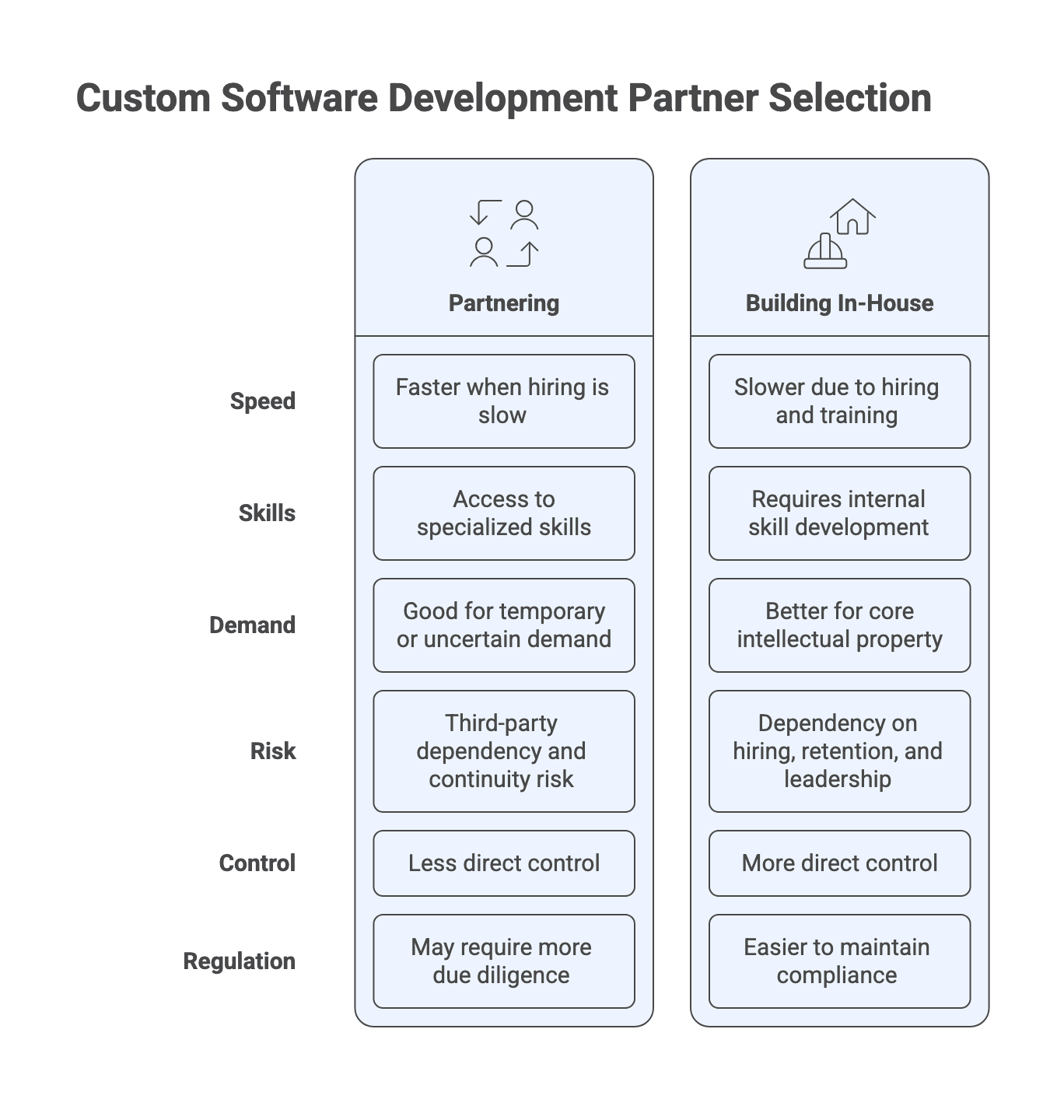
Partnering is often the right call when speed matters and hiring will not keep up, when you need specialized skills you do not have, or when demand is temporary or uncertain. For US buyers, global delivery can also widen the talent pool and improve coverage, especially if you design time-zone overlap and collaboration expectations upfront.
Building in-house tends to win when the software is core intellectual property, strategic differentiation, or deeply embedded domain knowledge. It can also be preferable in highly regulated contexts where direct control, staffing continuity, and operational accountability are easier to maintain with an internal team.
Partnering introduces third-party dependency and continuity risk. In-house reduces vendor lock-in but increases dependency on hiring, retention, and internal leadership capacity. The point is to choose where you want to carry it, then design governance and contracts accordingly, instead of eliminating risk.
Action cue: Classify your initiative by strategic criticality and scope certainty, then choose a partner-heavy, hybrid, or in-house approach that matches that profile.
This workflow is designed to be defensible. Each step produces concrete outputs you can use to compare options and reduce surprises.
Action cue: Run this as a gated process with explicit outputs, rather than an open-ended set of vendor conversations.
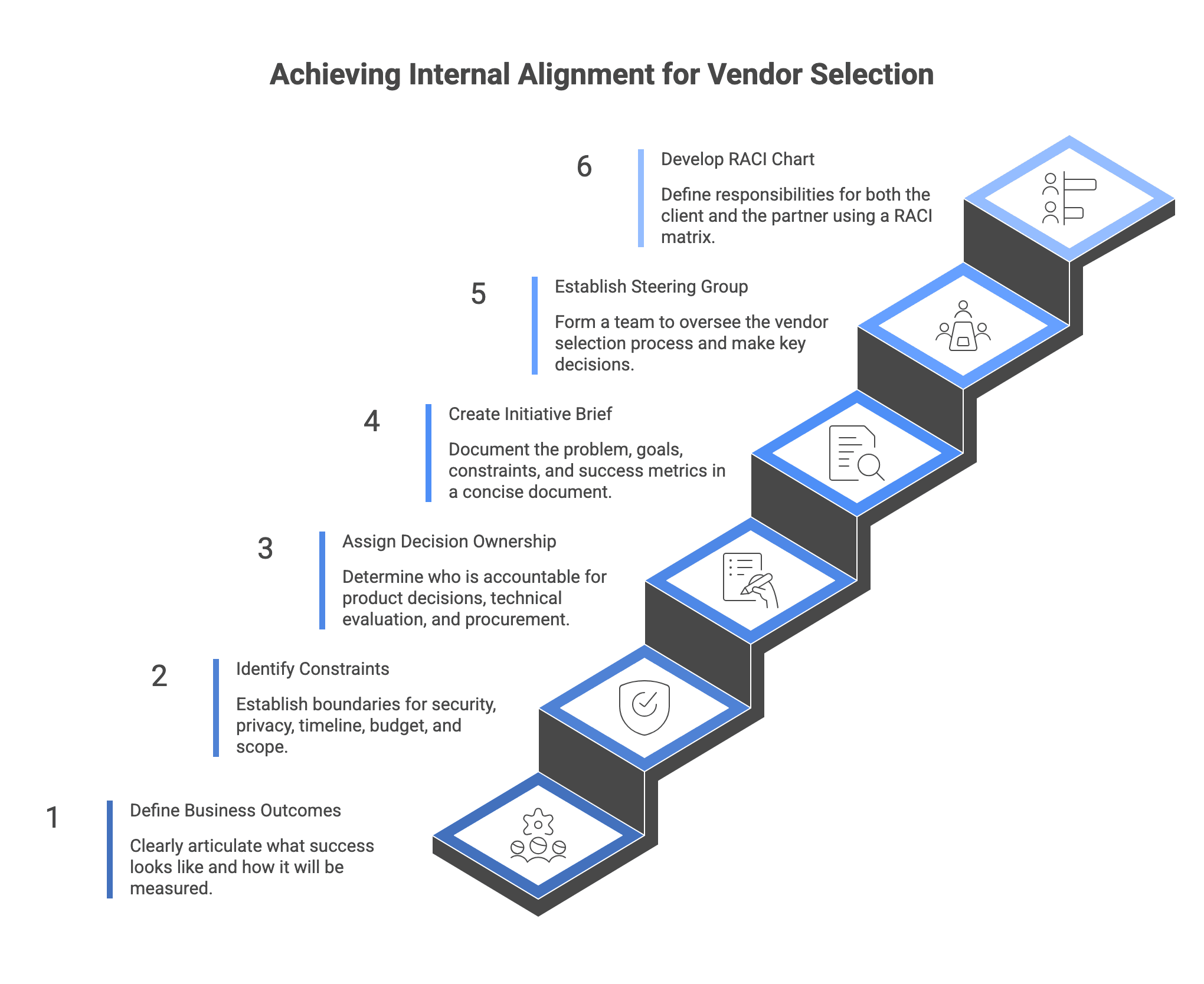
Most vendor selection friction starts inside your company. When goals are vague or ownership is unclear, vendors receive conflicting signals, proposals become incomparable, and decisions stall.
Start with internal alignment on:
Expected outcomes:
Action cue: Do not contact vendors until the brief and owners are agreed and signaled consistently.
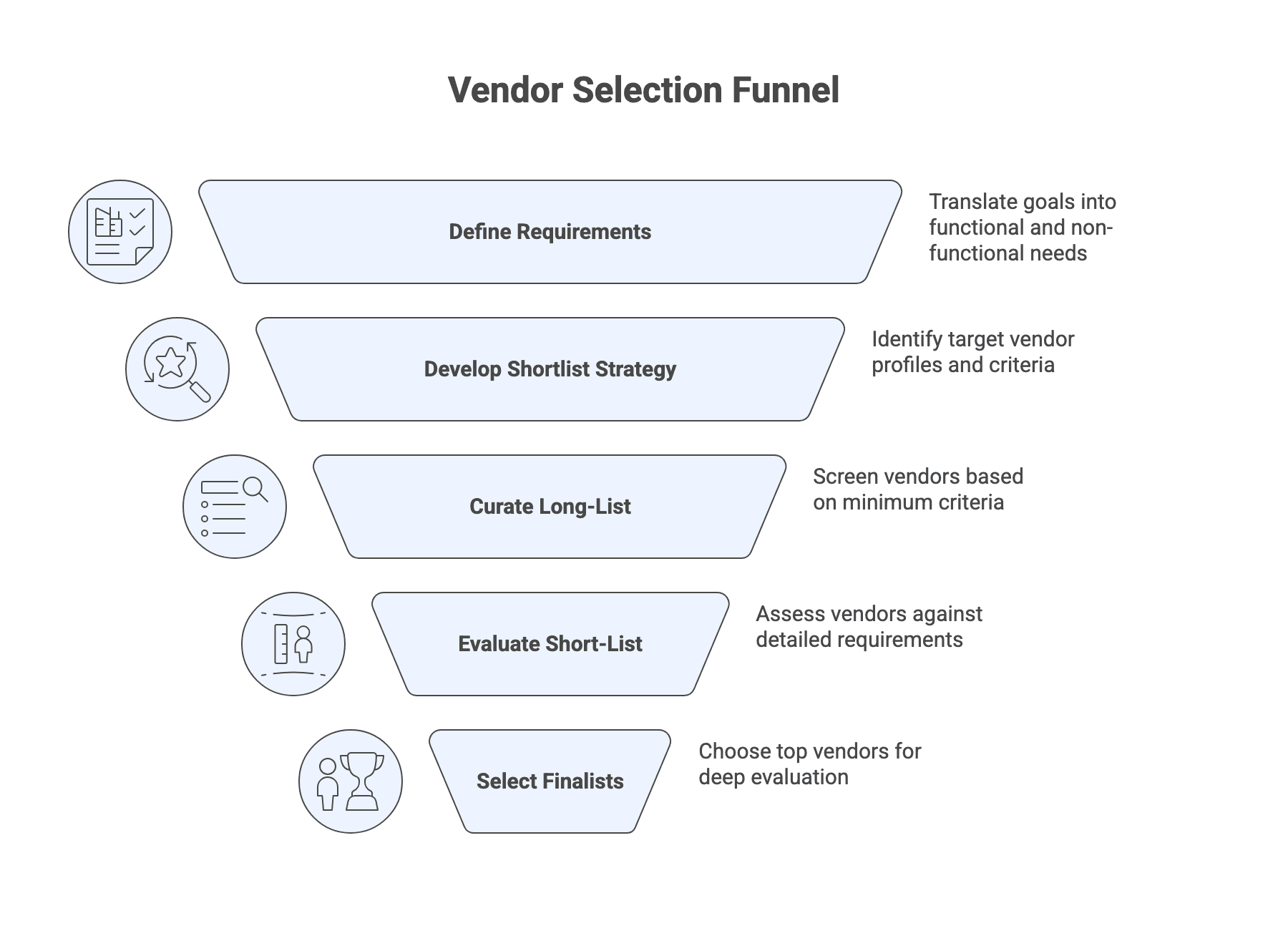
Convert goals into requirements that vendors can respond to concretely. If you are evaluating providers from our list of the top custom software development companies in 2026 or building your own shortlist, clarity at this stage determines how comparable proposals will be.
In 2026, non-functional requirements often drive hidden cost. If you do not define expectations for authentication, encryption, logging, monitoring, and data handling early, you are likely to pay for retrofits later.
Shortlist strategy should define:
Expected outcomes:
Action cue: Prioritize clarity and comparability over completeness, and label requirements to avoid treating every item as critical.
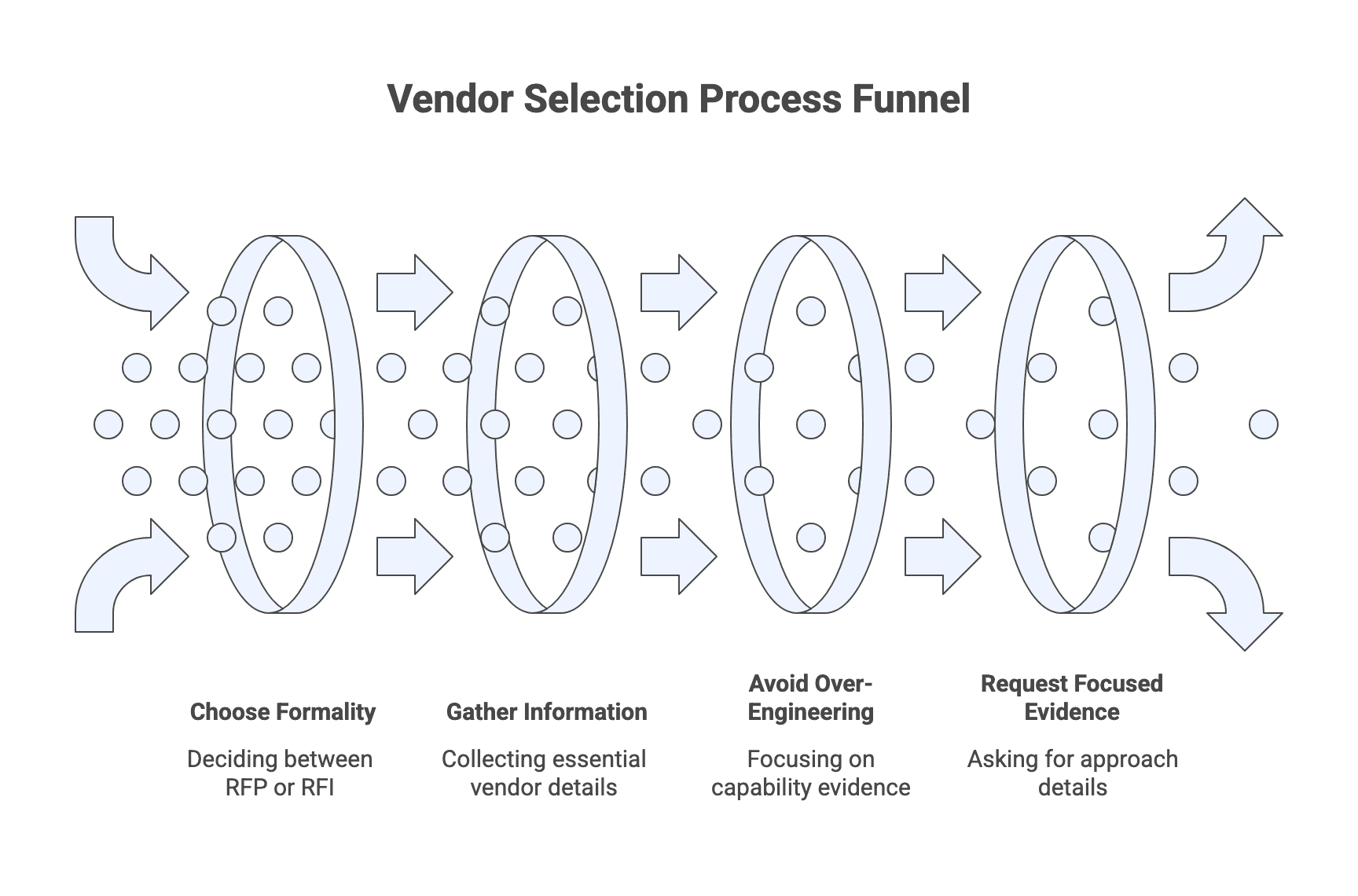
Choose formality based on value and risk. Large, regulated, or high-stakes initiatives often warrant a formal RFP with structured scoring. Smaller or exploratory work can be better served by a lighter request for information plus discovery workshops.
Common elements that consistently improve proposal quality:
Avoid over-engineering. Asking for extensive speculative design or free proofs of concept can deter strong vendors and produce low-signal material. A better pattern is to ask for focused evidence of approach and then reserve deep solution design for a later, potentially paid discovery phase.
If you need a structured starting point, use the custom software development RFP template.
Action cue: Ask for the smallest set of information that reveals capability, and keep deep design work for the shortlist stage.
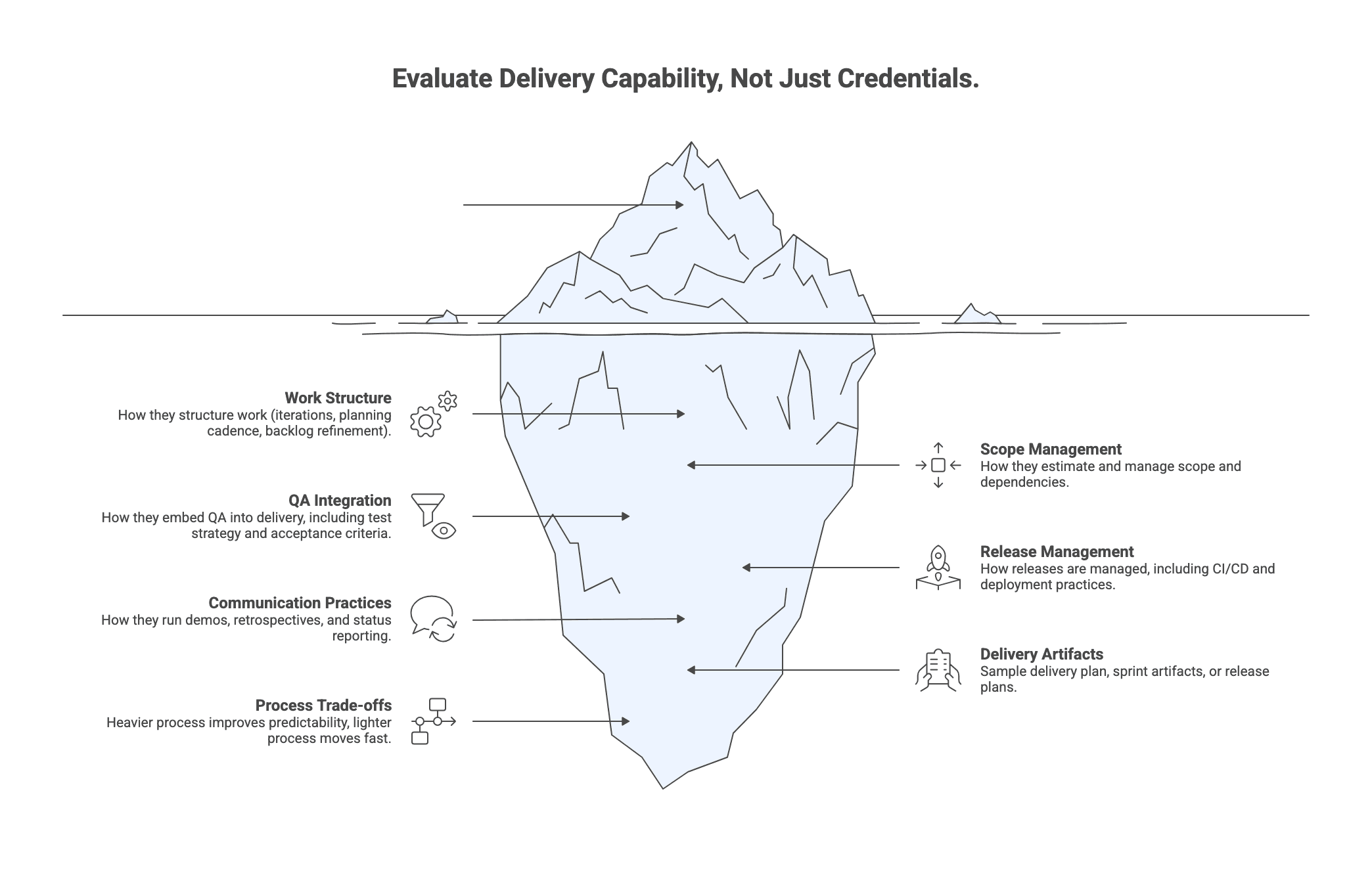
Logos and marketing claims do not ship software. Delivery capability shows up in how a partner plans, executes, tests, and communicates.
What to probe:
Artifacts that often separate mature delivery from sales narratives:
Trade-offs to recognize:
Action cue: Make vendors show how they deliver instead of what they have done.
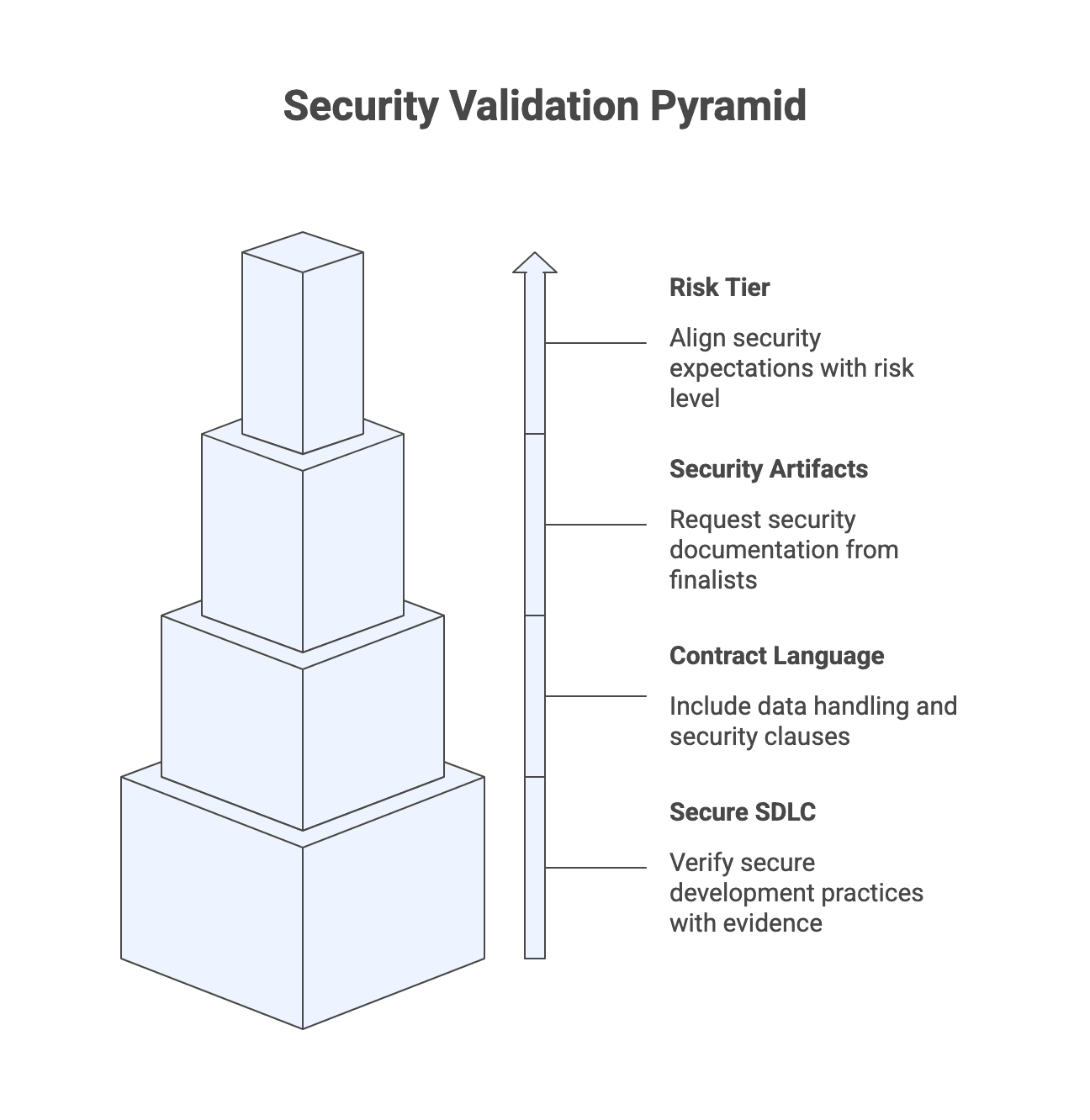
Security should be evaluated as an operational practice. Mature partners can explain how secure development works throughout the lifecycle, including:
Due diligence depth should match risk tier. If a partner will handle sensitive data or critical processes, buyers commonly request security questionnaires, audit reports or attestations where available, penetration test summaries, and incident response and business continuity basics. Certifications can be useful signals, but they do not guarantee that your system will be secure. You still need project-specific security requirements and validation.
Expected outcomes:
Action cue: Tier the diligence effort by criticality and data sensitivity, then verify secure SDLC practices with evidence.
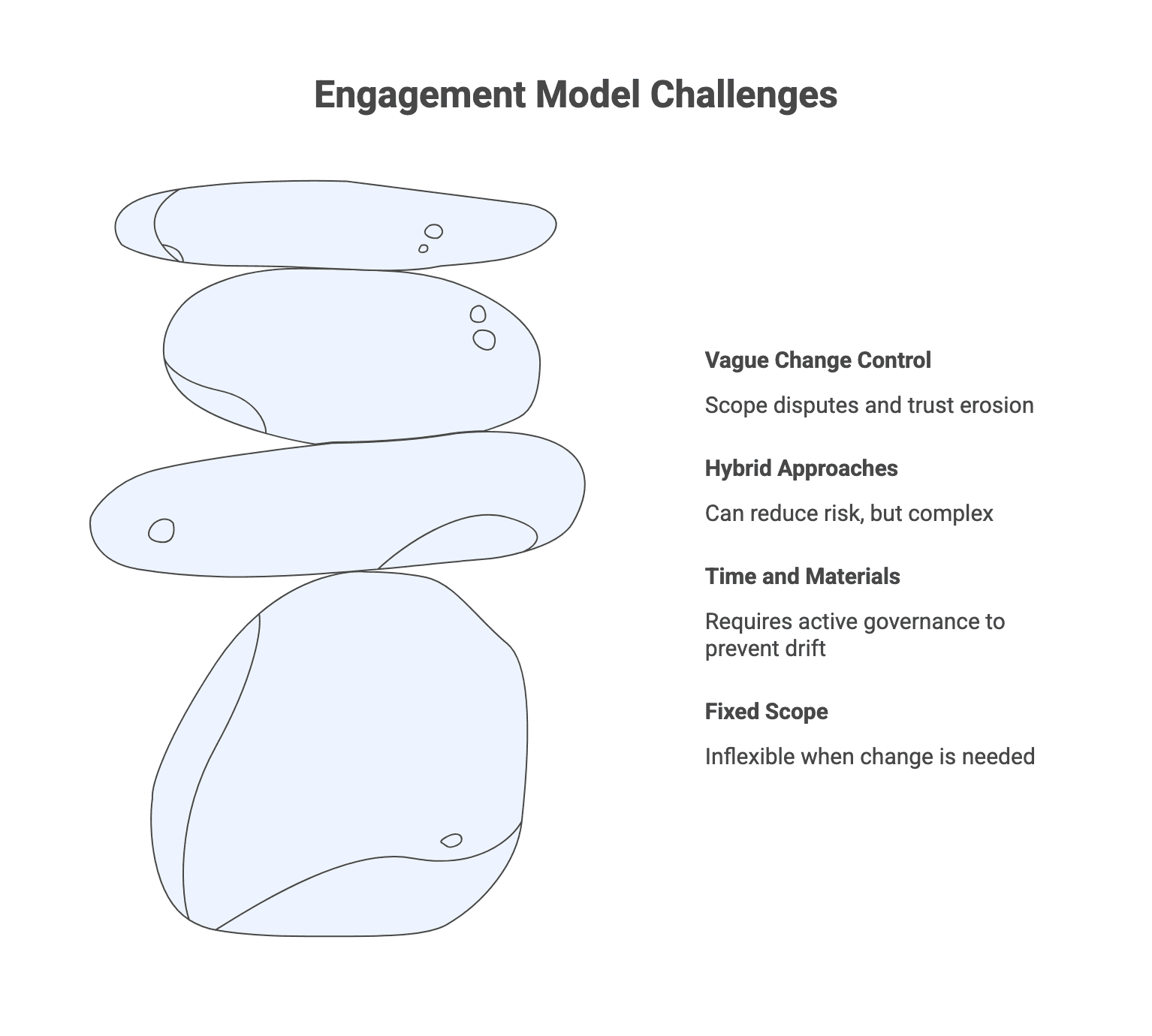
The engagement model is where many partnerships either stay healthy or break down.
High-level guidance:
Regardless of model, change control must be explicit: how changes are proposed, estimated, approved, and tracked. If change control is vague, scope disputes and trust erosion are likely.
For deeper trade-offs and when to use which approach, see: custom software development engagement models guide.
Action cue: Pick the model that matches how uncertain your scope really is, and define change control before kickoff.
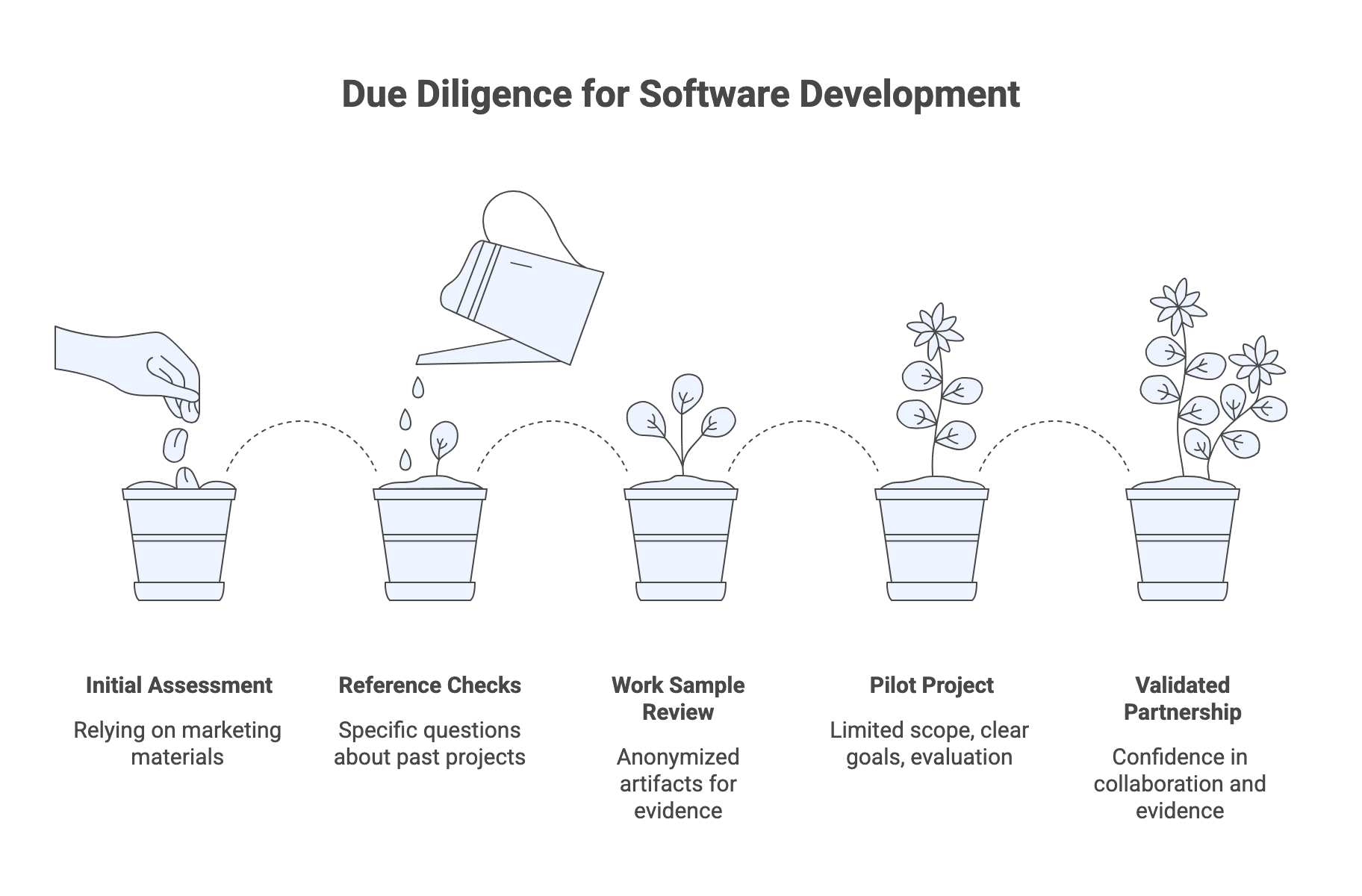
Due diligence is where you verify claims under real conditions.
Reference checks work best when they are specific:
Work samples can raise confidence quickly, especially anonymized artifacts like plans, status reports, test strategies, and retrospectives.
When you have close contenders or higher uncertainty, a paid pilot or discovery sprint can be the highest-signal step. It should have clear goals, limited scope, and explicit evaluation criteria, and it should produce useful outputs even if you choose not to continue.
Expected outcomes:
Action cue: Validate the partnership by testing collaboration and evidence quality, rather than reading more marketing material.
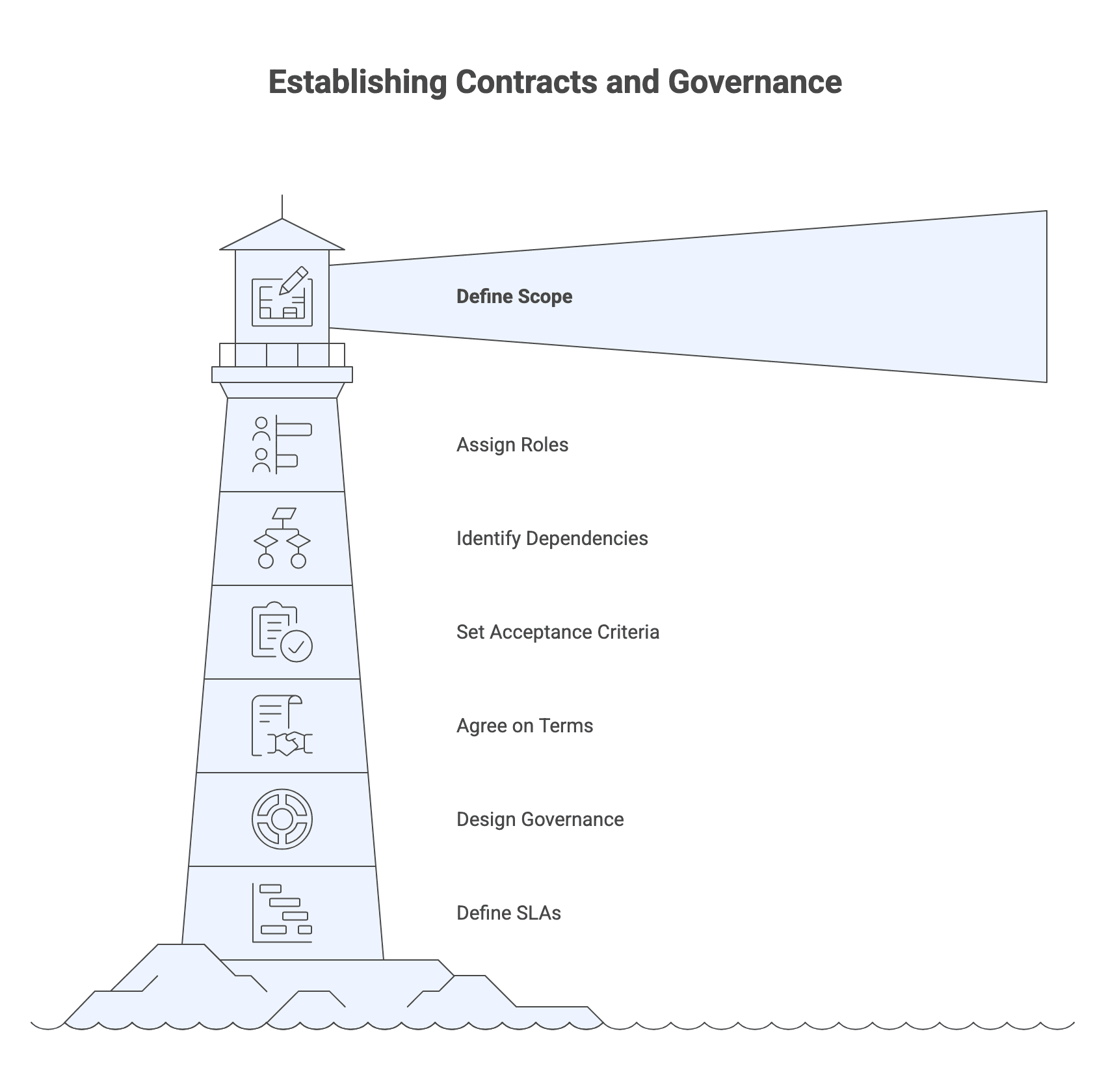
Contracts and governance are not administrative. They shape incentives and execution.
A strong Statement of Work (SOW) should define:
Governance should be designed before day one:
If relevant, define Service Level Agreements (SLAs) and Service Level Objectives (SLOs) for post-launch support, including availability, incident response and resolution targets, and defect handling. Make sure measurement mechanics are clear and realistic.
Action cue: Document delivery governance like part of the product system, and encode critical expectations in the SOW and contract.
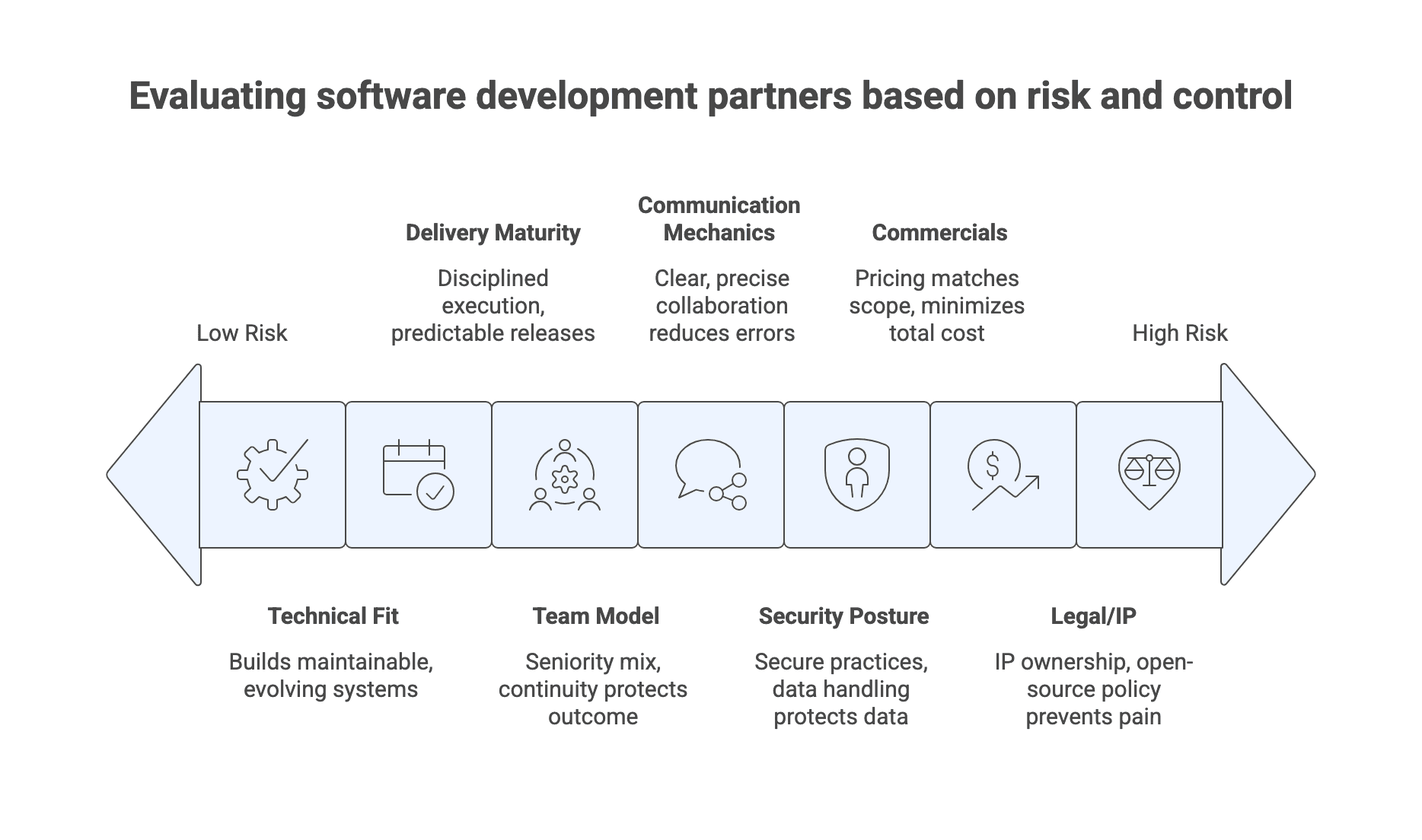
Once you have a workable shortlist, evaluate using consistent criteria. The goal is to understand fit and trade-offs.
Action cue: Use a small set of criteria that reflect your real risks, then weight them based on criticality.
Technical fit is not just stack familiarity. It is whether the partner can build in a way your organization can operate and evolve.
What to evaluate:
Key trade-off: a partner may propose technologies that are new to your team. That can bring speed or specialized capability, but it can also increase long-term dependency and reduce internal ownership unless you plan for knowledge transfer.
Action cue: Require rationale for major technology choices, and confirm you can maintain what is built without permanent dependency.
Delivery predictability comes from disciplined execution, not from a claim of being “agile.”
What to evaluate:
Key trade-off: more formal delivery practices can improve predictability, but may feel slower during exploration. Match maturity to project phase: discovery often needs flexibility, while build and launch need discipline.
Action cue: Ask how the partner measures delivery health, and what they do when milestones slip.
Team composition often determines your outcome more than the company brand.
What to evaluate:
Common failure mode: the A-team sells, the B-team builds. Avoid this with explicit staffing commitments and by meeting the delivery leads before signing.
Action cue: Confirm who will actually work on your product, and how continuity will be protected over time.
Communication failures are often misdiagnosed as technical failures.
What to evaluate:
Trade-off: more synchronous collaboration reduces misunderstanding but costs time. More asynchronous collaboration can scale but requires discipline and strong writing.
Action cue: Define the working rhythm and artifacts early, and make them part of the governance design.
Security posture is both organizational and project-specific.
What to evaluate:
Trade-off: strict controls can slow development if not designed well. The right balance depends on your risk tier.
Action cue: Provide your data classification requirements, then ask the vendor to explain how they will implement them in practice.
Pricing structure affects incentives, and incentives affect outcomes.
What to evaluate:
Hidden costs commonly come from rework, heavy client oversight, and compliance remediation when expectations were unclear. Total cost includes internal management time, operational overhead, and transition costs.
Action cue: Model total cost across the system lifecycle, including governance effort and transition risk.
Legal clarity prevents operational pain later.
What to evaluate:
Operational risk rises when critical knowledge is concentrated in a few people, or when subcontracting is opaque. These can be manageable, but only if you design for visibility and transition.
Action cue: Get explicit about IP, open-source policy, and transition support before you lock into an engagement.
Verification is where you make the decision real. This is also what makes your final choice defensible to stakeholders, auditors, and leadership.
Action cue: Standardize what you request across vendors, so your evaluation stays comparable.
A pragmatic minimum set for substantial custom software engagements:
Delivery evidence:
Technical evidence:
Security and risk evidence (scaled to your risk tier):
Team evidence:
How to use artifacts well:
Action cue: Ask for evidence that shows how work is actually executed instead of what the vendor claims to value.
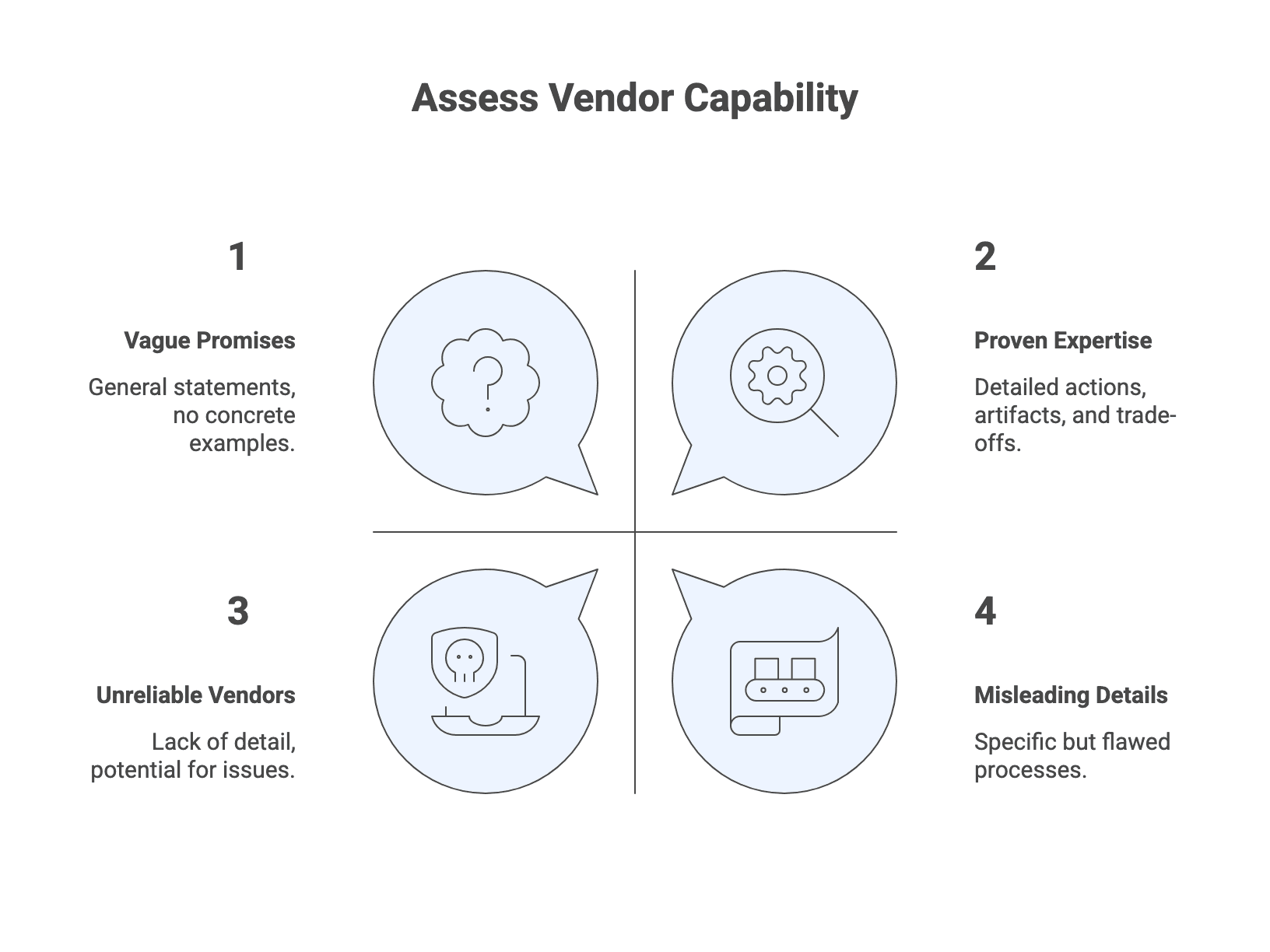
Use scenario-based prompts that force specificity. Examples:
Delivery and governance:
Quality and engineering practices:
Security posture:
Collaboration:
How to evaluate answers:
Action cue: Require specificity. If a vendor cannot describe real behaviors and artifacts, you should assume they will not appear later.
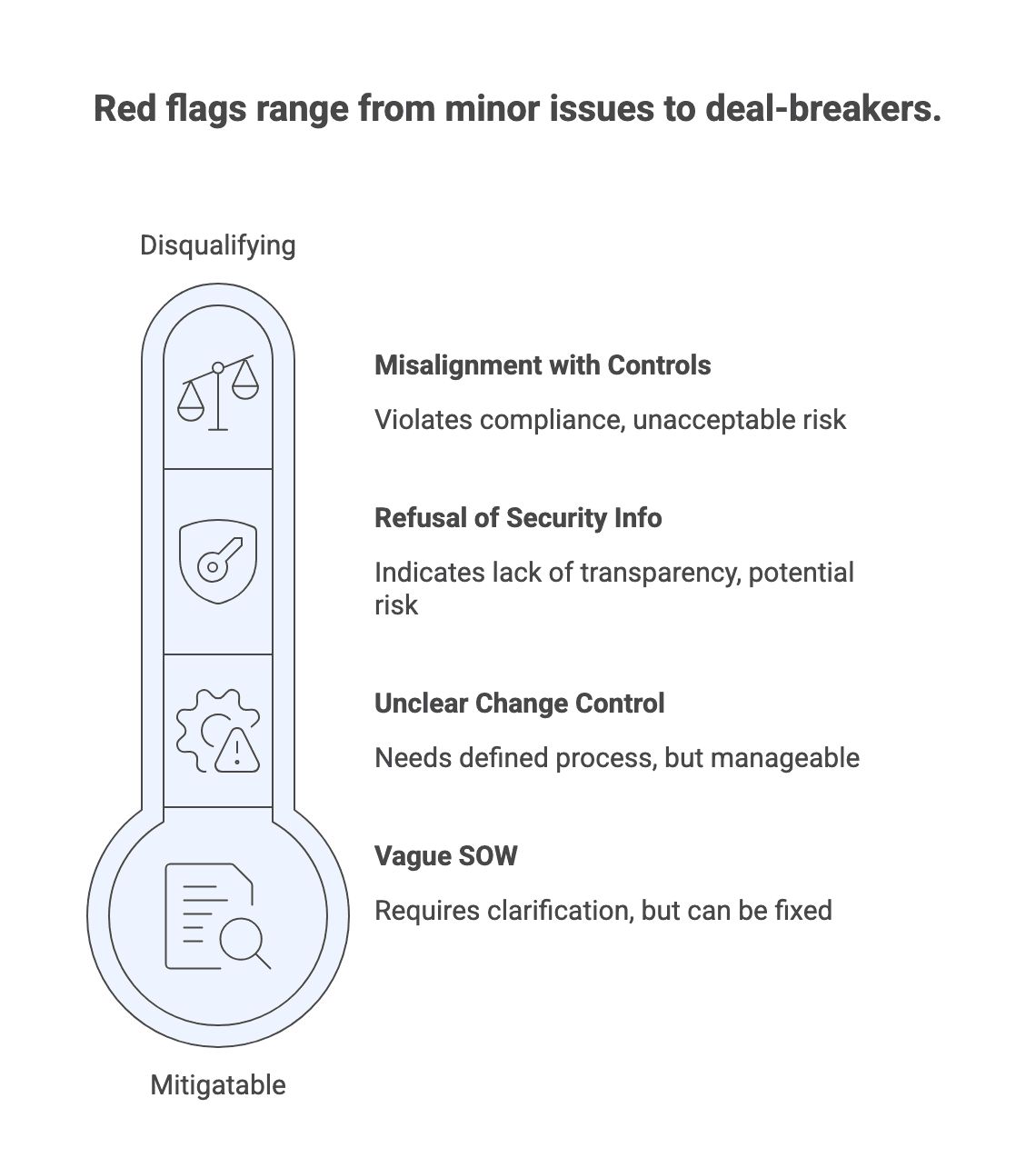
Red flags that often correlate with delivery pain:
Delivery and quality:
Security and risk:
Commercials and governance:
How to use a red-flag list:
Action cue: Decide upfront which red flags are deal-breakers for your risk tier, then apply that bar consistently.
A lightweight scoring model helps you avoid gut-feel decisions without creating bureaucracy.
Keep it simple:
If you want a more structured template and weighting guidance, use a custom software development vendor evaluation scorecard.
Action cue: Use scoring to structure the discussion and documentation.
A good partner choice in 2026 is not the one with the best pitch. It is the one you can verify, govern, and explain.
Make the decision defensible by:
Action cue: Create a one-page decision memo that links requirements, evaluation outcomes, and the reason the selected partner best fits your risk profile.

Trusted by top platforms for our transformative solutions and exceptional results: