

 Add as preferred on Google
Odoo Modules Explained: Which Odoo Apps Your Business Actually NeedsRead More
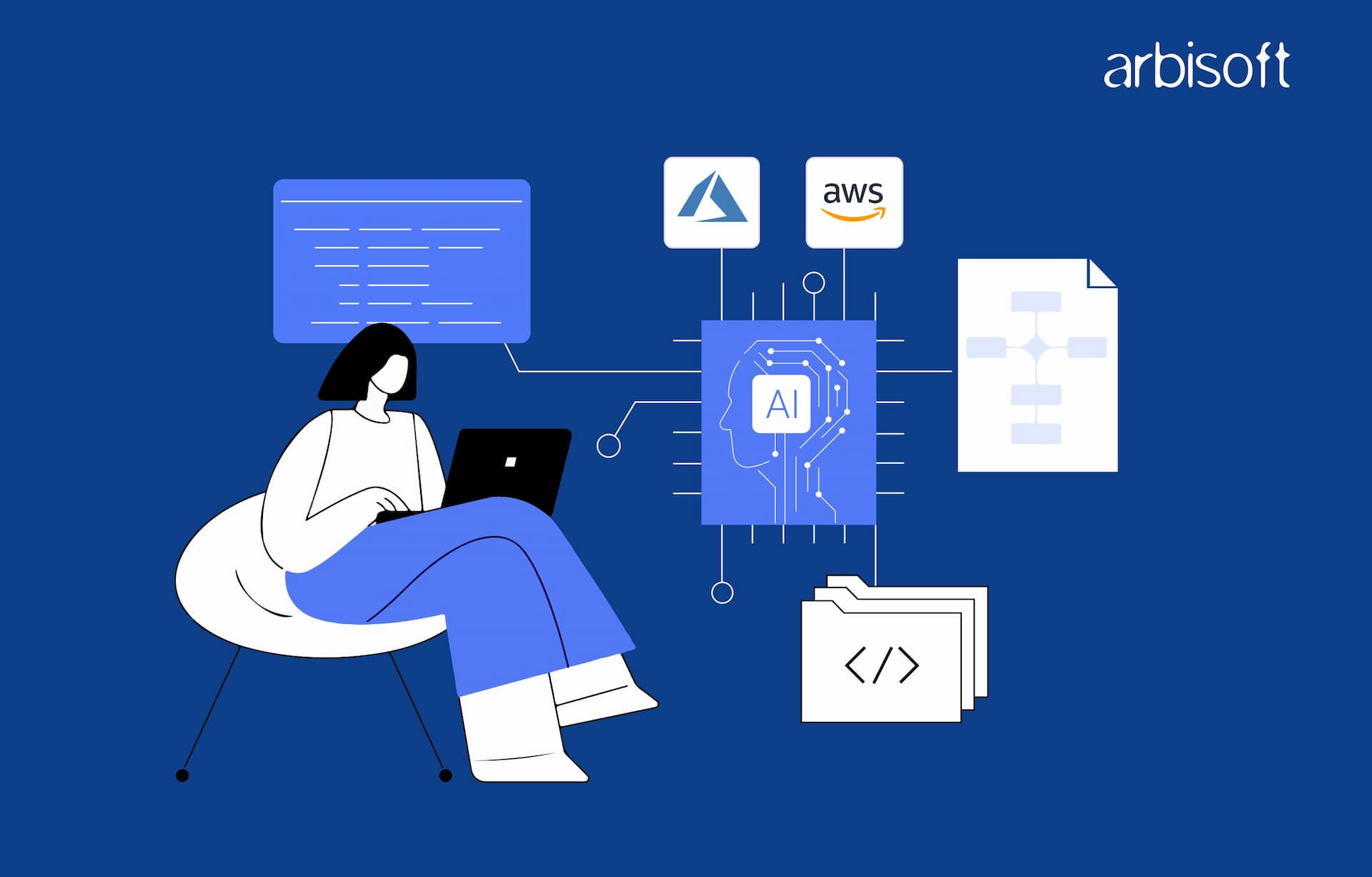
Imagine deploying a piece of code 100 times faster and with 50% fewer errors. That's the power of AI in DevOps.
As AI matures, its potential to transform DevOps is undeniable. We're on the cusp of a future where intelligent systems handle the mundane - freeing human ingenuity for more innovation. By integrating AI functionalities like Machine Learning (ML) and Natural Language Processing (NLP) into DevOps workflows, businesses can achieve significant improvements in efficiency, reliability, and security.
This article explores how AI is revolutionizing DevOps practices on both Microsoft Azure and Amazon Web Services (AWS) platforms.
But first, let’s take a brief look at the business value of AI in DevOps and why companies are vying to integrate AI with DevOps.
The advantages of using AI in DevOps translate directly to business value for the company's top management. Here’s how:
AI automates tedious tasks like infrastructure provisioning, configuration management, and security audits, freeing up developers' time for higher-value activities like innovation and feature development. This translates to faster time-to-market and a competitive edge.
AI-powered tools can identify and prevent configuration errors, code defects, and security vulnerabilities early in the development lifecycle. This leads to fewer bugs in production, reduced downtime, and improved customer satisfaction.
AI can analyze system logs and network traffic in real-time to detect and respond to security threats and vulnerabilities much faster than traditional methods. This proactive approach minimizes security risks, protects sensitive business data, and is further bolstered by reliable cybersecurity services.
AI can analyze historical usage patterns and predict future infrastructure needs. This enables just-in-time resource provisioning and automatic scaling, eliminating over-provisioning and minimizing cloud expenditures.
Download our AI in Azure vs. AWS DevOps Cheat Sheet to make an informed decision for the right platform!
Download the free AI in Azure vs. AWS DevOps Cheat Sheet now!
Microsoft Azure offers a robust suite of DevOps services that seamlessly integrate with AI functionalities. Here are some key examples with technical details.
Bicep, an Azure extension, utilizes a human-readable syntax for defining infrastructure (virtual machines, storage accounts, networks). Azure integrates Bicep with Azure Machine Learning (AML) services. AML allows developers to build, train, and deploy custom ML models that can automate IaC tasks.
For instance, an ML model can be trained to analyze historical infrastructure usage patterns and predict future resource needs. This enables Bicep to automatically scale infrastructure up or down based on predicted demand.
These services provide tools for building, training, and deploying ML models directly within Azure DevOps pipelines. This enables continuous integration and delivery (CI/CD) of AI-powered applications. Developers can leverage Azure DevOps ML Services to create ML models that can automate tasks like code quality analysis, security testing, and performance optimization within the CI/CD pipeline.
Consider an e-commerce platform built on Azure. An AI model trained on historical website traffic data can continuously analyze real-time traffic patterns and identify trends (sudden spikes in traffic). This allows for the automatic scaling of virtual machines and cloud storage resources based on predicted traffic surges. This approach prevents downtime and ensures a smooth user experience during critical periods like Black Friday or Cyber Monday.
Amazon Web Services (AWS) also boasts a comprehensive set of DevOps tools that leverage AI for enhanced automation. Let’s take a look:
CodeGuru utilizes machine learning to analyze code repositories during code reviews. It identifies potential security vulnerabilities, code style inconsistencies, and performance bottlenecks.
Developers can then prioritize bug fixes and code improvements based on the severity levels assigned by CodeGuru. This leads to cleaner, more secure code and reduces the risk of vulnerabilities being introduced into production.
CloudFormation is a template-based service for provisioning and managing AWS resources. It allows you to define your infrastructure in a human-readable format (YAML or JSON) and automate its creation and configuration. This ensures consistency and reduces the risk of errors compared to manual provisioning.
AWS CloudTrail, on the other hand, is a service that continuously records all API calls made to AWS services. This includes actions taken through the AWS Management Console, SDKs, command-line tools, and other AWS services. CloudTrail acts as an audit log, providing a detailed record of who made what changes to your AWS resources and when.
Here's how AI leverages these tools for intelligent infrastructure management.
AWS integrates CloudTrail data with Amazon Forecast, an AI service for time series forecasting. CloudTrail logs contain valuable information about past resource usage patterns (e.g., CPU utilization, network traffic). Amazon Forecast can analyze these historical logs to identify trends and predict future resource needs.
For a better understanding of the process, here is a breakdown.
This AI-powered approach to infrastructure management with CloudFormation and CloudTrail data allows for:
Both Azure and AWS offer compelling AI-powered DevOps solutions but with some key differences. 
The future of DevOps is all about AI. AI can constantly monitor systems, predict potential issues, and even automate fixes for minor glitches. This "self-healing" means less stress for your IT team and smoother operations for everyone.
Security is another area where AI shines. Think of it as your guard dog, to identify threats and vulnerabilities. It can handle tedious tasks like spotting suspicious activity and patching security holes. This frees up your security team to focus on more complex threats, and as AI keeps learning, your overall security gets even stronger. The best part? Arbisoft’s DevOps services can help you bring this AI power to your existing tools, no matter which platform you use.
By integrating AI in DevOps, you're giving your business a superpower. Developers can focus on cool new features instead of repetitive tasks with AI automation. Security gets a major boost as AI fights off threats before they strike. And to top it all off, AI helps you save money by using resources wisely. The future of DevOps is smart, automated, and efficient, and AI is the key to unlocking it all. The time to jump on board is now!
Trusted by top platforms for our transformative solutions and exceptional results: