
 Add as preferred on Google
The Future of Education Technology in 2027: How AI Is Changing Learning for All AgesRead More
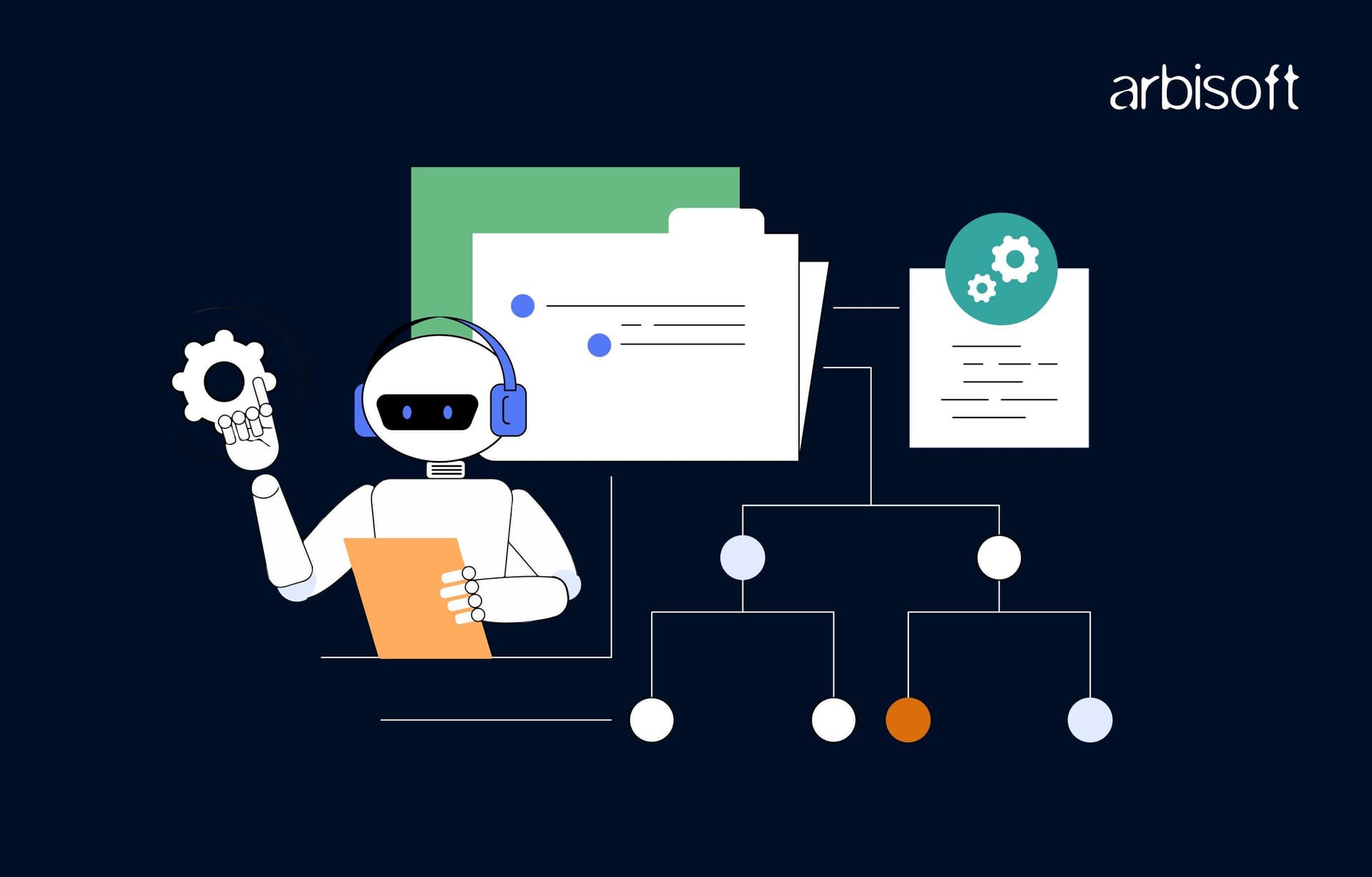
AI agents are software systems that take a goal, plan the steps, use tools or data to carry them out, and adjust based on the results. In practice, they work like digital coworkers. They handle repetitive tasks, research problems or help write code, so people can spend more time on decisions that need human judgment. This beginner's guide is for business and tech teams who want to see where agents fit in automation. It covers how agents differ from RPA, how they work, their benefits and risks, and real examples in use today.
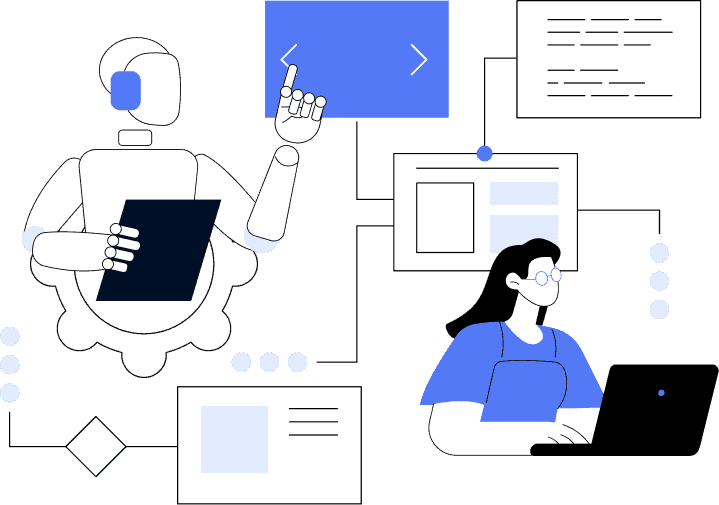
AI agents are systems that can work independently to gather information, make decisions, and take action based on their environment. They might operate in the real world, like self-driving cars or robotic drones, or exist entirely within software, completing tasks inside a computer. The magic of AI agents lies in their ability to act autonomously once given a goal or a task trigger, without needing constant human input.
Unlike traditional programs that follow strict, pre-defined rules, AI agents can adapt to changing conditions. They learn as they go, improving their approach and solving problems more efficiently over time. You’ll encounter AI agents in places ranging from customer service bots to automated supply chain systems, and even in creative tools generating art or music.
It's also important to distinguish AI agents from robotic process automation (RPA) tools. RPA bots automate repetitive tasks by mimicking human actions, like clicking through screens. However, these bots follow fixed rules and can't adapt or learn without manual updates. AI agents are better suited to processes that change and need decisions along the way. RPA vendors now combine the two: in October 2024, UiPath launched what it calls agentic automation, which pairs software robots for rule-based steps with AI agents for steps that need judgment.
AI agents can work in various settings to achieve different goals. However, all effective agents have a few key components in common.
The architecture is the foundation on which the agent operates. For more detail, see our technical breakdown of AI agent architecture. It can be a physical setup, like a robot, or a software system, or even a mix of both. For instance, a robotic AI agent might include parts like motors, sensors, and robotic arms. On the other hand, an AI software agent might rely on text inputs, application programming interfaces (APIs), and databases, often supported by backend as a service solutions, to function independently. For an agent that produces a monthly sales report, the architecture is a software agent connected to the CRM and spreadsheet APIs.
The agent function explains how the data collected is turned into actions that help the agent achieve its goals. When creating the agent function, developers think about the type of data needed, the AI's abilities, the knowledge base it will use, how it will get feedback, and any other technologies that might be required. In the sales report example, the function is the set of rules for turning raw sales records into a finished report.
An agent program is how the agent function is put into action. This includes designing, training, and launching the AI agent within the chosen architecture. The agent program ensures that the agent's business goals, technical needs, and performance criteria are all in sync. For the sales report, the program is the deployed code that runs the report each month.
AI agents are designed to simplify complex tasks and automate various processes. Most autonomous agents follow a structured workflow when carrying out their assigned responsibilities.
AI agents can take on multi-step work that used to need constant human direction. Here are some key advantages:
As generative AI advances, more people are interested in using it for workflow optimization through intelligent automation. AI agents can handle complex tasks that would usually require human effort, so organizations can reach their goals faster, at a lower cost, and on a larger scale.
Splitting work across several specialized agents helps on some tasks and not on others. Anthropic's 2025 engineering post on its multi-agent research system reported that the multi-agent setup outperformed a single Claude Opus 4 agent by 90.2% on its internal research evaluation. The same post says these systems use about 15 times more tokens than chats and are a poor fit for tasks where all agents need to share the same context. It also notes that most coding tasks involve fewer truly parallelizable tasks than research. Multi-agent setups make the most sense for broad, research-style work that splits into independent parts.
AI agents can give more detailed and personalized responses, a shift covered in our article on the rise of AI agents in software development. Better responses lead to better customer experiences. The improvement comes from the agents' ability to share information, use external tools, and update their knowledge as they work, while developers still shape these behaviors through instructions, tool access, and testing.
While AI agents offer many benefits, they also come with certain risks and limitations that need to be considered.
Some complex tasks require input from several AI agents, and each added agent is another place where something can go wrong. As the Anthropic post mentioned above points out, agents are stateful, so an early error can carry through every step that follows. If several agents use the same underlying model, they can also repeat the same mistake, which lets one weakness affect the whole system at once. Strong data governance and thorough testing, including automation testing services, help catch these problems before agents reach production.
If an agent can't form a complete plan or check its own progress, it may keep calling the same tools without getting closer to the goal. Simple guardrails help here, such as a maximum number of steps per task, a clear stop condition, and an alert when the agent repeats the same action. Some level of real-time human oversight keeps long-running agents on track.
AI agents carry two kinds of cost. Training or building the underlying models takes significant compute and time. Running an agent also costs compute on every task, and multi-agent runs use far more tokens than a single chat, as the collaboration section above shows. Teams should estimate the cost per task before scaling an agent to large volumes of work.
AI agents are already used in several fields to make multi-step tasks easier to manage. Here are some common areas.
AI agents are integrated into websites and apps, with many ecommerce platforms now deploying an ai chatbot solution for ecommerce to provide real-time support. These agents act as virtual assistants that answer questions and guide users, whether that means offering mental health resources or simulating job interviews. Automation platforms now offer agent builders aimed at business users as well as developers. For example, UiPath previewed Agent Builder in October 2024 as a tool to build, evaluate, and publish agents. Production agents still need integration with existing systems, testing, and ongoing monitoring before they can support customers reliably.
In healthcare, AI agents can help with administrative and coordination work, such as scheduling appointments, drafting documentation, and routing information to the right team. Any clinical use needs careful validation, clinician oversight, and review by qualified medical experts before deployment.
During emergencies, responders receive large volumes of reports and updates. AI agents can help sort and summarize this incoming information so teams see the most relevant details sooner. Decisions about dispatch and response stay with trained staff, and any system used in this setting needs review by emergency management experts before it goes live.
Here are a few examples of AI agents in action:
As of October 2026, the Devin documentation describes Devin as an autonomous AI software engineer that can write, run, and test code. The same documentation says it can handle most tasks, excluding extremely difficult ones. Teams using it still review its pull requests before merging, the same way they would review a colleague's code.
In the 2023 "Generative Agents" study, researchers at Stanford University and Google Research populated a small sandbox town with 25 AI agents that lived their lives autonomously. The agents shared memories and planned events. Starting from a single user-given idea that one agent wanted to throw a Valentine's Day party, the agents organized the party themselves, showing how AI can simulate human-like interactions.
Waymo runs self-driving vehicles that use sensors and learning systems to drive through traffic without a human driver. Its list of service cities changes often, so Waymo's own site is the best place to check current coverage. The technology is still evolving.
AI agents work best on multi-step tasks with a clear goal, and they still need oversight to stay reliable. A practical starting point is a narrow workflow whose output is easy to verify, such as a weekly report or a support ticket queue, with a person reviewing results before they reach customers. For a closer look at how agents are put together, read our technical breakdown of AI agent architecture. Teams planning agent features for their products can talk to Arbisoft about AI agent development.
...Loading Related Blogs
Trusted by top platforms for our transformative solutions and exceptional results: