
 Add as preferred on Google
How to Modernize a Legacy Learning Platform Without a Full RewriteRead More
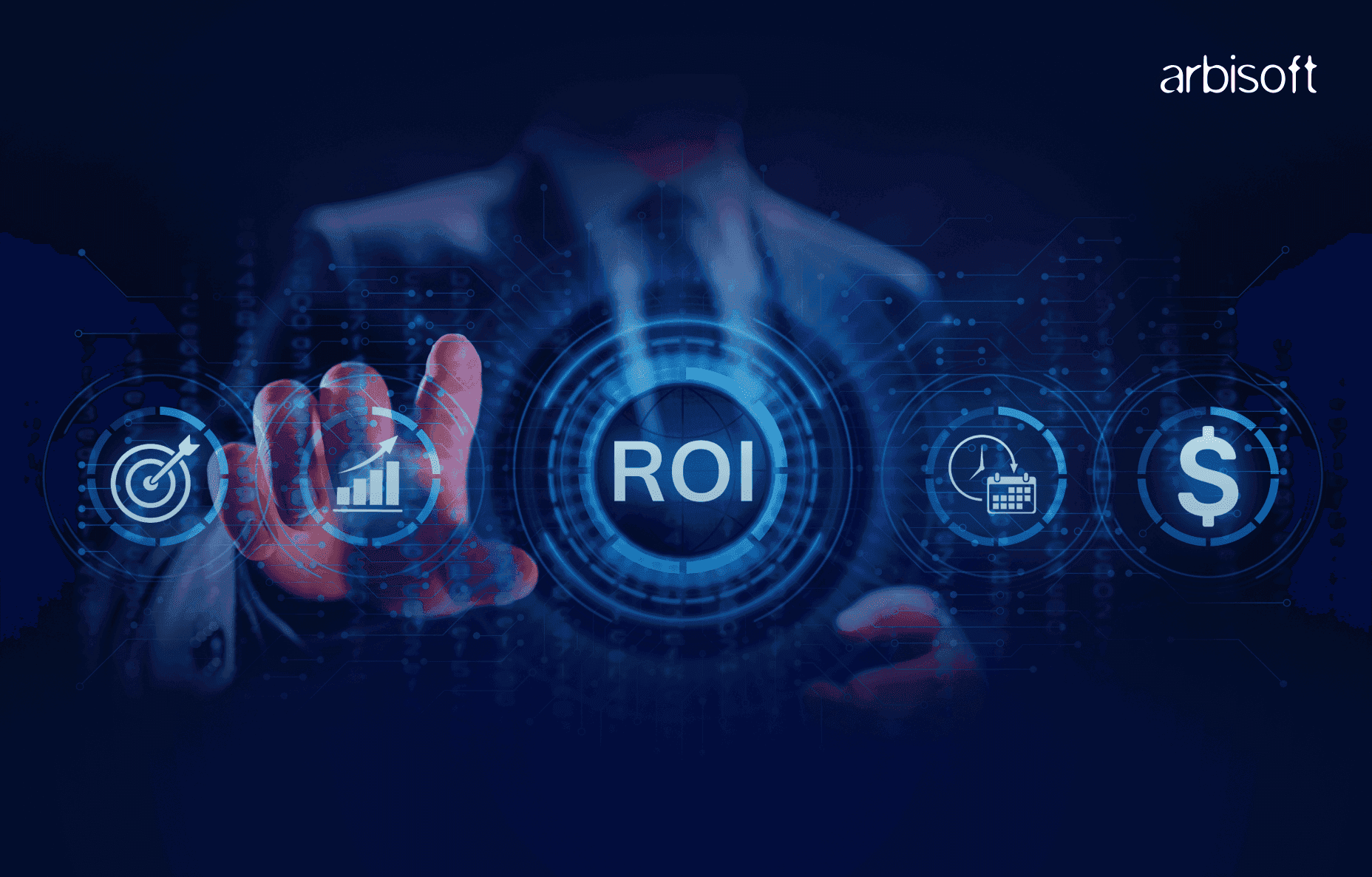
For years, open source has created straightforward advantages. Enterprises saw lower licensing costs, full code transparency, and a level of architectural freedom that commercial tools rarely offered. This model worked through cloud adoption, DevOps evolution, and the rise of container ecosystems.
AI has changed these outcomes.
The shift is structural and goes beyond technology choices. AI systems operate with higher stakes, heavier compute demands, stricter governance, and deeper operational commitments. These factors reshape the economics of open-source adoption and force CIOs to question assumptions that once felt stable.
As Thomas Kurian, CEO of Google Cloud, puts it:
“AI is not a plug-and-play technology. It changes the operating model of an organization, not just the tech stack.”
A growing number of leaders now evaluate open source through a different lens. Lower licensing fees matter, yet they no longer define ROI. The total cost of ownership now depends on architecture stability, security readiness, model upkeep, talent specialization, compliance alignment, and the pace at which AI evolves.
This blog explores why CIOs across industries are re-examining open-source ROI in the AI era and what this shift means for enterprise architecture, financial planning, and long-term innovation strategy.
The financial equation behind open-source adoption changes once AI becomes central to business operations. Traditional cost savings still exist, although they sit within a layered economic structure that is more complex and more continuous than before. These cost layers resemble the shifting economics we now see as enterprises compare the economics of modern data platforms.
AI workloads bring recurring compute and engineering efforts. A recent IDC survey indicates that 62% of AI budgets are allocated to operational overhead rather than initial model development. This reality affects open-source models more strongly because enterprises carry the full workload of tuning, monitoring, patching, and scaling.
Cost drivers now include:
Open source shifts these responsibilities inward. Even if an open-source model is free, its upkeep is persistent and substantial.
Many organizations underestimate the integration tax. AI systems rely on pipelines, logging systems, identity controls, vector databases, monitoring frameworks, and governance layers. Each integration and modernization of data infrastructure requires customization and security checks.
In a 2024 McKinsey study, enterprises reported that integration and compliance activities consume 20–30% of the total cost of AI projects. These are often unplanned expenses and create financial pressure that did not exist with earlier generations of open-source software.
As Satya Nadella, CEO of Microsoft, noted:
“The cost of AI isn’t just compute. It’s the entire system around it, data, governance, monitoring, integration. That’s where enterprises feel the real pressure.”
Cost considerations set the foundation, although enterprise expectations for architecture and reliability define the real breakpoints in open-source ROI.
AI systems operate in environments where performance must be tracked, outputs must be explainable, and model behavior must align with internal and regulatory expectations. These demands elevate the architectural bar and change how open-source tools are evaluated.
AI pipelines do not tolerate unpredictable model behavior, so it is necessary to build scalable AI solutions that maintain predictable performance. Even minor instability can cascade into operational failures, inaccurate outputs, or compliance violations. Open-source models vary widely in benchmark quality, update cadence, hardware compatibility, and support coverage.
Many enterprises now run internal reliability audits.
In a Deloitte survey, 54% of CIOs ranked stability as a higher priority than flexibility when selecting AI tools. This shift pressures open-source systems because many updates arrive rapidly, with uneven documentation and limited backward compatibility guarantees.
AI architecture is long-lived, and models evolve through retraining cycles and version upgrades. Pipelines accumulate technical dependencies. Security expectations rise as models integrate into workflows linked to sensitive data.
Enterprises look for:
Many open-source options offer partial coverage. Enterprises then fill the gaps with internal engineering work, which raises total ownership cost. Architecture only functions as intended when the organization has the depth of talent needed to maintain and evolve it. This creates the next major inflection in the open-source ROI discussion.
AI talent markets remain tight. Open-source adoption increases the need for specialization, which grows total workforce cost and stretches existing teams.
Models must be tuned, evaluated, retrained, secured, and monitored. Each activity requires a different skill set. MLOps engineers, data engineers, security analysts, and AI infrastructure architects remain in short supply.
A recent Gartner report found that enterprise AI teams require 30–50% more specialized roles when they rely on open-source stacks, compared to managed AI platforms. Enterprises with small or mid-sized teams feel this pressure strongly. The skill requirements grow faster than headcount budgets.
Fei-Fei Li, Stanford AI Lab co-director, captures it well:
“AI is not just software development. It is an ecosystem of data, infrastructure, and continuous iteration, and that requires people with rare expertise.”
When engineering capacity is limited, upgrades take longer, experiments slow down, and compliance tasks accumulate. This delays value delivery and reduces the ROI advantage that open source once offered. Even skilled teams face constraints once regulatory and governance responsibilities enter the equation. These domains now shape ROI as strongly as technology choices.
AI introduces heightened responsibilities, while the open-source models place more of this burden directly on the enterprise.
Every dependency, model weight, dataset, and pipeline component requires security approval. According to IBM’s 2024 Cost of Data Breach Report, AI-related misconfigurations increased the average breach cost by 18% in environments where open-source components lacked proper patching. Integrating security earlier into AI pipelines with DevSecOps practices is important and beneficial for better governance and compliance.
Open-source assets require:
These tasks grow consistently with each model update.
AI regulations evolve rapidly according to the recent shifts and progress, and well, the rise of deepfakes too. Organizations must maintain model explainability, lineage, and usage logs. They must validate training data sources and ensure that outputs follow internal guidelines.
A Capgemini survey found that 71% of CIOs expect compliance workload to rise sharply through 2026, especially for open-source and self-hosted models. This level of oversight increases operational load and shapes the economic logic behind platform decisions.
As compliance and security become continuous responsibilities, enterprises explore hybrid strategies that balance flexibility with operational safety.
CIOs rarely choose between fully open-source and fully commercial anymore. Most enterprises are building hybrid stacks that blend both, depending on the workload.
Organizations prioritize control over sensitive workloads while seeking speed and efficiency for others. Hybrid strategies support this balance.
Leading examples include:
A recent Boston Consulting Group (BCG) study shows that 68% of enterprises now use a hybrid model strategy when adopting AI. This approach reduces risk while accelerating delivery.
ROI now depends on workload segmentation. Open source fits some use cases, while proprietary systems handle others. The most successful enterprises evaluate tools based on long-term sustainability, not short-term financial gains.
With hybrid ecosystems becoming the norm, enterprises need a structured way to measure ROI across these mixed environments.
Traditional ROI models underestimate the full lifecycle cost of AI. CIOs now need multidimensional frameworks that capture not just licensing or infrastructure costs, but also technical, operational, talent, and strategic factors.
To make this practical, we propose a scoring rubric. Each lever is rated 1–5, where 1 indicates a significant challenge or low ROI potential, and 5 represents high maturity and efficiency. This allows CIOs to quantify ROI, compare options, and make investment decisions with clarity.
ROI Lever | 1 = Low ROI / High Risk | 5 = High ROI / Low Risk | Metrics / Notes |
| Operational Load | Minimal automation, frequent failures, high manual effort | Fully automated pipelines, predictable execution, minimal retraining | GPU usage, pipeline retries, maintenance hours |
| Engineering Capacity | Requires rare skills, team stretched, frequent bottlenecks | Well-staffed, cross-functional team handles all tasks efficiently | Headcount, skill coverage, weekly engineering hours |
| Governance & Compliance | Cannot meet audits, regulatory violations likely | Fully auditable, compliant with all internal and external regulations | Logging, explainability, model lineage |
| Security Posture | Frequent vulnerabilities, no patching, weak dependency management | Continuous scanning, patching, robust supply-chain security | CVEs, incident response time, dependency risk |
| Architecture Stability | Model outputs inconsistent, frequent regressions | Predictable output, version governance, robust observability | Drift metrics, retraining stability, backward compatibility |
| Speed of Innovation | Long release cycles, experiments slow, integration challenges | Fast experimentation, quick deployment, seamless integration | Time-to-deployment, number of experiments, new tech adoption |
AI adoption in open-source environments requires careful sequencing, clear ownership, and a minimum viable starting point. The goal is not to abandon open source but to maximize value while mitigating operational risk.
Below is a phased approach for CIOs and their teams:
Objective: Build awareness of the current state, establish metrics, and secure executive alignment.
Action | Owner | Key Output |
| Rebuild your ROI model using modern lifecycle metrics | CIO & Head of Data/AI | Initial AI ROI baseline report incorporating operational load, talent capacity, security posture, architecture stability, and innovation speed |
| Map current talent constraints and identify critical gaps | Head of Data/AI | Talent gap assessment, identifying roles at risk (MLOps, AI engineers, data engineers) |
| Conduct a high-level security and governance review | CISO | Executive summary of vulnerabilities, compliance readiness, and risk exposure for open-source AI components |
| Identify mission-critical AI workloads | Enterprise Architecture | Inventory of high-stakes pipelines where reliability and governance are non-negotiable |
Objective: Start targeted interventions and pilot hybrid strategies on key workloads.
Action | Owner | Key Output |
| Segment workloads and define where open source truly excels | Enterprise Architecture & Head of Data/AI | Workload classification framework (experimental vs. production, low vs. high compliance/latency requirements) |
| Pilot hybrid model strategy for mission-critical pipelines | CIO & Enterprise Architecture | Documented hybrid AI deployment examples combining open-source and commercial models |
| Evaluate reliability demands of critical pipelines | Head of Data/AI & Enterprise Architecture | Reliability scorecards, SLAs, and upgrade/retraining schedules |
| Begin cross-team alignment for security and governance | CISO & Head of Data/AI | Compliance checklist, patching cadence, and risk monitoring plan integrated into AI operations |
Objective: Expand ROI framework across the enterprise, integrate governance, and ensure sustainable AI operations.
Action | Owner | Key Output |
| Refine and scale ROI framework across all AI initiatives | CIO | Full lifecycle ROI model with scoring, templates, and dashboards for ongoing evaluation |
| Establish long-term architecture plan for model evolution and compliance | Enterprise Architecture | Standardized AI architecture blueprint, version governance, observability tools, and lifecycle management policies |
| Optimize talent allocation and upskilling programs | Head of Data/AI & CIO | Talent roadmap, internal training plan, and hiring strategy for AI roles |
| Institutionalize hybrid AI strategy | CIO & Enterprise Architecture | Policy and governance framework defining when to use open source vs. commercial AI, with operational guidance |
| Continuous security & compliance integration | CISO | Fully integrated security and compliance workflows with automated monitoring, audits, and reporting |
The economics of open-source AI have shifted. Beyond licensing savings, enterprises now navigate deeper operational commitments, higher reliability expectations, and expanded compliance responsibilities.
CIOs across industries recognize that true ROI depends on architecture stability, security maturity, talent depth, and the ability to scale AI responsibly. This shift marks an important milestone. Open source remains valuable. Its role is now more deliberate, more strategic, and directly tied to the long-term demands of enterprise AI.
To build a sustainable AI roadmap, organizations often engage expert Enterprise AI and Data Engineering partners who help translate strategy into actionable outcomes, such as:
CIOs across industries recognize that true ROI depends on architecture stability, security maturity, talent depth, and the ability to scale AI responsibly. This shift marks an important milestone. Open source is simply more deliberate, more strategic, and more closely tied to the long-term demands of enterprise AI. To build a sustainable AI roadmap, many organizations rely on expert Enterprise AI & Data Engineering partners who can balance flexibility with governance, that help them architect secure, scalable, and compliant AI systems.
...Loading Related Blogs
Trusted by top platforms for our transformative solutions and exceptional results: