
 Add as preferred on Google
The Best LLMs in 2026: A Comparison and What to Expect in 2027Read More
With the Nvidia GTC 2025 coming to an end, Jensen Huang - the CEO of Nvidia gave the world a glimpse into what's next in AI, robotics, and accelerated computing.
Nvidia held its biggest conference of the year, which started this week in San Jose. Huang described the event as the ‘Super Bowl of AI’. From robots inspired by Star Wars to self-driving cars, here’s why this year’s event wasn’t just about silicon—it was about creating the future of reality.

Nvidia’s Blackwell platform, now in full production, isn’t just an upgrade—it’s a revolution. Huang dropped a jaw-dropping stat - Blackwell delivers 40x the AI performance of its predecessor, Hopper. The reason is its NVLink 72 architecture. Why does this matter?
Forget 'fast enough.' With reasoning AI, computing demand will explode—and Nvidia’s ready to cash in.

Nvidia did something rare - it revealed its GPU roadmap through 2027. For enterprises planning billion-dollar AI investments, this is gold.
Huang’s message was clear - 'Predictability is our new product.' With competitors like AMD and Intel scrambling, Nvidia’s transparency is a power move to lock in customers.

But wait—there’s software too. Meet Dynamo, Nvidia’s open-source “OS for AI factories.” It optimizes AI workloads across GPU clusters, tackling parallel processing and real-time inference. This in fact is holding Blackwell’s power together.
What it does - It performs complex tasks like pipeline, tensor, and expert parallelism while handling in-flight batching and workload management.
By making Dynamo open source, Nvidia is strengthening its ecosystem. This move ensures that even as AI models grow more complex, Nvidia’s hardware remains at the heart of the AI revolution.
The showstopper indisputably was the Disney BDX droid (nicknamed “Blue”) waddling onstage. Behind the theatrics was a serious play: Nvidia wants to own physical AI.
Huang warned of a 50 million global worker shortage by 2030. Robots aren’t optional—they’re inevitable. By open-sourcing Groot, Nvidia is betting on strong robotic grounds.
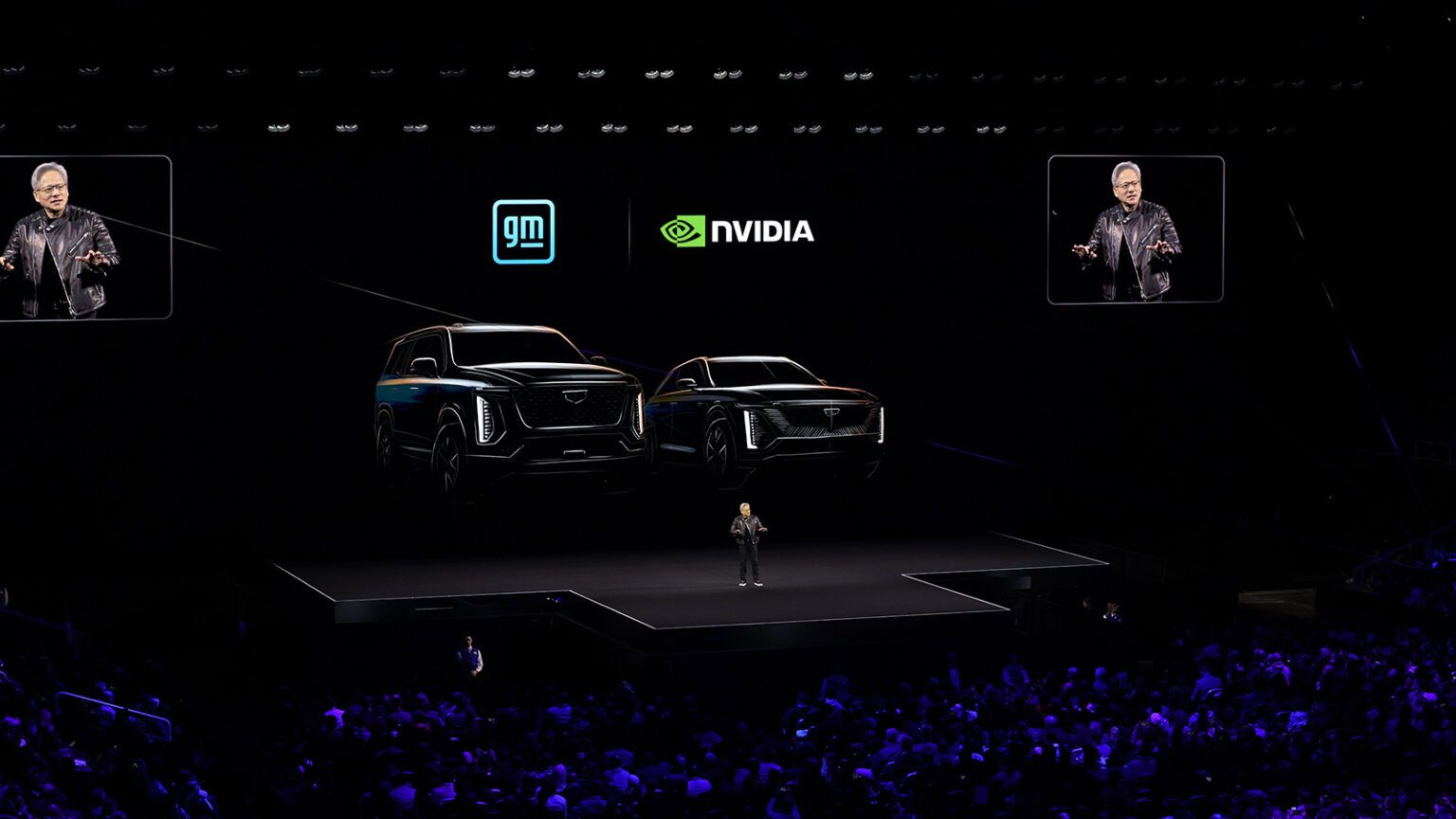
Nvidia’s reach extends far beyond traditional computing. At GTC 2025, Nvidia announced a major partnership with General Motors to build their future self-driving car fleet. Three focus areas are:
Huang tied it back to 2012’s AlexNet breakthrough. “That moment inspired us to go all-in on self-driving cars.” Over a decade later, Nvidia’s tech is in nearly every major automaker’s pipeline.
Beyond hardware and robotics, Nvidia is also investing heavily in software and AI models. Huang talked about:
Despite the fireworks, Nvidia’s stock closed 3% lower.
GTC 2025 wasn’t about selling GPUs or a product showcase—it was about selling a future.
With open-source models (Groot), software (Dynamo), and partnerships (GM, Disney), Nvidia is building an AI empire that’s sticky, scalable, and inescapable. Robotics and AVs are Nvidia’s new frontiers. As Huang put it - “AI isn’t slowing down, and neither are we.”
How we see it is that the AI revolution just grew legs—literally. Whether Nvidia’s stock dip is a blip or a warning, one thing’s clear - the company isn’t just trying to lead the AI race—it’s starving for it!
But with the AI market too unpredictable, we never really know what comes next! So stay tuned!
...Loading Related Blogs
Trusted by top platforms for our transformative solutions and exceptional results: