
 Add as preferred on Google
Odoo Customization Guide for Smarter ERP DecisionsRead More
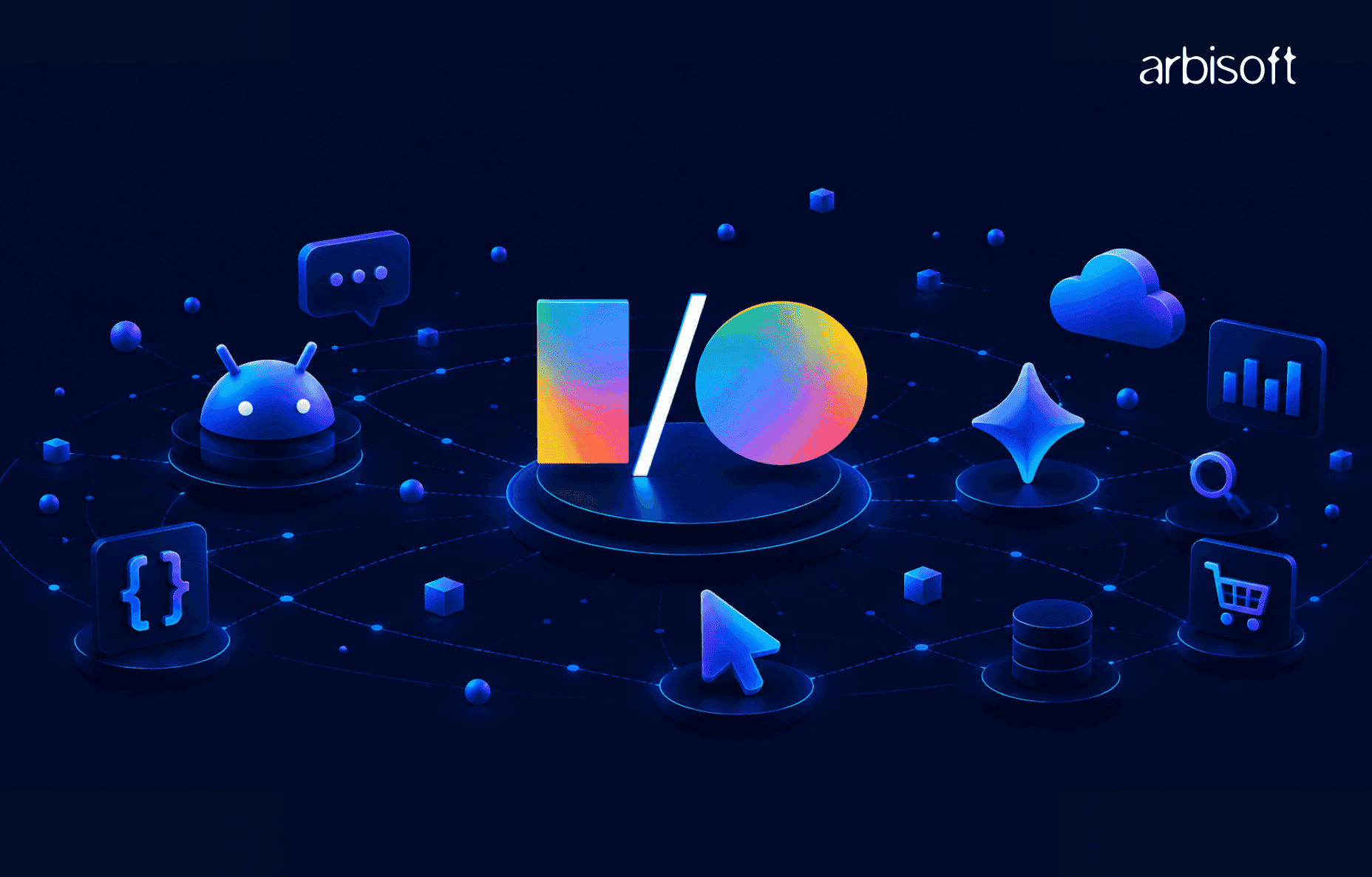
Google held its annual I/O developer conference on May 19, 2026, at Shoreline Amphitheater in Mountain View, California. The keynote ran for nearly two hours and covered a lot of ground.
But underneath the product announcements and stage demos, one idea kept coming up in different forms.
Google wants AI to stop waiting for instructions and start doing things on its own.
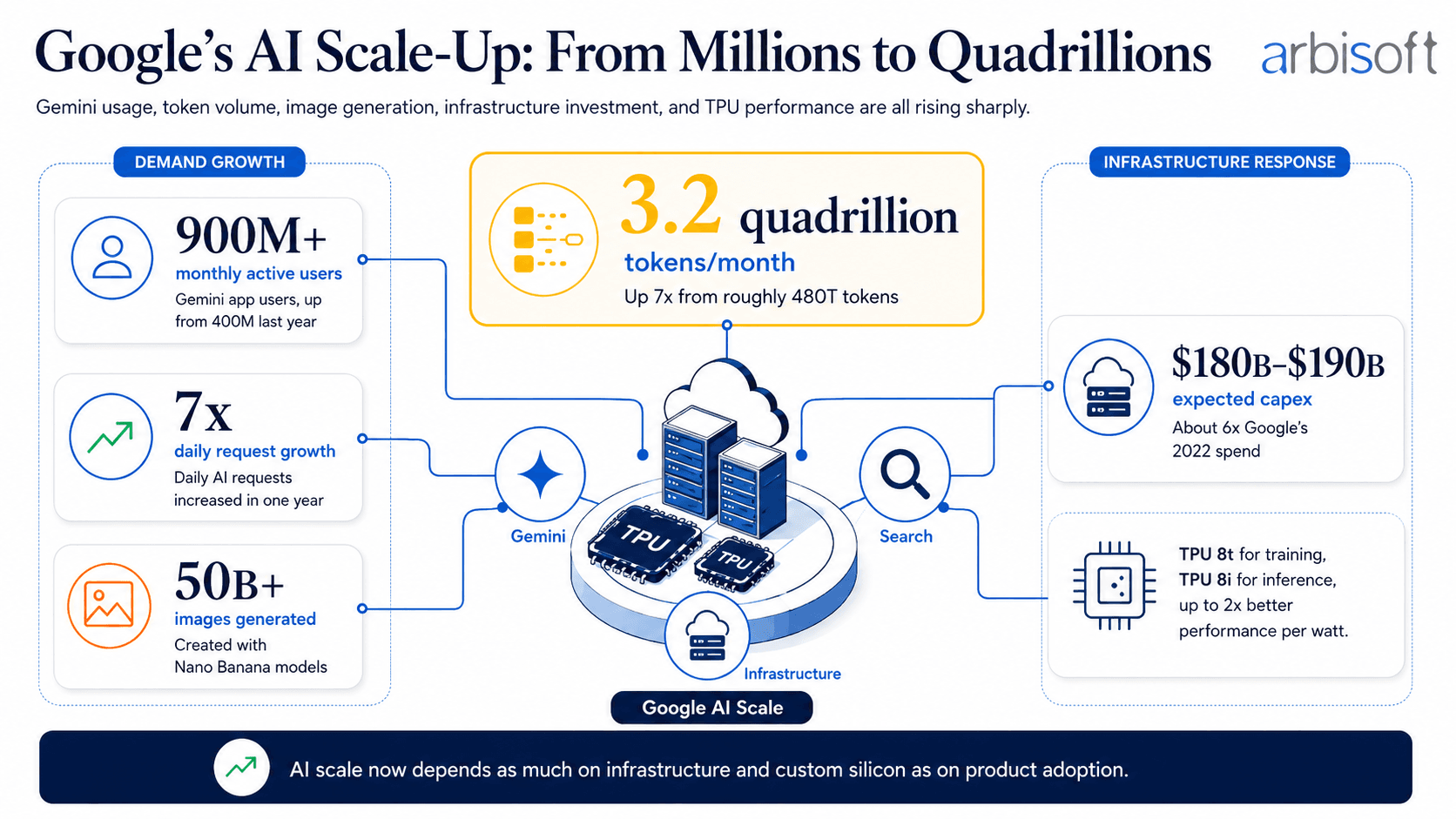
CEO Sundar Pichai called the past year a period of “hyper progress.” He backed it up with numbers that were hard to ignore. Before the product announcements even begin, those numbers already explain where things are heading.
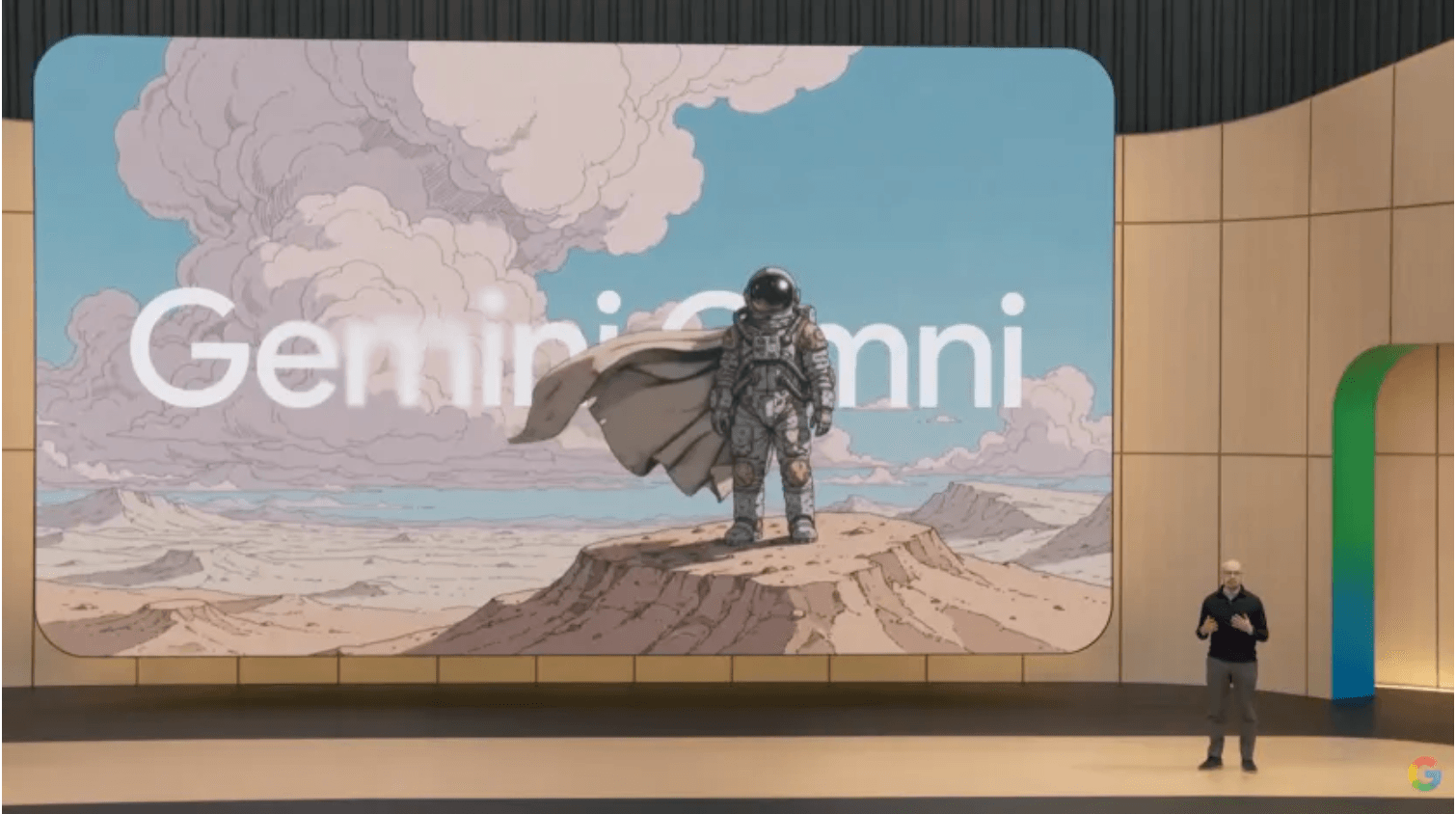
Image Source: Google
The Gemini app had 400 million monthly active users at last year's I/O. That number has since crossed 900 million, more than doubling in a year, with daily requests growing over seven times in that same period.
Token volume tells a similar story. Two years ago, Google was processing 9.7 trillion tokens a month across its surfaces. At last year's I/O, that had grown to roughly 480 trillion. Pichai said that number has jumped 7x to over 3.2 quadrillion tokens per month. He acknowledged the unit himself on stage: "Never imagined I'd say quadrillion in an I/O keynote, but here we are."
On image generation alone, more than 50 billion images have been created with Google's Nano Banana models since launch. To keep up with all of this, Google expects capital expenditure this year to land between $180 billion and $190 billion, roughly six times what it spent in 2022.
A significant part of that goes into new custom silicon. Google announced its first dual-chip TPU generation. The TPU 8t chip handles large-scale AI training and delivers nearly three times the raw compute of its predecessor. The TPU 8i chip handles inference and is optimized for speed and efficiency. Both deliver up to two times better performance per watt.
With that context in place, here is everything Google actually announced.
Google Search is still the company’s most important product, and I/O 2026 made clear it is being rebuilt around AI from the ground up.
AI Mode, which launched one year ago, has surpassed one billion monthly users. Google’s response was to push further still.
The search box itself has been fully redesigned. It dynamically expands as you type, accepts images, files, videos, and Chrome tabs as input alongside text, and uses AI‑powered suggestions that go beyond autocomplete by anticipating your intent rather than just completing your words. Pichai called it the biggest upgrade to the search box in over 25 years.
Search can now build custom responses entirely on the fly. Rather than fixed result layouts, it assembles interactive visuals, tables, graphs, and simulations tailored to each individual query. These generative UI capabilities will begin rolling out broadly in summer 2026.
The Deeper Change Is What Google Calls Information Agents
Information agents run in the background around the clock. If you are apartment hunting, you can describe your exact requirements and the agent will continuously scan for matching listings and notify you. If you follow an athlete waiting for a sneaker collab, the agent alerts you the moment a drop lands. Information agents will roll out first to higher‑tier AI subscribers like Pro and Ultra.
Google is also expanding Personal Intelligence in AI Mode to a wide range of countries and languages, with no subscription required. Users can securely connect apps like Gmail and Google Photos, and Google Calendar support is coming soon.
Search has essentially stopped being a place you go to look things up. It is becoming a system that monitors things on your behalf around the clock. That shift sets the stage for the model powering all of it.
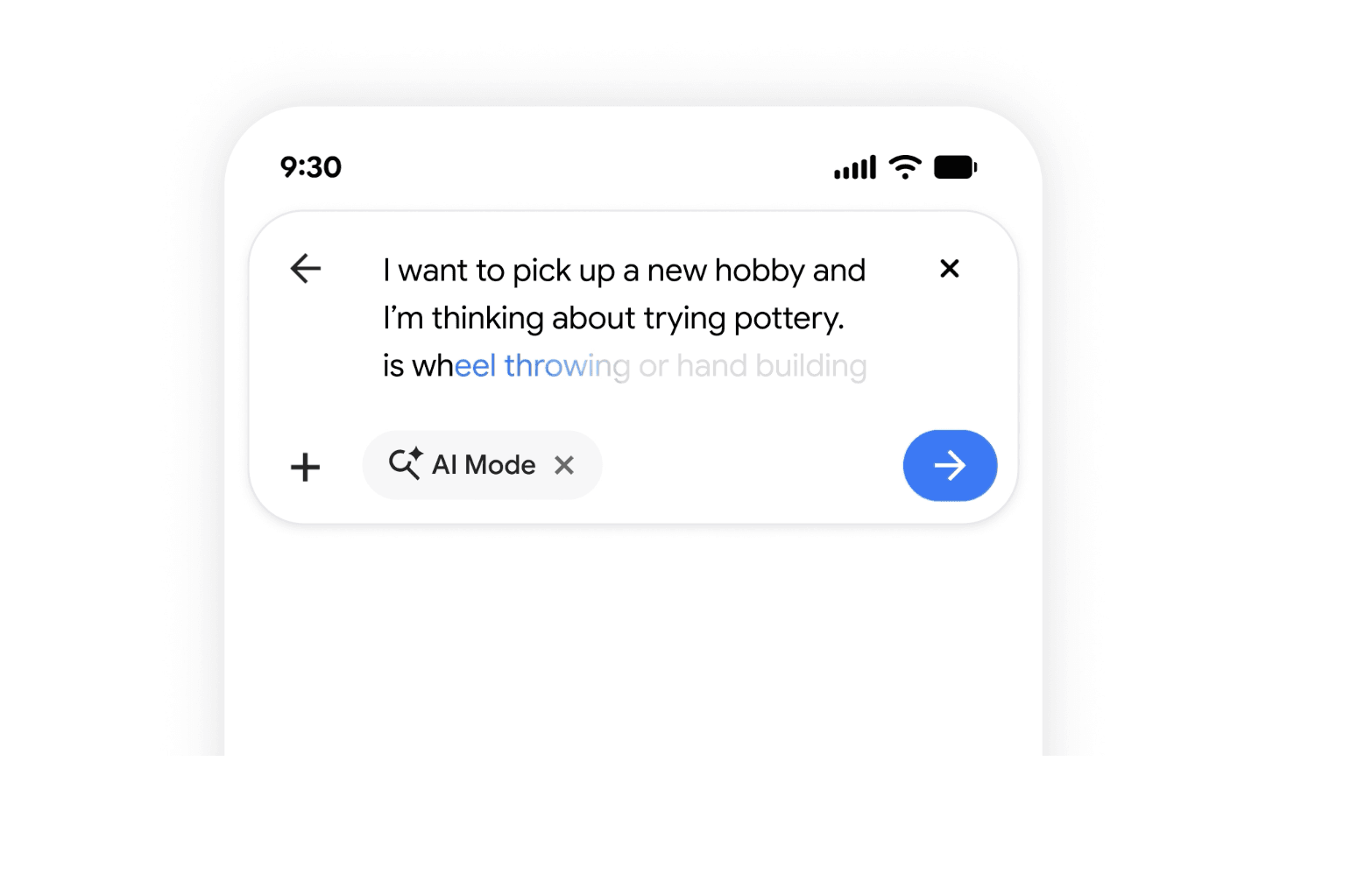
Image Source: Google
Google launched Gemini 3.5 Flash as its strongest model yet for coding and autonomous AI agents. The model can independently execute coding pipelines, manage research projects, and in internal tests, help build the core of a working operating system from scratch.
Google claims Gemini 3.5 Flash produces outputs four times faster than competing frontier AI models while maintaining high reasoning performance. It also outperforms the previous Gemini 3.1 Pro on coding and agentic benchmarks, which is notable for a Flash‑tier model that also costs less to run.
To show what that speed means at scale, Pichai described how inside Antigravity, 93 parallel sub‑agents running on Gemini 3.5 Flash built a working operating system core from scratch in about 12 hours, making over 15,000 model requests and processing 2.6 billion tokens in the process.
Gemini 3.5 Flash is now the default model in AI Mode, the Gemini app, and the Gemini API. The heavier Gemini 3.5 Pro is in internal testing and is expected to arrive soon. The speed of 3.5 Flash goes beyond benchmark gains and is what makes the next announcement possible even when your device isn’t active.
Image Source: Google
Gemini Spark stood out as the most talked-about announcement of the day by moving beyond the idea of a chatbot into an autonomous agent.
Spark runs on virtual machines in Google Cloud and operates 24/7. Your device does not need to be on for it to work. It connects to Gmail, Docs, Calendar, and Google Workspace from the start, with third‑party app support via MCP coming later this summer.
Google describes Spark as transforming Gemini from an assistant that answers your questions into an active partner that does real work on your behalf and under your direction. During the keynote demo, Spark was shown managing a block party, tracking RSVPs, drafting invitations, and sending follow-up reminders automatically, the kind of multi-step task that normally takes real attention across several days.
Spark is rolling out to trusted testers this week and will be available in beta to Google AI Ultra subscribers in the US next week. Google also plans to bring Spark to Gemini desktop apps, including on Mac, later this year, where it will be able to interact with local files and automate tasks.
Spark is Google’s clearest answer to what a personal AI agent actually does day to day. But agents are not only for productivity. Google also brought them into creative work, which leads to the next announcement.
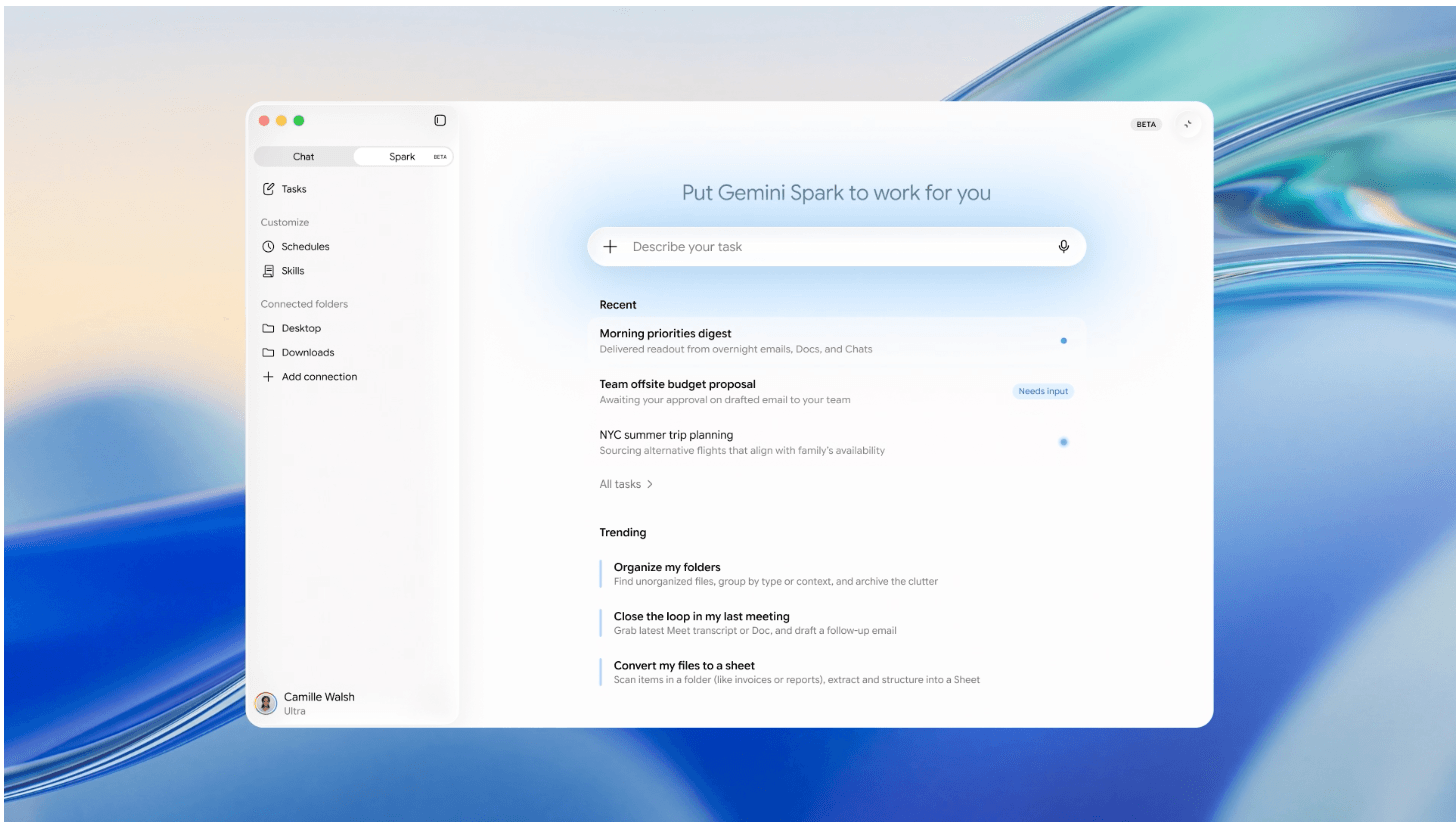
Image Source: Google
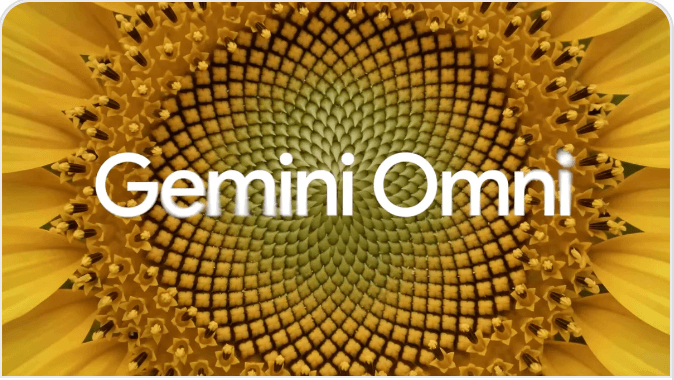
DeepMind CEO Demis Hassabis introduced Gemini Omni as a model that combines Gemini’s AI capabilities with its media generation tools including Veo, Nano Banana, and Genie. He described it as “our new model that can create anything from any input.”
Gemini Omni combines an understanding of physics with Gemini’s knowledge of history, science, and cultural context, bridging the gap between photorealism and meaningful storytelling. The keynote demo showed a claymation‑style educational video about protein folding generated entirely from a text prompt, and a separate sequence where someone asked Omni to transform a metal sculpture into one made of bubbles, with the model adjusting the object while keeping the rest of the scene physically consistent.
The first release, Gemini Omni Flash, currently generates short clips of a few seconds. Google DeepMind has framed this as a deployment decision to manage compute demand at scale, not a ceiling on what the model can do. A higher‑tier Omni Pro variant is planned for later.
Omni Flash is available today for Google AI Plus, Pro, and Ultra subscribers globally through the Gemini app and Google Flow. YouTube Shorts and the YouTube Create app get access starting this week at no cost.
Video is the most visible part of this creative push, but Google also expanded its creative tooling on the music side as well.
Google Flow, the company’s AI creative studio, received significant updates at I/O. The Flow app is now available on Android in beta, with iOS coming soon. The Flow Music app is available now on iOS, with Android coming soon.
Flow Music lets users upload a recording and then prompt Gemini to generate additional musical elements around it, turning a rough melody or voice note into a fuller, produced track. The tool is aimed at people with a creative idea but without the equipment or technical skills to execute it on their own.
These tools sit alongside Gemini’s Nano Banana‑based image tools as part of a broader effort to make creative production accessible without specialized software. Speaking of which, image generation got its own dedicated announcement.

Image Source: Google
Google announced new AI image creation and editing capabilities built on the Nano Banana family of models. The system treats every element in an image as an individual object rather than a flat file, which means you can create, swap, or adjust specific parts without affecting everything around them.
This builds on a foundation Google has been developing for a while. The original Nano Banana launched in August 2025 and attracted millions of first‑time users to the Gemini app within days. By mid‑October, it had generated more than 5 billion images. The updated Nano Banana 2, released in early 2026, brought faster generation, sharper detail, and much higher‑resolution output, with 4K quality associated with the Nano Banana Pro line.
These Nano Banana‑powered tools are available now to trusted testers and will roll out to Google AI Pro and Ultra subscribers in Workspace later this summer.
Image and video tools are now woven through what Gemini does across every surface. The next announcement takes that integration into the tools developers use every day.
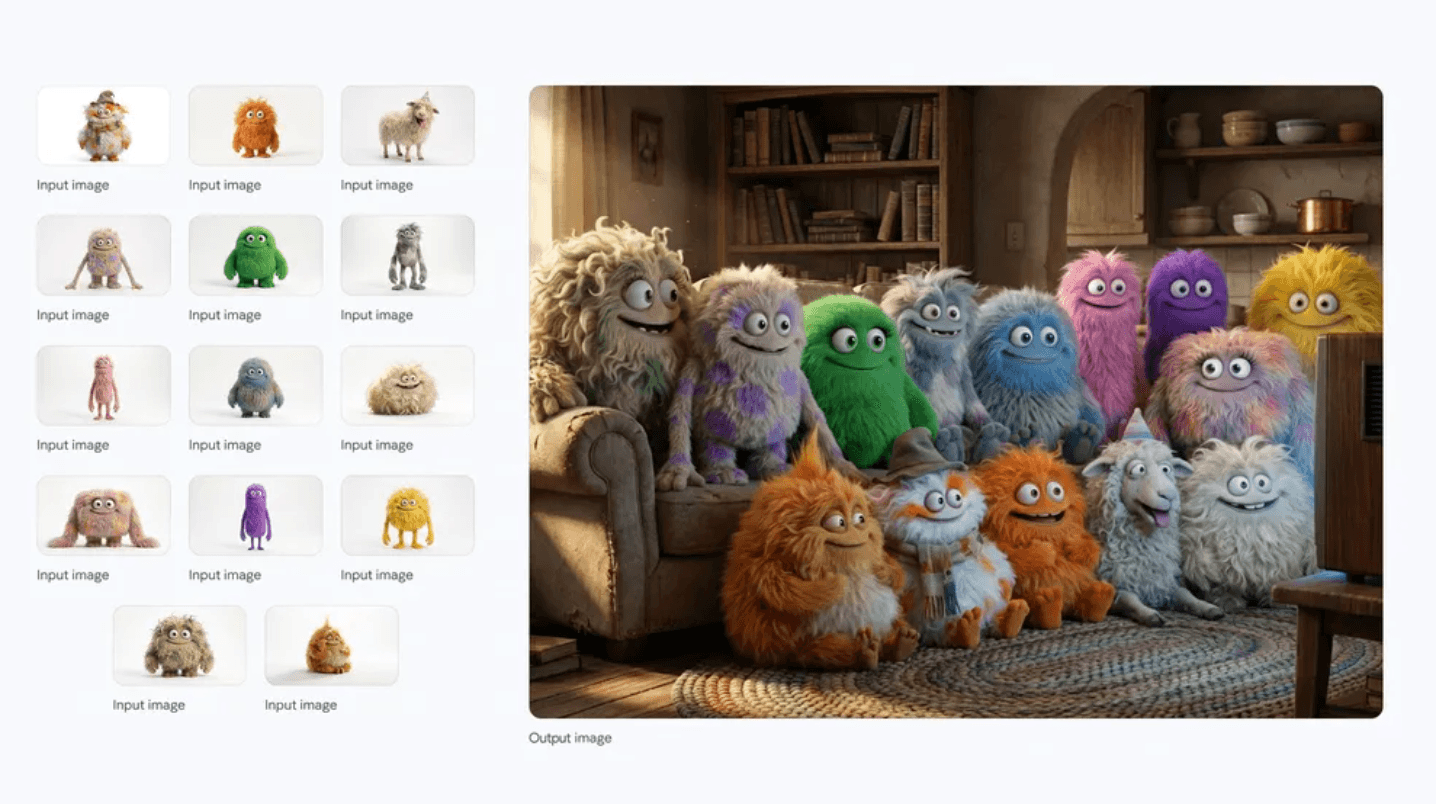
Image Source: Google
Google launched Antigravity 2.0, a new agent‑first desktop app for coding that runs on Gemini 3.5 Flash. Inside Antigravity, the platform leverages Flash’s higher token throughput and efficiency to make agentic coding workflows feel much faster than prior generations.
Antigravity 2.0 is available broadly for developers. It supports CLI tools, software development kits, voice input, and Android and Firebase integrations.
Google also announced native Android‑oriented coding support in Antigravity, along with Google Workspace integrations and a new AI Studio mobile app.
Antigravity is also being connected to over 30 major life science databases and tools through a new initiative called Gemini for Science, available today on GitHub and inside Antigravity as Science Skills.
For developers, Antigravity 2.0 is where Google’s agent story becomes most concrete. But agents are also being applied to everyday consumer behavior, as the next announcement shows.
Image Source: Google
Google’s Universal Cart lets you add products from different retailers across the web into one Gemini‑powered cart. Once items are in there, the agent tracks price drops, flags stock changes, and even identifies product incompatibilities. If you are building a custom PC and add parts from several retailers, the cart will flag any component that does not work with the rest and suggest alternatives.
Because the cart is built on Google Wallet, it also pulls in your payment method perks, loyalty information, and merchant offers. When you are ready to buy, you can check out through Google’s payment system without visiting each retailer separately. Universal Cart arrives in Search and the Gemini app in the US this summer, with YouTube and Gmail support to follow.
Shopping is the kind of task most people handle across multiple tabs and multiple sessions. Google is betting that consolidating all of it into one agent‑managed experience is a meaningful enough convenience that people will hand the workflow over. From shopping, Google moved to the product category that got the biggest reaction in the room.
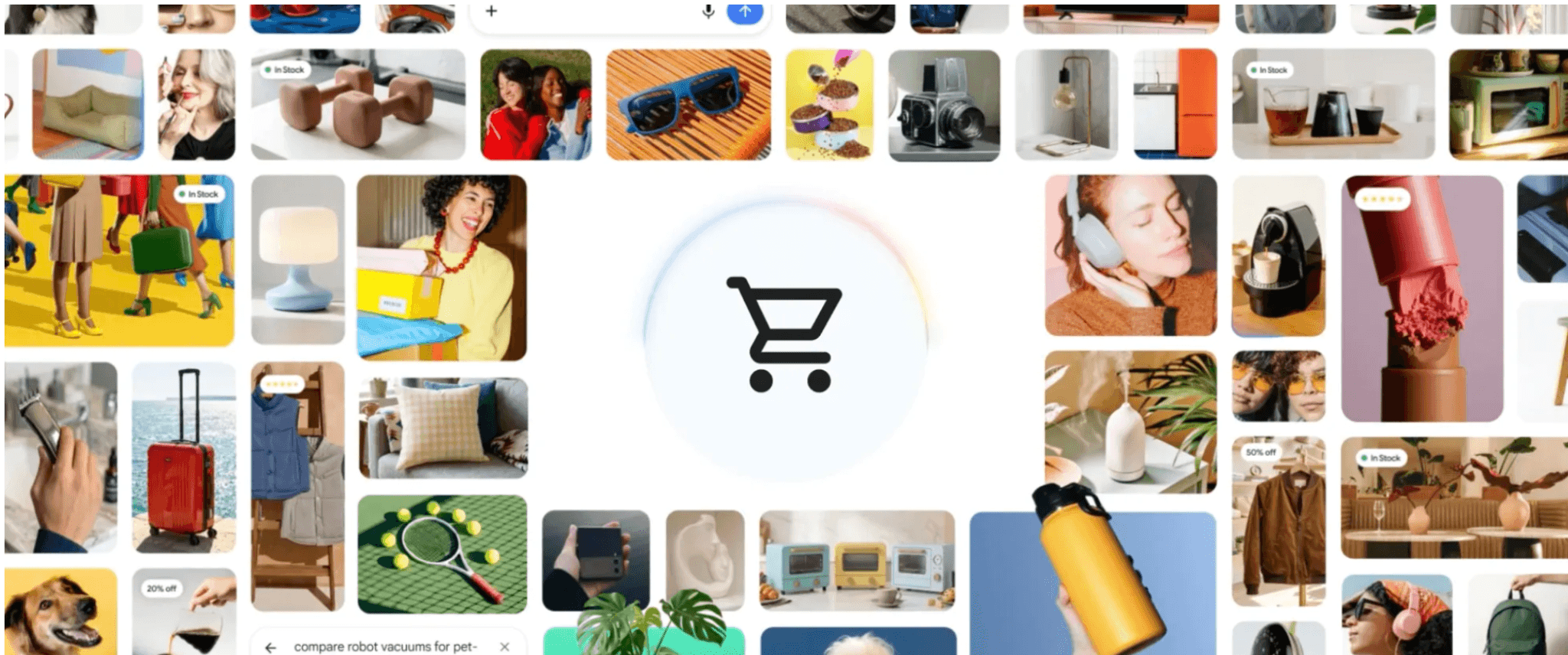
Image Source: Google
Two types of intelligent eyewear are in development, both built on the Android XR platform in partnership with Samsung for the hardware, and Warby Parker and Gentle Monster for the frame designs. The first type, arriving this fall, is audio‑only. Speakers built into the temples let Gemini speak directly into your ear, while cameras on the frames allow Gemini to see what you are looking at, so you can ask questions about the real world without touching your phone.
The second type adds a small display window in the lens that can show text messages, live directions, and search results. Both versions support live language translation, and the display version superimposes translated text directly into your field of view.
Both types support Nano Banana capabilities. You can point the cameras at a scene, ask Gemini to take a picture, and use the model to edit the image directly from the glasses.
The glasses are not a mass‑market product yet, but they represent the clearest physical signal of where Google’s AI is heading. While that hardware is still months away, several software features announced at I/O are available immediately.
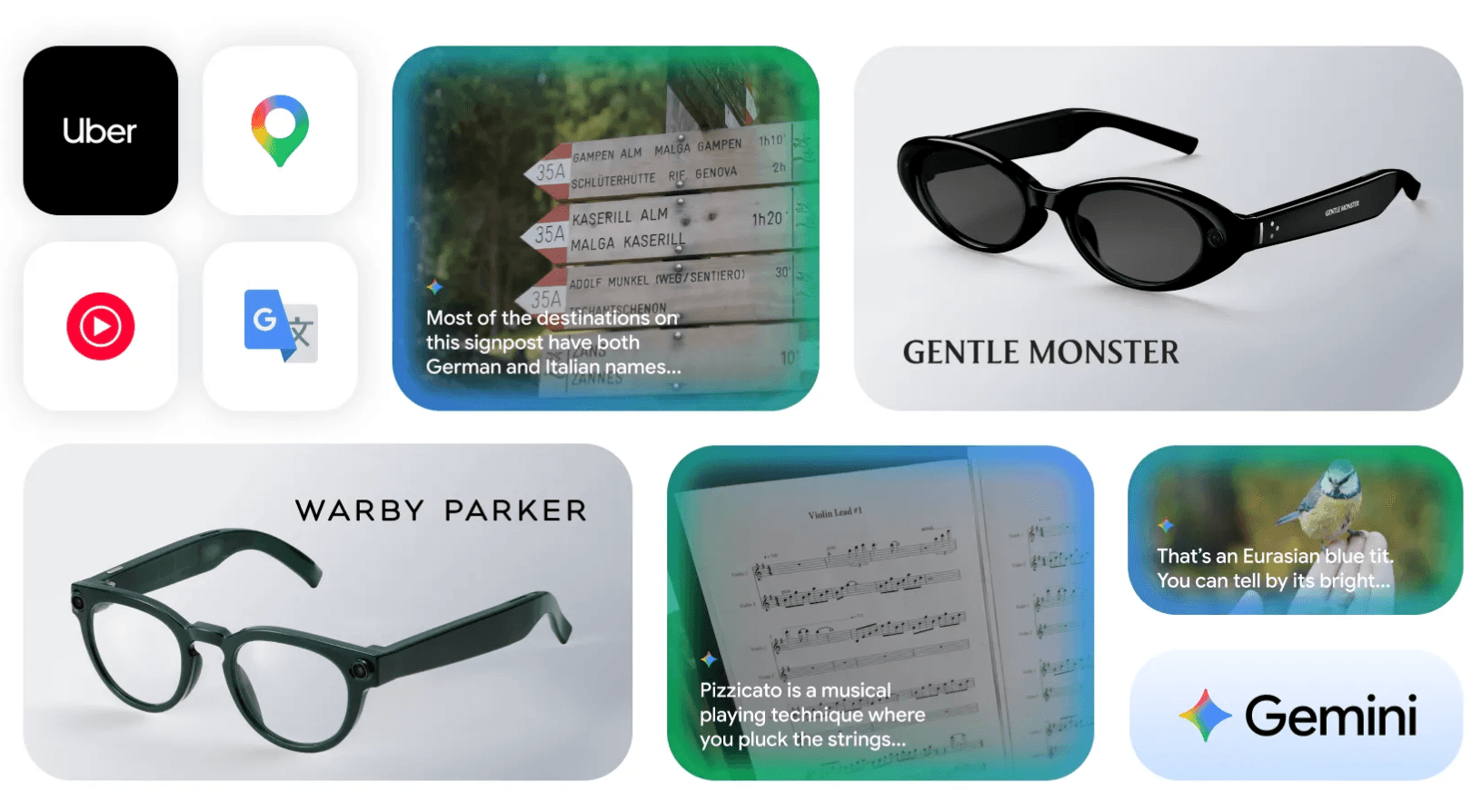
Image Source: Google
Several practical updates landed across Google’s productivity and consumer apps.
Docs Live lets you create and edit documents by talking out loud. You describe what you want, and Gemini writes it, structures it, and pulls in citations from the web. Voice capabilities are also coming to Gmail and Keep later this summer. In Keep specifically, the voice mode organizes free‑flowing thoughts into concise, structured notes.
Google also announced updates to AI Inbox, a Gmail feature rolling out to AI Plus, Pro, and Ultra subscribers that splits your inbox into suggested to‑dos and topics to catch up on, appearing above the regular inbox in the side panel.
Google Photos is getting a wardrobe planning feature that will help you decide what to wear. AI pulls in images of clothing from your Google Photos library, organizes clothing items into a digital closet, lets you put items together to create outfits, and lets you virtually try them on with a digital avatar.
None of these are headline announcements individually. Together they show how thoroughly Google is threading AI into the tools people use every single day.
Image Source: Google
Four more productivity features also landed at I/O.
Daily Brief is a personalized digest of your day ahead, pulling from Gmail, Calendar, and Tasks to prioritize what needs attention and suggest next steps. It is rolling out today to Google AI Plus, Pro, and Ultra subscribers in the US.
Ask YouTube lets you search video content through natural language. Ask it how to grill a steak and an agent finds the relevant clips and jumps directly to the exact moment in each video that answers your question, rather than leaving you to scrub through manually.
Gmail Live brings conversational search to your inbox and rolls out to Google AI Pro and Ultra subscribers in the US this summer on Android and iOS.
The Gemini app is also moving from daily prompt limits to a compute‑used model that factors in the complexity of your prompt, the features you use, and the length of your chat. Limits refresh every five hours until you reach your weekly limit, meaning simple text prompts cost far less than complex video or coding tasks.
These features collectively show how thoroughly Google is threading AI into the tools people use every day. Even the question of whether AI‑generated content can be trusted got its own dedicated announcement.
Google has been integrating SynthID into its generative media models since 2023, watermarking over 100 billion images and videos and 60,000 years of audio. Companies including OpenAI, Kakao, and ElevenLabs are now bringing SynthID technology to their own AI‑generated content, building on an earlier partnership with Nvidia.
Google is also launching a new AI Content Detection API on Google Cloud’s Gemini Enterprise Agent Platform, giving businesses a way to identify AI‑generated media from both Google and other popular models. Users in Search and Chrome will be able to right click any image to check whether it was captured by a camera or generated by AI.
The fact that OpenAI is adopting a Google‑developed standard is notable on its own. It points toward parts of the AI industry moving toward shared infrastructure for trust and verification, even while competing aggressively everywhere else. The final section of the keynote moved into territory beyond consumer products entirely.
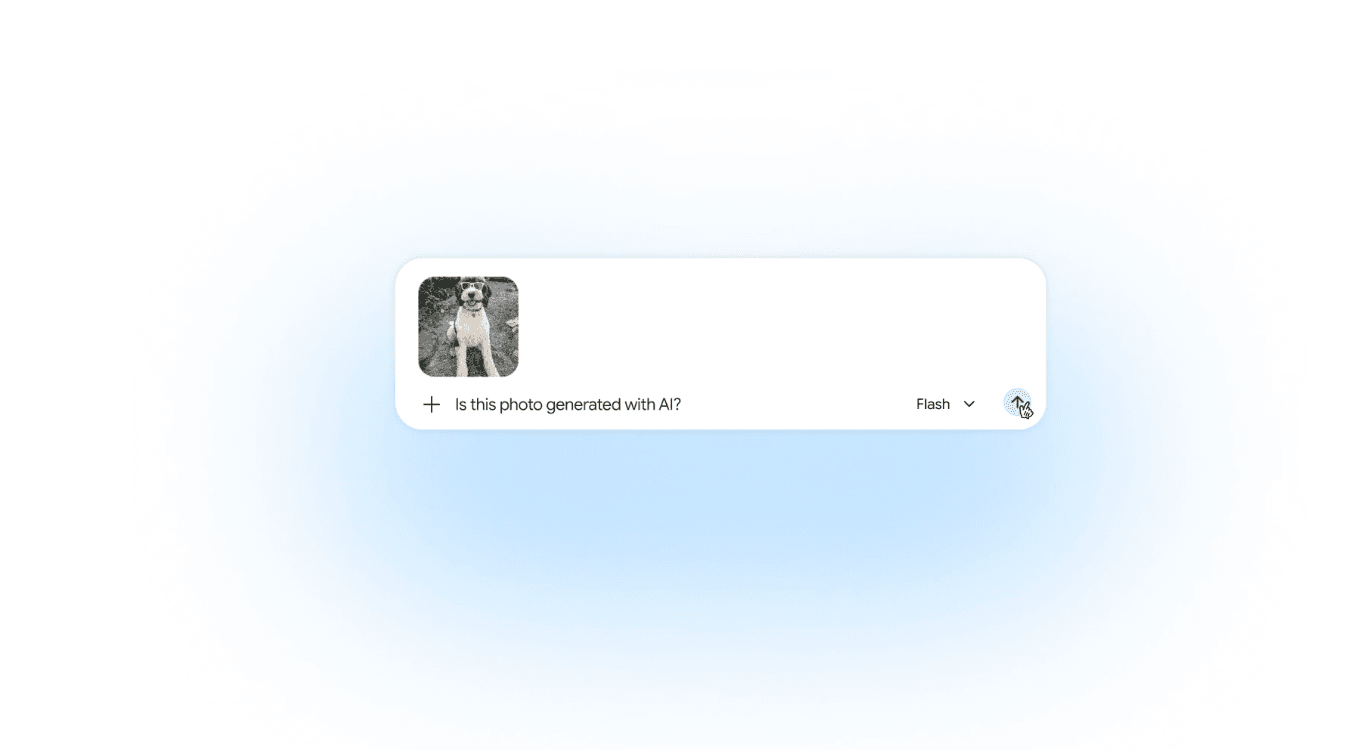
Image Source: Google
The closing section, delivered by DeepMind CEO Demis Hassabis, covered four announcements aimed at real‑world scientific and security impact.
WeatherNext is an AI weather forecasting model Google developed to predict extreme events. A video shown at I/O demonstrated how it helped the National Hurricane Center issue more accurate and timely forecasts ahead of Hurricane Melissa’s landfall in Jamaica in 2025, giving the public earlier warning than traditional models would have allowed.
Gemini for Science brings together AI tools to help accelerate scientific research, connecting Google’s Antigravity platform to over 30 major life science databases and tools. It is available today on GitHub and inside Antigravity as Science Skills.
Co‑Scientist is a collaborative AI partner built with Gemini to help researchers accelerate scientific breakthroughs. It is designed to move research teams from initial idea to usable code and simulation faster than working alone.
Code Mender is a new security tool that automatically finds vulnerabilities in codebases and patches them. Google is inviting outside experts to test it. Hassabis closed the keynote by saying “AGI is now on the horizon,” framing all of these tools as early steps toward AI that genuinely accelerates human progress.
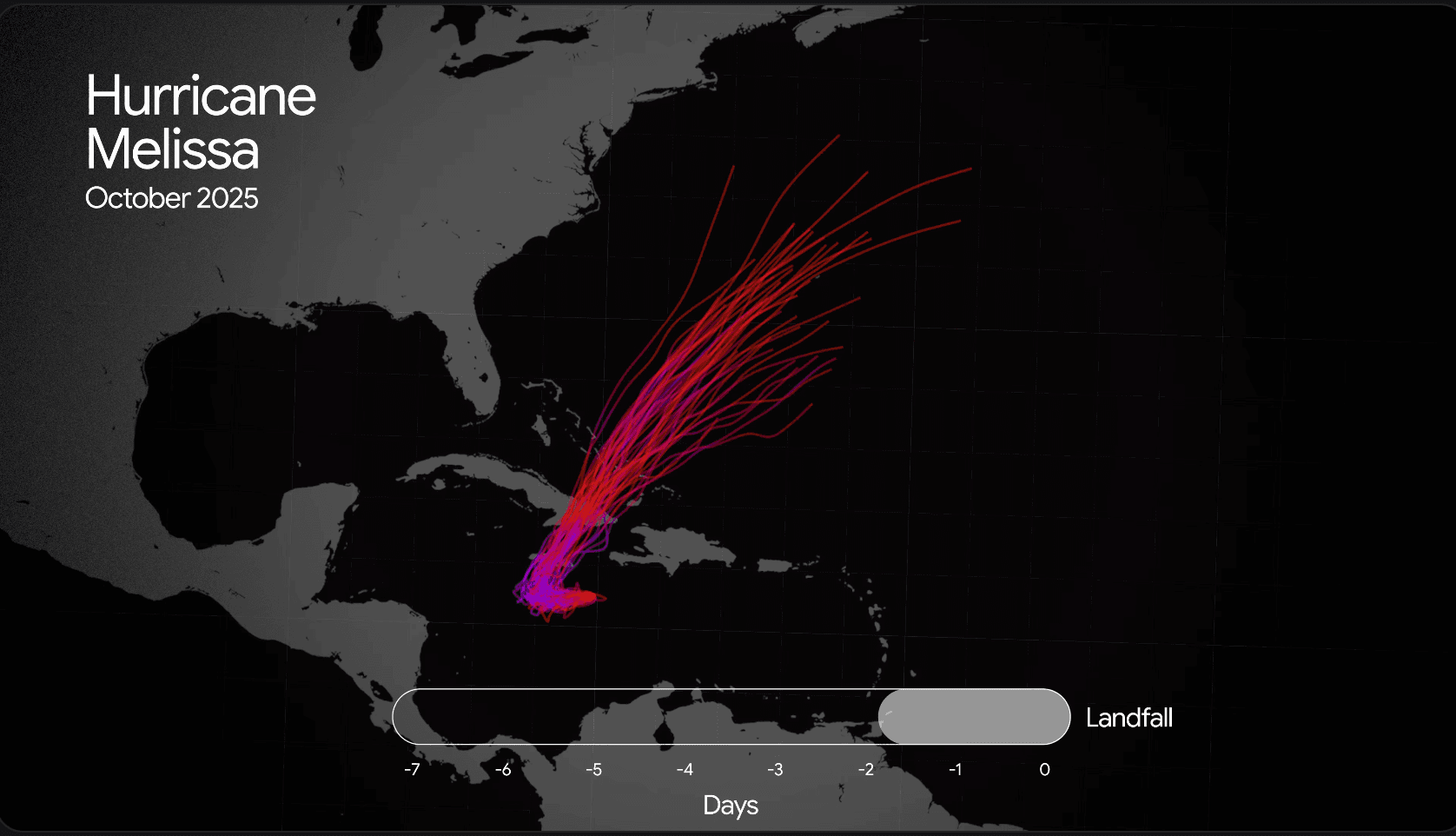
Image Source: Google
Taken together, these changes point to a fundamental shift in how technology will be experienced across the board. For everyday users, the promise is less friction: fewer repetitive tasks, less manual coordination, and more systems that anticipate needs rather than wait for instructions. But that convenience also comes with a quieter trade‑off, where decisions, recommendations, and even actions are increasingly mediated by AI systems that operate beyond direct visibility.
For developers and builders, the internet is becoming less about designing static interfaces and more about designing behaviors for autonomous agents. Applications will need to be structured in ways that allow AI systems to interact with them, reason over them, and execute tasks across them. That changes what “building software” means, shifting it closer to orchestrating intelligent systems than writing linear user flows.
At an infrastructure level, the web itself starts to look less like a collection of pages and more like a network of agents communicating, negotiating, and completing tasks on behalf of users. This introduces new opportunities for scale and automation, but also raises important questions about reliability, accountability, and how much control users ultimately retain in an agent‑driven environment.
Google did not announce one hero product at I/O 2026. It announced more than a dozen things that all point in the same direction: AI stops being a tool you open when you need it, and starts being infrastructure that runs in the background of your daily life.
Search monitors things for you. Spark handles your tasks while your laptop is closed. Omni edits your videos. The Universal Cart tracks your shopping. Smart glasses put Gemini in your ear before you even think to check your phone. WeatherNext helps save lives. Code Mender secures codebases. Gemini for Science speeds up research that takes years.
If this year’s I/O had a single thesis, it was that AI should not be a destination you visit. It should be the infrastructure you live inside. Google has placed a very large, very expensive, and coherent bet that agentic AI is the next computing paradigm.
Whether all of this works as cleanly in practice as it did on stage is a fair question, one that will get answered over the next few months as these features reach real users. But Google showed up at I/O 2026 with a clear direction, products shipping today, and the capital to sustain it for years.
The central theme is the shift toward agentic AI, where systems do tasks independently rather than just responding to prompts.
It refers to an internet where AI agents actively perform actions on behalf of users, including planning, monitoring, and executing tasks across apps and services.
It focuses on speed and efficiency while supporting autonomous agent workflows, making it suitable for always-on background execution across Google products.
Not entirely. It is evolving into an AI-driven system that generates dynamic, personalized responses and can act as a continuous monitoring agent.
Early benefits go to developers and AI subscribers, but many features like AI Mode expansion, Search upgrades, and Workspace integrations will gradually reach general users.
Google is rolling out Google I/O 2026 announcements in phases. Features like AI Mode in Search, Gemini 3.5 Flash, Gemini Spark, and Workspace AI tools are initially available to trusted testers and Google AI Pro or Ultra subscribers, with broader global availability planned over time.
Trusted by top platforms for our transformative solutions and exceptional results: