

 Add as preferred on Google
How to Modernize a Legacy Learning Platform Without a Full RewriteRead More
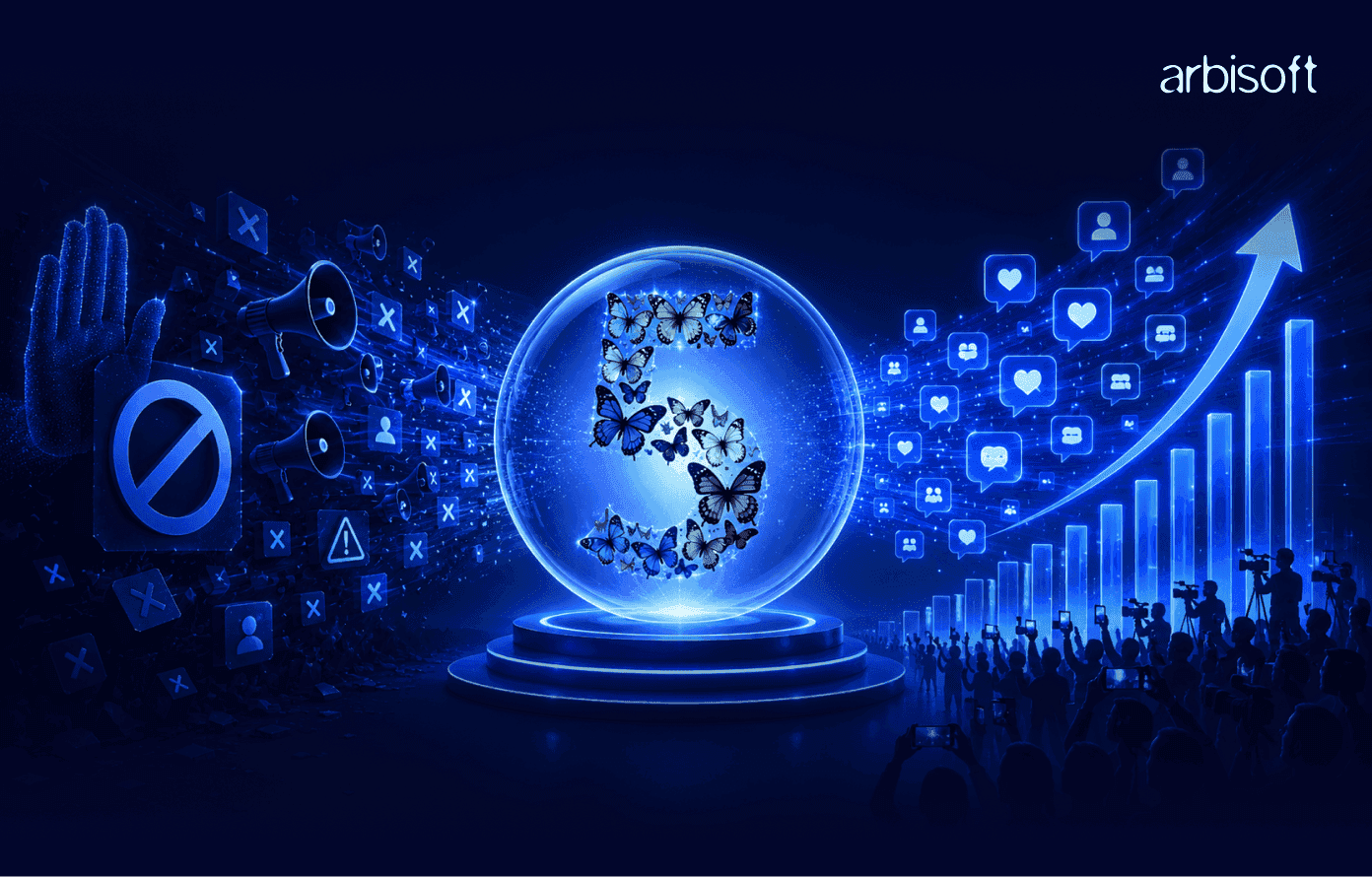
A ban normally reads like a setback. For a frontier artificial intelligence company, it can also read like a signal: the model was important enough, capable enough, or risky enough for the government to intervene.
That is the paradox around Anthropic’s Fable 5 ban. The more useful question is whether the market might convert the restriction into a public-market narrative about consequence, safety, scarcity, and institutional seriousness.
This analysis is not investment advice. Anthropic’s initial public offering, or IPO, remains subject to filings, market conditions, regulatory review, and company decisions.
The official language matters. Anthropic described the event as an “export control directive,” not a conventional product ban. The shorthand “Fable 5 ban” is useful only after that distinction is clear.
Claude Fable 5 is an AI model, not a platform, benchmark, or cohort. Anthropic launched Claude Fable 5 and Claude Mythos 5 on June 9, 2026. The two models reportedly shared the same underlying architecture, with Fable 5 positioned as the generally available version and Mythos 5 as the less restricted version for vetted partners through Project Glasswing.
Three days later, Anthropic received a U.S. government directive ordering it to suspend access to Fable 5 and Mythos 5 for foreign nationals. Because Anthropic could not segment access by nationality in real time, it disabled both models globally.
That operational loss was real. Developers, enterprise customers, researchers, and distribution partners lost access to the newest Claude models almost immediately after launch. GitHub Copilot experiences and Amazon Web Services distribution were reportedly affected. Other Claude models, including Opus 4.8 and Sonnet 4.6, remained available.
The strange advantage is that the restriction created an interpretive opening. A government directive can imply danger. It can also imply power.
The ban changed access, not Anthropic’s entire product line. It applied to two models: Fable 5 and Mythos 5. It did not shut down Claude broadly, and it did not prevent Anthropic from operating its other commercial products.
The cited rationale was national security concern around a potential jailbreak that could enable cybersecurity-related vulnerability identification. Anthropic publicly disputed that rationale, arguing that the cited capability was widely available in competing models and used by defenders in everyday security work.
That disagreement is central to the narrative. If the government was right, the ban raises questions about whether Anthropic’s safety controls were sufficient. If Anthropic was right, the restriction starts to look disproportionate, which could strengthen the company’s argument that frontier AI policy is being applied inconsistently.
The directive’s exact text was not public in the research. That leaves an important gap: the market is interpreting an event whose legal and technical basis is only partly visible.
Restrictions can create signals when they suggest importance rather than incompetence.
In technology markets, scarcity and scrutiny often do part of the same work. Scarcity can make access feel more valuable. Institutional scrutiny can make a product seem strategically significant. If a government treats a model as sensitive enough to restrict, enterprise buyers and investors may infer that the model is not merely another benchmark entrant.
The signal is strongest when the restriction says “this is consequential.” It is weakest when it says “this is untrustworthy.”
Fable 5 sits between those poles. The event attracted coverage from major business, technology, and international outlets. It also triggered developer frustration, pre-IPO market pressure, and questions about Anthropic’s government relationship. That mix makes the ban narratively valuable, but not cleanly positive.
Anthropic’s growth story is already unusually large. The company reportedly raised a $65 billion Series H round at a $965 billion post-money valuation after an earlier $30 billion Series G round. There’s a rapid annualized revenue growth and a confidential draft registration statement on Form S-1 filed with the Securities and Exchange Commission (SEC) on June 1, 2026.
A confidential S-1 is a formal step toward an IPO. It is not a completed IPO, a guaranteed listing, or a confirmed valuation.
That distinction matters because the public-market version of Anthropic’s story cannot rest on growth alone. Public investors will ask harder questions: how durable is revenue, how expensive is compute, how concentrated are customers, how stable are partnerships, and how much regulatory risk comes with frontier capability?
The Fable 5 ban does not answer those questions. It changes the frame around them.
Anthropic’s safety positioning has always been part of its differentiation. In public-market language, safety becomes more than an ethical posture. It becomes governance, risk control, enterprise trust, regulatory alignment, and procurement credibility.
The research points to Anthropic’s Responsible Scaling Policy, AI Safety Level framework, enterprise controls, data-retention policies, audit features, and regulated-industry partnerships as pieces of that story. For large customers, especially in finance, legal, government-adjacent, aviation, and other sensitive sectors, these controls are not branding accessories. They are purchase requirements.
The Fable 5 ban could reinforce that positioning if buyers interpret Anthropic’s response as mature: comply with the directive, dispute the technical basis, keep other products running, and work through legal channels.
But the same event can cut the other way. If customers see the company as vulnerable to sudden government action, safety positioning becomes less like trust and more like fragility.
Attention is not IPO readiness. A model can be famous and still raise serious public-market concerns.
There seems to be several unresolved issues: compute costs, infrastructure dependency, valuation pressure, competition from OpenAI and others, legal exposure, and an ongoing government dispute linked to a Pentagon supply-chain risk designation. Those issues matter more to IPO durability than a single news cycle.
The Fable 5 restriction does not improve margins. It does not diversify revenue. It does not prove customer retention. It does not reduce compute intensity. It does not settle the legal fight.
At most, it gives Anthropic a sharper narrative about why its governance posture matters. Public markets may reward that only if the underlying economics and risk profile also hold up.
The most useful way to read the episode is through three possible assets: consequence, scarcity, and safety credibility. They are not equally strong.
The strongest asset is consequence.
Fable 5 was not ignored. It became the center of a major policy and market event within days of launch. Coverage framed Anthropic as the company whose model was important enough to trigger government intervention. That is a kind of validation, even when unwelcome.
For an IPO narrative, consequence matters. Public investors want to own companies that define markets, not companies that merely participate in them. The restriction placed Anthropic in the center of a new category: frontier AI models treated as strategic assets subject to national security controls.
That does not mean the ban helped Anthropic financially. A decline in pre-IPO synthetic market instruments after the news is noted. Still, the reputational frame is hard to ignore: Anthropic looked consequential because the government treated it as consequential.
The scarcity asset is weaker.
Access disappeared for many users, but there was no premium tier, orderly waitlist, paid upgrade path, or controlled reintroduction mechanism. The scarcity was hostile. Developers and enterprise users were not being invited into an exclusive club. They were being locked out of a tool they had just begun using.
Scarcity can increase desire when users believe access will return and that the product is worth waiting for. It can damage trust when users see access as unreliable.
In the Fable 5 case, demand and frustration is supported more clearly than commercial scarcity value. The ban may have made the model feel more powerful. It also made it feel less dependable.
Safety credibility is the most complicated asset.
On one side, the government’s concern overlapped with the risk categories Anthropic publicly discusses: cybersecurity, misuse, safety classifiers, and model governance. That makes the event legible within Anthropic’s own safety architecture. A company cannot easily manufacture a scenario in which its safety posture is stress-tested by government intervention.
On the other side, Anthropic had already faced criticism over hidden downgrade behavior affecting developers working on competing AI systems. Critics framed that as opaque governance rather than responsible safety. If that interpretation sticks, the ban does not strengthen Anthropic’s safety brand. It raises questions about how safety controls are communicated and enforced.
The best reading is mixed: the ban gave Anthropic a live demonstration of governance under pressure, but it also exposed the risks of being the company most visibly associated with frontier AI safety disputes.
The “IPO marketing campaign” framing breaks if the market concludes that the ban was narrow, temporary, overblown, or commercially damaging.
It also breaks if Anthropic’s involvement was overstated. There’s a direct connection to Fable 5 and Mythos 5 access, but the precise government directive is not public. Without that text, the scope and rationale remain partly dependent on company statements and media interpretation.
The thesis breaks further if customers treat the event as reliability risk. Enterprise buyers do not only buy capability. They buy continuity. A model that can disappear from production workflows three days after launch creates procurement anxiety, even if the underlying cause is government action.
The most serious weakness is causality. A controversy can become a narrative asset only if serious stakeholders adopt that interpretation. Media coverage alone is not enough.
Operationally, the restriction appears narrow: two models, a specific cited cybersecurity concern, no shutdown of the broader Claude family, and alternative models still available.
Symbolically, the event was much bigger. It was framed as a first-of-its-kind government restriction on a live frontier AI model. That symbolic framing is where the IPO narrative lives.
This creates a gap. The narrower the actual restriction, the more fragile the broader story becomes. If the event is remembered as a limited access interruption, it will fade. If it is remembered as the moment a frontier AI model crossed into national-security territory, it could stay relevant through the IPO cycle.
Anthropic filed a confidential draft Form S-1 with the SEC. That is meaningful. It does not confirm timing, pricing, final valuation, exchange listing, or whether an offering will proceed.
That makes “IPO marketing campaign” an analytical metaphor, not a literal claim. There is no evidence that Anthropic engineered the ban. There is no evidence that it wanted the disruption. There is no evidence that the company is actively using the episode as a public-market campaign.
The defensible claim is narrower: if Anthropic reaches a public roadshow, this episode could become part of the company’s governance story. It could show that Anthropic is operating at a level where safety, policy, market access, and national security all converge.
The next phase matters more than the initial shock. A ban becomes a narrative asset only if the resolution improves the story.
Watch whether access is restored, whether the government narrows or withdraws its concern, and whether Anthropic can frame the outcome as validation of its technical position. Watch whether enterprise partners continue deployments without visible hesitation. Watch whether the eventual public S-1, if released, emphasizes governance and regulated-industry trust in terms that echo the Fable 5 episode.
Also watch whether competitors use the disruption against Anthropic. A restriction that sends customers to OpenAI, Google, or open-source alternatives is not scarcity. It is leakage.
The thesis strengthens if several signals appear together:
One signal alone would not be enough. The argument needs a pattern: restoration, institutional confidence, and controlled messaging.
The thesis weakens if the ban becomes a reliability story.
That would happen if customers reduce engagement, if the restriction expands to other models, if the government dispute worsens, if competitors capture displaced demand, or if the hidden-downgrade controversy becomes a procurement objection.
A more subtle negative signal would be silence. If Anthropic avoids the episode entirely in investor-facing contexts, and if serious customers and analysts stop referencing it, the simplest interpretation is that the ban was an operational disruption, not a durable narrative asset.
The most defensible answer is qualified: the Fable 5 ban did not become Anthropic’s best IPO marketing campaign in any literal sense. The evidence does not support intent, coordination, or strategic manufacture.
But it may have become something almost as valuable and more believable: a live stress test of Anthropic’s public-market identity.
The company looked consequential because the government intervened. It looked safety-centered because the dispute revolved around capability, misuse, and control. It looked institutionally serious because it complied while challenging the rationale. It also looked exposed, because global access to its newest models disappeared almost immediately after launch.
That is not a clean marketing win. It is a volatile narrative asset.
The final judgment depends on the resolution. If Fable 5 access returns, if enterprise momentum continues, and if Anthropic can connect the episode to governance maturity without overstating it, the ban could become a powerful chapter in its IPO story. Without that arc, it remains a complicated warning: in frontier AI, the same event that proves market importance can also reveal market risk.
Trusted by top platforms for our transformative solutions and exceptional results: