Add as preferred on Google
How a Repository Health Dashboard Helped Open edX Patch certifi in 48 HoursRead More
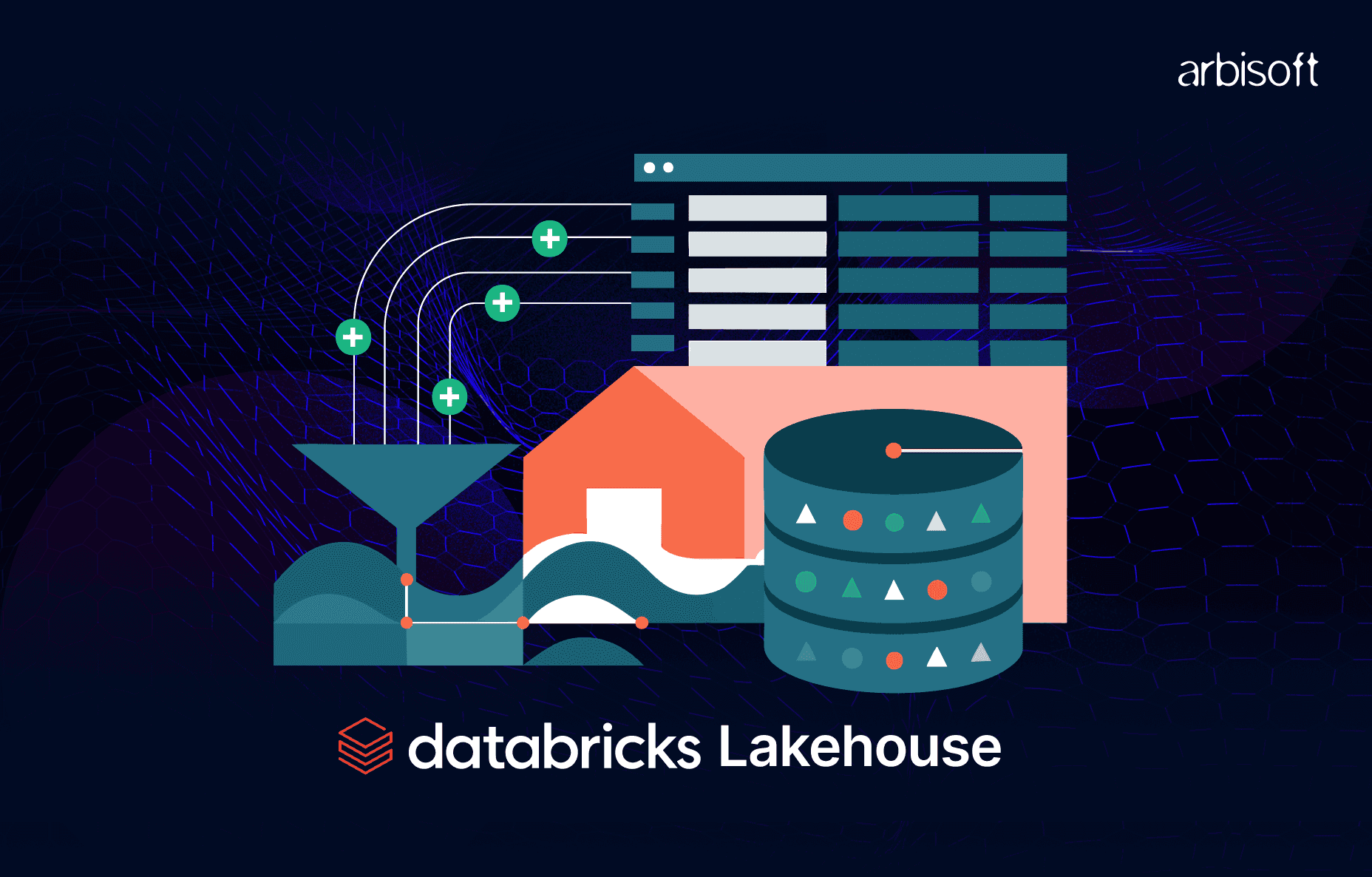
Databricks Lakehouse suits companies that want fewer tools and data copies, with AI on governed data, and a scoped pilot should prove that before migration.
Run a pilot on one cross-team use case before committing to a full migration.
A typical mid-market data stack has a warehouse for BI, a data lake for raw files, a separate ML tool and a different set of access rules in each. Every new AI project starts by copying data. That copying is the strongest reason to consider Databricks, whose lakehouse runs data engineering, SQL analytics, governance and AI on one copy of data kept in your own cloud account. Below are seven strategic benefits of the Databricks Lakehouse for leaders who own the 2027 data and AI budget, each with the capability behind it and the caveat that comes with it, and then a checklist for testing fit in a pilot before any multi-year commitment.
Databricks introduced the lakehouse architecture in 2020, defining it as an open architecture that combines elements of data lakes and data warehouses. In practice, the Databricks Lakehouse keeps raw files and curated tables in open formats on cloud object storage, then runs pipelines, SQL analytics, machine learning and AI agents on those same tables.
It runs inside the customer's cloud account. Databricks documentation says the Databricks Data + AI Platform integrates with the cloud storage and security in that account and deploys the cloud infrastructure for you. Its foundations, Delta Lake, Apache Spark and MLflow, began as open source projects created by Databricks employees. Our comparison of data lakes, lakehouses and data warehouses covers the differences.
The benefits that carry most weight in a 2027 business case are consolidation, open formats, cost control, elastic scale, central governance, AI on governed data and self-service analytics. Each one has a condition attached, and our CIO guide to Databricks benefits covers the efficiency case in more depth.
Databricks lets data engineers, analysts, data scientists and BI developers work on the same governed tables, which removes most of the copies and handoffs between separate tools. Take a fashion retailer. It has country-wide stores and an e-commerce site that runs campaigns on several ad platforms, separate ERPs for HR, finance, supply chain and engineering, and a mix of open source and licensed analytics tools, each holding its own copy of customer and stock data.
On Databricks, Lakeflow pipelines ingest those sources into one set of tables, and demand forecasting models and marketing dashboards then read the same data under one set of permissions. Lakeflow added a Shopify connector in beta in September 2026. The ERPs stay where they are. What shrinks is the analytics layer around them, along with the number of separate skill sets the data team has to hire for.
Other engines can still read your data if strategy changes. Tables use Delta Lake, an open source format, and Unity Catalog can also manage Apache Iceberg tables. According to Databricks, every Iceberg table in Unity Catalog is reachable through the Iceberg REST Catalog API, which supports reads and writes from external Iceberg engines and hands them temporary storage credentials.
For a finance sponsor, that openness limits switching costs on the most expensive asset, which is the data itself. Openness here has edges. External Iceberg engines cannot read views defined in Unity Catalog, foreign Iceberg tables are read-only inside Databricks, and any team that plans to share curated views with another engine should test that path early.
Most of the saving comes from retiring overlapping tools and from automating table maintenance that engineers used to schedule by hand. Predictive optimization runs OPTIMIZE, VACUUM and ANALYZE automatically on Unity Catalog managed tables, which takes those scheduled jobs off the team's list, and VACUUM alone reduces storage cost by deleting data files a table no longer references.
Billing is the caveat. Spend follows usage, and Databricks points teams to the billable usage system table to track serverless costs. A 2027 cost case should compare total spend, including the licences you will retire and the engineering hours now spent on tuning, and it should name an owner for platform spend before the first production workload goes live. Consolidation savings appear only once the old tools are switched off.
Engineers don't have to size clusters or redesign table layouts to absorb a spike. Databricks describes serverless compute as a Databricks-managed service that connects users to on-demand compute, which speeds up start-up and scaling and cuts idle time, and liquid clustering replaces table partitioning and ZORDER. Databricks recommends it for all new tables, streaming tables and materialized views included.
A retailer's Black Friday traffic and a fintech's month-end close are where this shows. Existing tables are the catch, because liquid clustering is not compatible with partitioning or ZORDER and older tables need a planned rewrite before they can use it.
Audited sectors such as fintech and healthcare get the most from this. Unity Catalog gives Databricks one governance layer for tables, files, models and dashboards, and access is managed through privileges and attribute-based policies, including row filters and column masks, set once for all of them. The audit log system table records data access and system activity, and lineage is tracked automatically from source data through to models and dashboards.
The business effect is a single answer when an auditor asks who saw a customer's records. Adoption is a project in itself. Teams with permissions spread across older workspaces will feel that most, and our guide to Databricks Unity Catalog governance covers access control, lineage, auditing and migration in more depth.
Nothing gets copied for a model. Machine learning and AI agents on Databricks read the same governed data as BI dashboards. MLflow tracks experiments and models. Agent Bricks, which Databricks calls its agent developer platform, builds and deploys agents, while MLflow tracing records each step an agent takes for evaluation and monitoring.
Customers are using it. In its February 2026 results announcement, Databricks said its AI products had crossed a $1.4 billion revenue run-rate. Our view is that the platform helps most when an AI use case already exists and is stuck on data access or governance, because that is the blocker it is designed to remove. It won't pick use cases for you, and it can't fix source data nobody owns.
A business user asks a question in plain English and gets an answer without filing a ticket with the data team. Databricks Genie converts each question into SQL using the table and column descriptions in Unity Catalog, and Unity Catalog evaluates access as the end user's own identity, which means a regional sales manager sees only the rows that manager is allowed to see.
Data teams set up Genie Agents (formerly Genie Spaces), domain-specific environments that hold trusted data and business rules. Since September 2026, when the Genie One MCP server became generally available, external AI clients can also query Genie under the same Unity Catalog permissions. Descriptions matter more than they look. Writing them belongs in the rollout plan, because Genie relies on those descriptions to write correct SQL.
Small data needs that are already met make the clearest case against it. We'd be cautious in four situations:
None of these rules Databricks out. They do mean a pilot has to prove the business case before anyone writes a migration plan.
Several capabilities above, the Genie One MCP server included, are recent, so track record counts. Gartner named Databricks a Leader in its 2025 Magic Quadrant for Cloud Database Management Systems, the fifth consecutive year it received that placement. In February 2026, Databricks reported a $5.4 billion revenue run-rate, more than 65% year-over-year growth in its fourth quarter and more than 800 customers consuming at over $1 million a year.
Those figures describe vendor momentum. Fit still has to be tested company by company. As an outlook, our view is that 2027 budgets will ask data teams to support AI agents as well as dashboards, and agents need the same permissions and audit trail as people. A platform decision made early in 2027 leaves time to consolidate data before agent pilots reach production.
A short, scoped pilot answers most open questions. Pick one problem that crosses teams, such as a retail demand forecast that needs sales and stock data, and test each benefit against it.
| Benefit | What to test in the pilot | Best for |
|---|---|---|
| One platform | Number of tools and data copies the use case no longer needs | Companies with several overlapping analytics tools |
| Open formats | Whether a second engine can read the pilot tables through the Iceberg REST Catalog API | Teams with a multi-engine strategy |
| Cost | Daily pilot spend against the licences it could replace | Finance sponsors building the budget case |
| Scale | Run time and spend at peak load on serverless compute | Retail and fintech workloads with seasonal spikes |
| Governance | Row and column access for real roles, plus lineage to the final dashboard | Fintech and healthcare |
| AI and ML | One model or agent trained, traced and served on governed tables | Teams with a blocked AI use case |
| Genie | Share of business users' test questions answered correctly | Organisations with a long BI request queue |
Teams that already run Databricks can start with a health check instead. Arbisoft's Databricks Health Checkup reviews an existing environment for security, reliability, scalability and cost.
No, Databricks leaves operational systems alone. It is an analytics and AI platform, and Lakeflow pipelines ingest data from source systems into governed tables where reporting and AI work happen, while the ERP keeps running day-to-day transactions.
Yes, in the sense that Databricks documentation states the platform integrates with the cloud storage and security in your cloud account. In a standard setup, tables live in your object storage, and Databricks manages the compute infrastructure.
Not through normal use. Unity Catalog evaluates data access as the asking user's own identity, so that user sees only the rows and columns they are allowed to access. A wrong answer from poorly described tables is the more realistic risk, and data teams reduce it by writing clear descriptions for tables and columns, configuring trusted data in a Genie Agent and testing common questions before launch.
It supports Delta Lake and Apache Iceberg. Unity Catalog can manage Iceberg tables and expose them to external engines over the Iceberg REST Catalog API, and for those external clients Databricks recommends Iceberg client version 1.9.2 or later.
The short answer to why consider Databricks for 2027 is consolidation with an AI payoff, meaning fewer tools and data copies under one governance layer, with AI and Genie running on the same tables. Prove that on one project shared across teams before committing to a full migration. If it shows lower tool spend and correct, governed answers for business users, the 2027 case is strong. If not, you've learned that cheaply.
Arbisoft's team of 25+ certified Databricks experts provides consultancy, implementation and health checkups for companies at this decision point. Talk to us about Databricks consulting and implementation to scope a platform assessment for your 2027 plan.
...Loading Related Blogs
Trusted by top platforms for our transformative solutions and exceptional results: