
 Add as preferred on Google
The Future of Education Technology in 2027: How AI Is Changing Learning for All AgesRead More
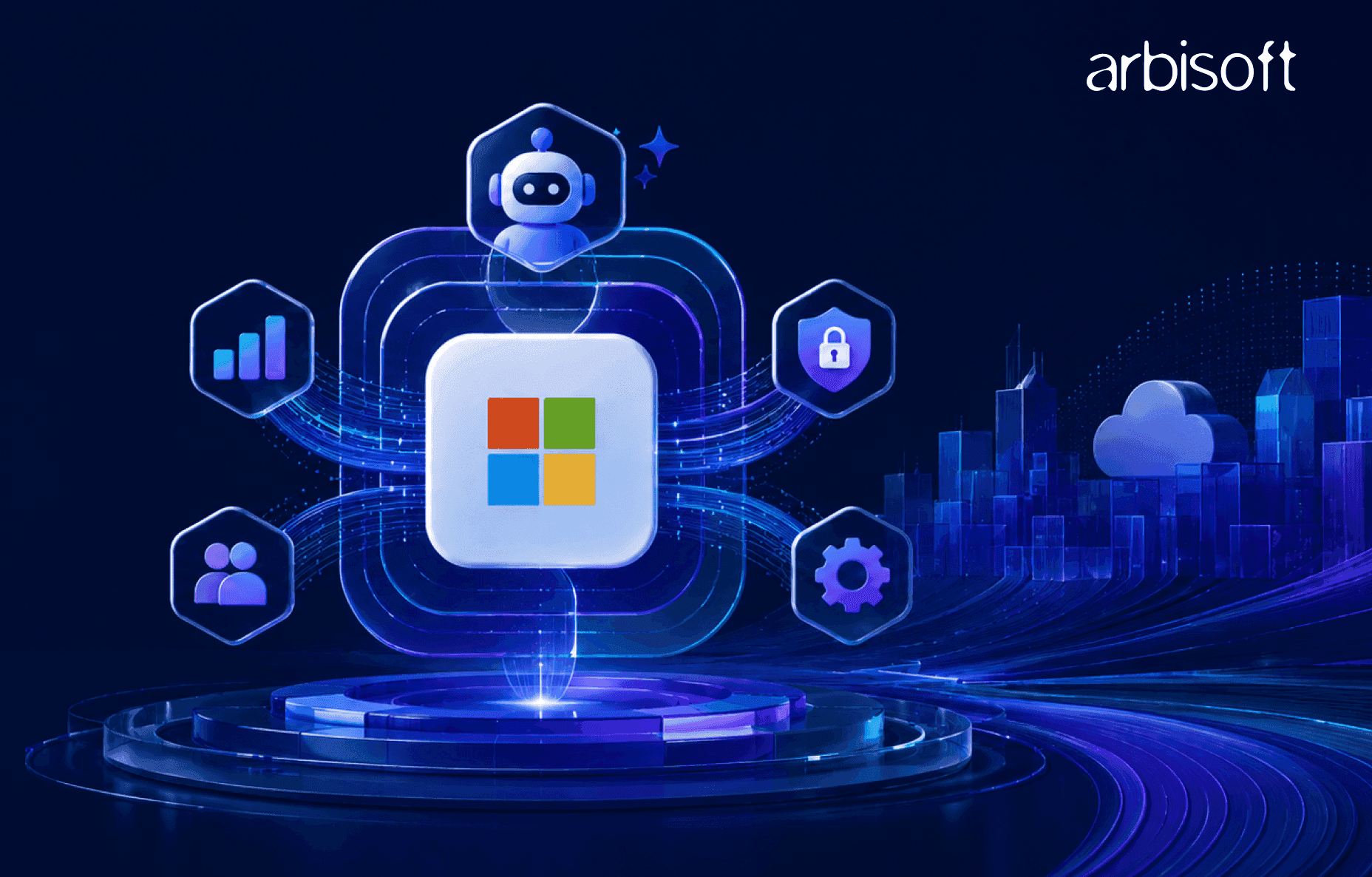
For years, the pitch was simple. Add AI to your tools and your team moves faster. It was a nice upgrade, like a smarter autocomplete. What happened at Microsoft Build 2026 is a different conversation entirely.
On June 2, 2026, at the annual developer conference in San Francisco, Microsoft walked on stage with one clear message. The way we interact with computers is changing, and agents are what comes next.
Satya Nadella opened Build with a clear frame. The software stack is being rebuilt. Not patched, not upgraded. Rebuilt. The new layers are compute, models, context, tools, and runtime, with governance wrapped around all of it. The point he kept returning to was simple. Apps are how people used to interact with computers. Agents are how they will.
This is already visible inside Microsoft's own products. Agent Mode is the default in Microsoft 365 Copilot, including Word, Excel, and PowerPoint. The idea of AI sitting in a sidebar waiting for a question is already outdated. What Build 2026 did was show what happens when you extend that logic across everything.
The clearest example of this shift is Scout, the first product in Microsoft's new Autopilots category. Autopilots are always-on agents. They run in the background, carry their own identity, and take action on your behalf across apps without needing a prompt each time.
Scout monitors Teams, Outlook, OneDrive, and SharePoint continuously. It spots things that need attention, handles coordination tasks, and keeps work moving within your organization's policies. The distinction from a traditional Copilot is important. Copilot answers when you ask. Scout watches your work and acts on its own. That naturally raises a question. What if you do not want an agent taking action until you tell it to? Or what if it makes a decision you would not have made yourself? Those concerns are exactly why context, permissions, and governance have become central to Microsoft's agent strategy.
What makes Scout useful rather than just ambitious is the context layer sitting behind it. Microsoft IQ is what feeds Scout and other agents real workplace knowledge. Work IQ pulls signals from Microsoft 365, your emails, meetings, and files. Fabric IQ connects agents to structured business data. Web IQ grounds responses in current information from the web. Without something like Microsoft IQ, an agent is just running blind. With it, Scout actually understands what is happening in your organization before it acts.
That is a real shift in what enterprise software means. The mental model moves from "tool I use" to "agent working alongside me." For leaders managing large teams and sprawling communications, that distinction matters.
Image source: Google
The GitHub Copilot desktop app is now in preview. It handles full agentic workflows natively, letting developers manage and direct coding tasks from a standalone app across multiple repositories. The framing has moved from pair programmer to project coordinator.
There is a problem every developer knows well. AI tools today can spin up a working frontend in minutes. Getting that application into actual production is a completely different story. It still requires manually wiring together databases, authentication, APIs, and infrastructure, often taking weeks.
Microsoft introduced Rayfin at Build to close that gap. It is an open-source SDK and CLI that lets developers and coding agents define a full application backend entirely in code, then deploy it directly to Microsoft Fabric. The app arrives in production already secured, compliant, and integrated with enterprise data, without the developer having to configure infrastructure from scratch. Replit is the exclusive launch partner, and their CEO put it plainly:
“Agents write the code, Fabric ships it quickly and safely, and the path from idea to production goes from months to hours.”
Microsoft also released its own model family at Build. MAI-Thinking-1 is Microsoft's first in-house reasoning model, built from scratch on commercially licensed data with no distillation from OpenAI or any other third-party model. It has 35 billion active parameters in a Mixture-of-Experts architecture, which lets it deliver strong performance at a lower compute cost than traditional dense models. MAI-Code-1 is tuned specifically for GitHub and is already available in Copilot and VS Code. Azure AI Foundry still supports models from OpenAI, Anthropic, Mistral, and DeepSeek, but the message is clear. Microsoft is building its own AI capabilities, not just distributing everyone else's.
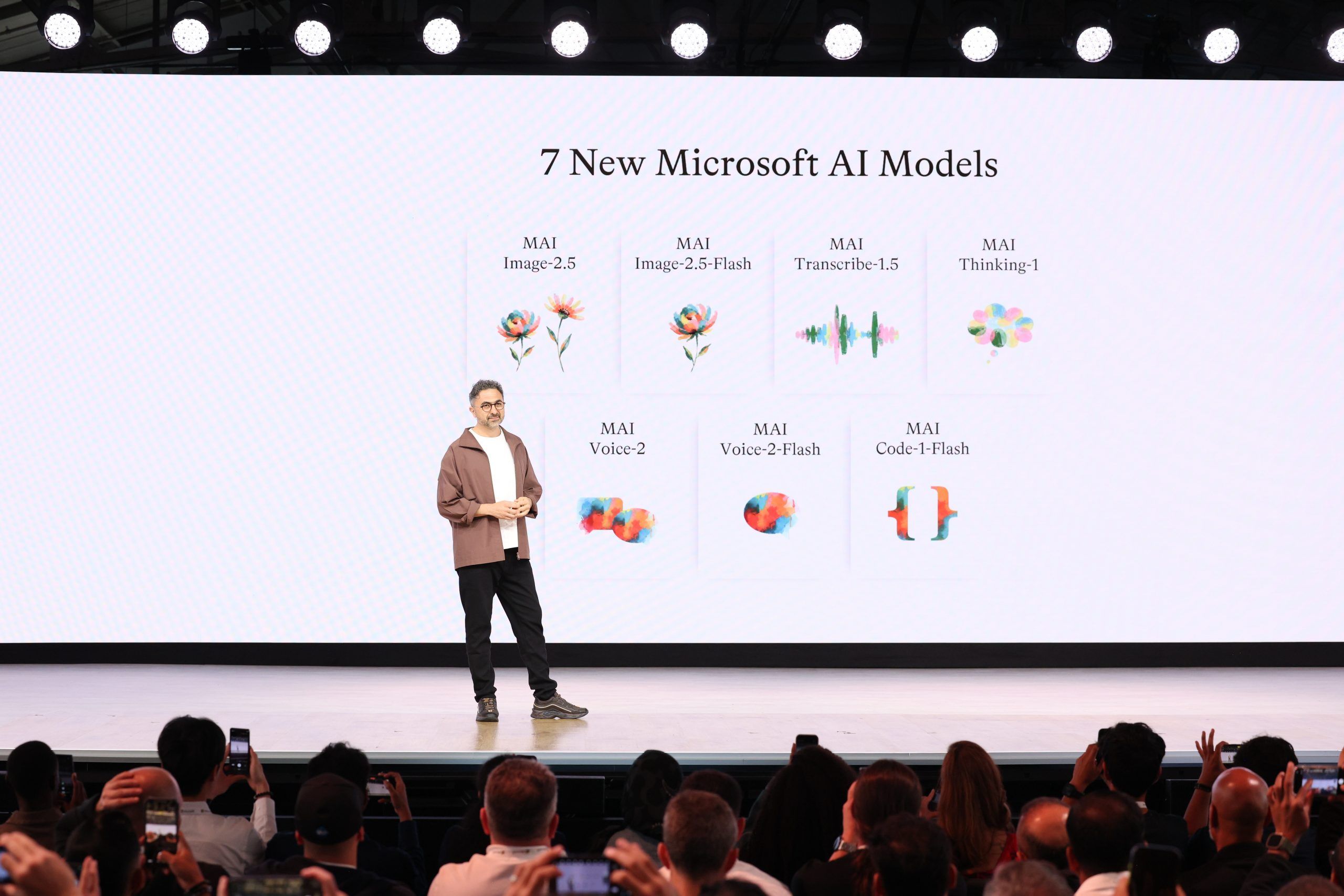
Image source: Google
For teams thinking about where heavy AI workloads actually run, Microsoft also announced the Surface RTX Spark Dev Box. It packs 1 petaflop of AI compute, 20 CPU cores, and 128GB of unified memory, and can run models up to 120 billion parameters locally without touching the cloud. For engineering teams working on sensitive data or latency-critical applications, running models on-device rather than sending everything to a remote server is a real option now, not a future consideration.
All the agent announcements grabbed attention. The governance story is where the real work is happening.
Agent 365, generally available since May 2026, is Microsoft’s umbrella for governing agents at scale. It shows administrators exactly where an agent is running, which tools and servers it connects to, what identity it uses, and what cloud resources it can reach. Policies can detect and block unsanctioned agents on managed devices. This is the infrastructure that makes agents safe to deploy in production, not just in a demo.
Microsoft Foundry is the production runtime sitting underneath all of it. It handles hosted agents, provides tracing and evaluation tools, and includes an Agent Optimizer to help measure and improve agent behavior over time. If you are building release assistants, incident helpers, or environment automation agents, Foundry is where they live once they leave the sandbox.
Together, Agent 365 and Foundry define the boundary between experimentation and production: one controls what is allowed, the other executes what is built.
Teams that treat governance as a future problem will spend months cleaning up what their agents did. Teams that design for it from day one will scale faster and with far less pain.
The real significance of Microsoft Foundry is not that it runs agents. It is how it changes what “running in production” actually means.
In traditional software systems, deployment is the end state. In agentic systems, deployment is just the beginning. Behavior is not fixed at release time. It evolves based on context, inputs, and ongoing interaction with enterprise data.
Foundry introduces the operational layer needed for that shift. Tracing becomes continuous visibility into how agents are making decisions. Evaluation is no longer a one-time QA step but an ongoing feedback loop. Optimization is not manual tuning after failures, but a structured process for improving agent performance over time.
This matters most in real enterprise workflows like release coordination, incident response, or infrastructure automation, where agents are not just generating outputs but actively participating in systems that cannot afford unpredictability.
Running agents in production, therefore, is no longer about shipping code. It is about managing behavior at scale. That is where Agent 365 fits in. It provides the governance layer around Foundry, defining identities, permissions, and boundaries for what agents can access and execute across the organization.
Together, they form a split responsibility model: Foundry manages how agents behave, Agent 365 manages what they are allowed to do.
None of this means the direction is wrong. It means the responsible approach is to adopt thoughtfully, govern early, and measure honestly. The teams that will get the most from agents are the ones asking hard questions now, before they are in production dealing with the answers.
The code review bottleneck is real. Agents can open ten pull requests in the time a developer opens one. That is a problem if your review processes have not been rethought. Giving agents write access to your repositories without changing how reviews work is asking for trouble.
Agent identity is now an infrastructure concern. Every agent in a governed enterprise needs a traceable identity, clear permissions, and an audit trail. Agent 365 is generally available today. If you are deploying agents and skipping this step, you are building up risk.
The model landscape inside enterprises is fragmenting. Microsoft is now building its own AI capabilities alongside its OpenAI partnership, a shift that gives enterprise buyers more options inside the same platform. Leaders who assumed one vendor would dominate everything are going to have a more complicated conversation before the year is out.
The companies that figure out how to govern agents well will move faster than the ones that simply deploy agents quickly. Speed without structure does not scale, and that lesson applies here more than anywhere.
If your team is working through what an agentic engineering environment looks like in practice, we are happy to think it through with you. Schedule a conversation with Arbisoft today.
...Loading Related Blogs
Trusted by top platforms for our transformative solutions and exceptional results: