
 Add as preferred on Google
How to Modernize a Legacy Learning Platform Without a Full RewriteRead More
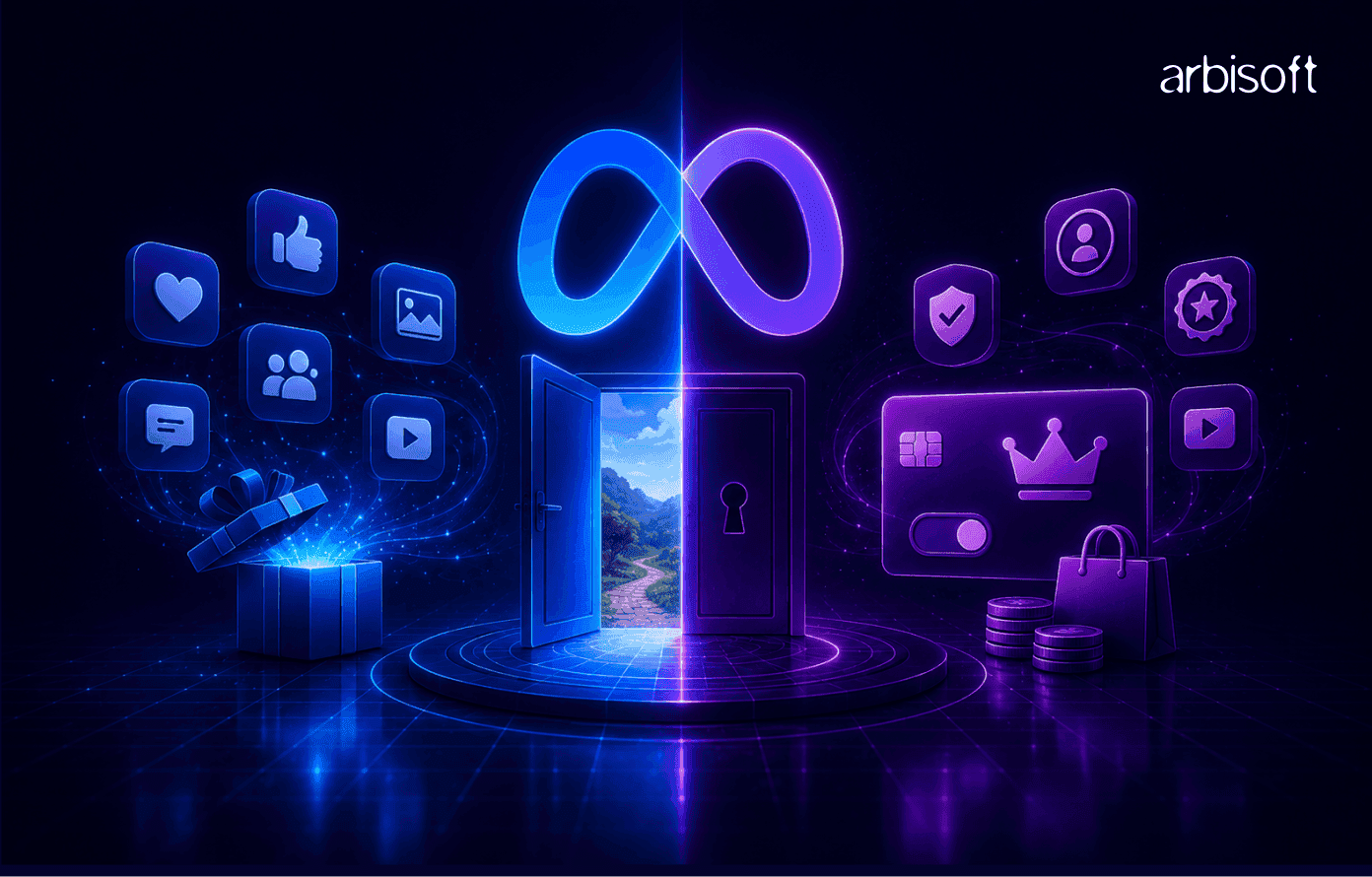
Meta's head of product Naomi Gleit announced the global rollout of paid subscription plans across Instagram, Facebook, and WhatsApp on Wednesday, May 27, 2026 with tests of additional plans for businesses, creators, and Meta AI users to follow.
The plans are straightforward. Instagram Plus is priced at $3.99 per month, Facebook Plus at $3.99 per month, and WhatsApp Plus at $2.99 per month. These sit entirely separately from Meta Verified, the existing paid tier that handles verification and impersonation protection. Meta Verified is not being phased out at the moment, though the company indicated that it may change over time.
Meta says all core platform experiences will remain free. Users will still be able to browse Instagram, message on WhatsApp, and post on Facebook without paying. The paid plans are positioned as optional upgrades.
The features across the three apps are tailored to what their heaviest users most often ask for.
Instagram Plus lets users see how many people have rewatched a Story, adds unlimited audience lists beyond Close Friends, lets users spotlight a story once a week for extra views, use Super Heart animated reactions, choose custom app icons, add customized fonts to a profile bio, extend a story beyond 24 hours, and search through a story viewer list. Subscribers can also post straight to their profiles without the post appearing in their followers' feeds, and preview someone else's story without showing up as a viewer.
Facebook Plus includes most of the same features as Instagram Plus, with an emphasis on audience growth, post visibility, and engagement tools.
WhatsApp Plus includes app themes, custom ringtones, more pinned chats, list customization, and premium stickers. The features are lean personal, and messaging-focused rather than audience-oriented, which reflects how differently people use WhatsApp compared to the other two platforms.
The consumer Plus tiers are just the opening layer. Meta is testing a broader subscription umbrella under the name Meta One, with Gleit describing it as "the one place that brings our subscriptions together across all of our apps."
Under that umbrella, two more categories are in testing.
The $7.99 Meta One Plus plan and the $19.99 Meta One Premium plan are aimed at Meta AI users. Both unlock higher compute queries, reasoning, and image and video generation, with the Premium tier offering deeper reasoning for complex tasks. Meta AI will stay free in some capacity, but its more advanced features are moving behind a paywall.
A Meta One Essential plan priced at $14.99 per month is designed for creators and businesses. These plans include enhanced profile visibility, audience insights, collaboration tools, clickable links in Instagram posts and Reels, and dedicated account support. They will begin in select test markets before a wider rollout.
The timing is not coincidental. Meta has lifted its 2026 capex guidance to between $125 billion and $145 billion, nearly double last year's spending pace. As recently as 2023, Meta's entire annual capex totaled around $28 billion.
Meta's first quarter 2026 revenue reached $56.3 billion, up 33% from the same period last year, but investors have been asking a pointed question: when does all this AI spending turn into new revenue? The new subscription plans add a recurring revenue layer on top of Meta's advertising model, and the market liked the update because it gives Meta a clearer route to charge for premium features and AI usage after months of capex anxiety. Meta's stock rose nearly 3% on the news.
Analysts estimate revenue from Meta One could range from $4 billion to $12 billion, depending on which plans users prefer. For a company spending $145 billion on infrastructure this year, subscriptions are not going to close that gap alone. But they represent something Meta has never had before: a revenue line that does not depend entirely on the ad market.
To understand why the WhatsApp subscription specifically landed differently to many users, you have to go back about a decade.
When Facebook acquired WhatsApp in 2014 in a deal worth about $19 billion, founders Jan Koum and Brian Acton insisted on a core principle: the app would remain free of ads, games, and gimmicks. In 2016, Meta abolished even a symbolic $1 annual fee and officially declared the app would remain free forever, promising monetization only through business APIs.
The introduction of WhatsApp Plus at $2.99 per month represents a notable departure from that earlier approach. Although Meta emphasizes that the basic version remains free, the very introduction of a subscription model within private messaging reflects a gradual shift in how the platform is monetized.
It is worth noting this is not entirely new territory for Meta. The company already runs a paid ad-free subscription in Europe, introduced to comply with EU privacy regulations. That plan has faced its own turbulence, with privacy advocates arguing that asking users to pay to protect their own data is not genuine consent. The global Plus rollout is different in purpose, adding features rather than removing ads, but it sits against that same complicated backdrop.
The announcement was met with some backlash on social media, with commenters pushing back against the idea of paid subscriptions on platforms they have used for free for years.
The criticism goes beyond sticker shock at $3.99 a month. The concern for Meta's Plus plans is that there are countless social media and communication features people depend on that could, without notice, suddenly fall under Plus. WhatsApp's end-to-end encryption is one example cited by critics. Features like longer reels, saving stories, or direct messages are others that analysts have flagged as potentially vulnerable to future paywalling.
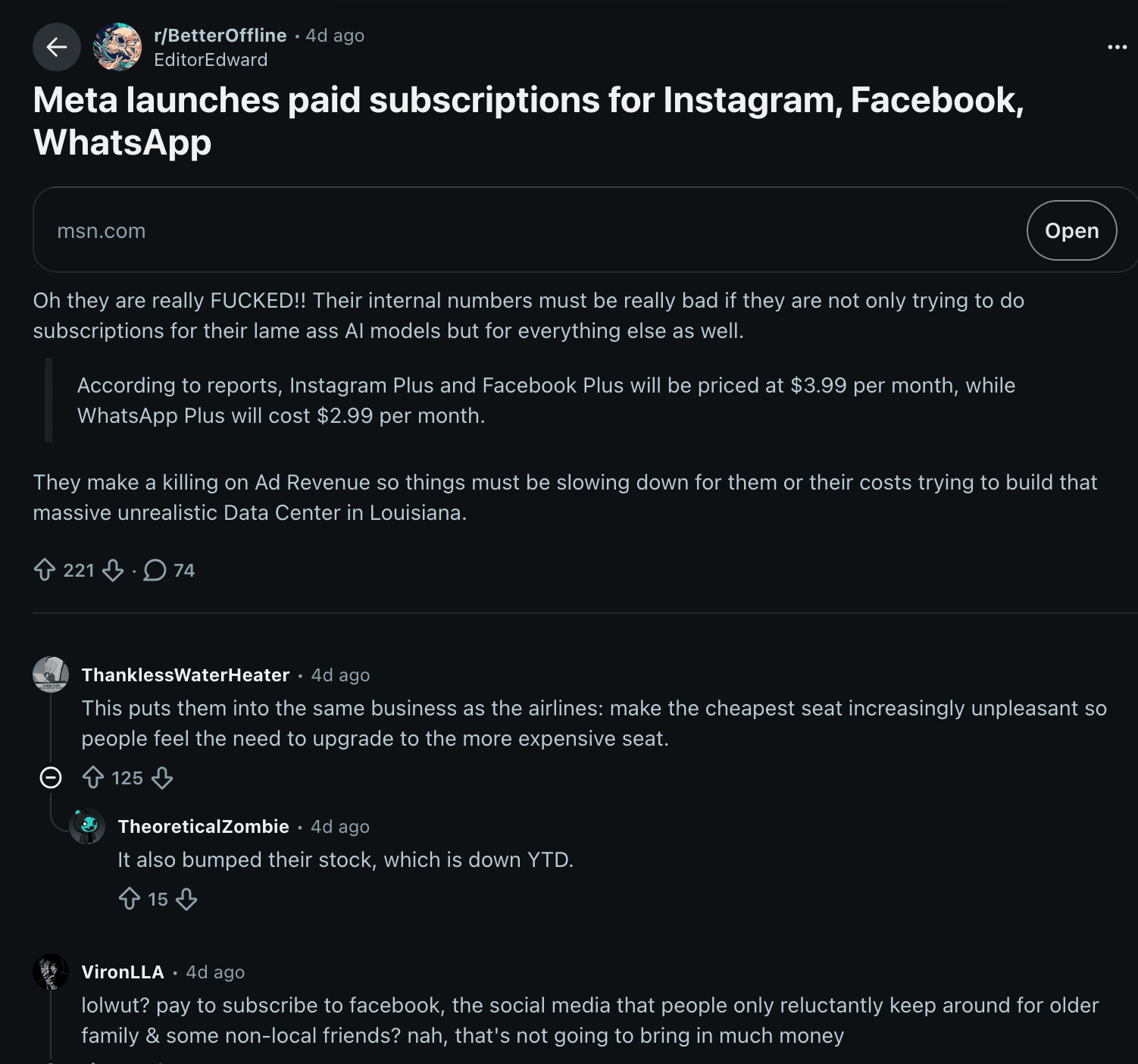
This concern is sharpened by Meta officially ending end-to-end encryption for Instagram direct messages on May 8 2026, a reversal that privacy advocates said could permanently damage user trust. Meta defended the move as a safety decision to improve its ability to combat scams, harassment, and abusive behavior, but the optics sit uncomfortably alongside a subscription rollout three weeks later.
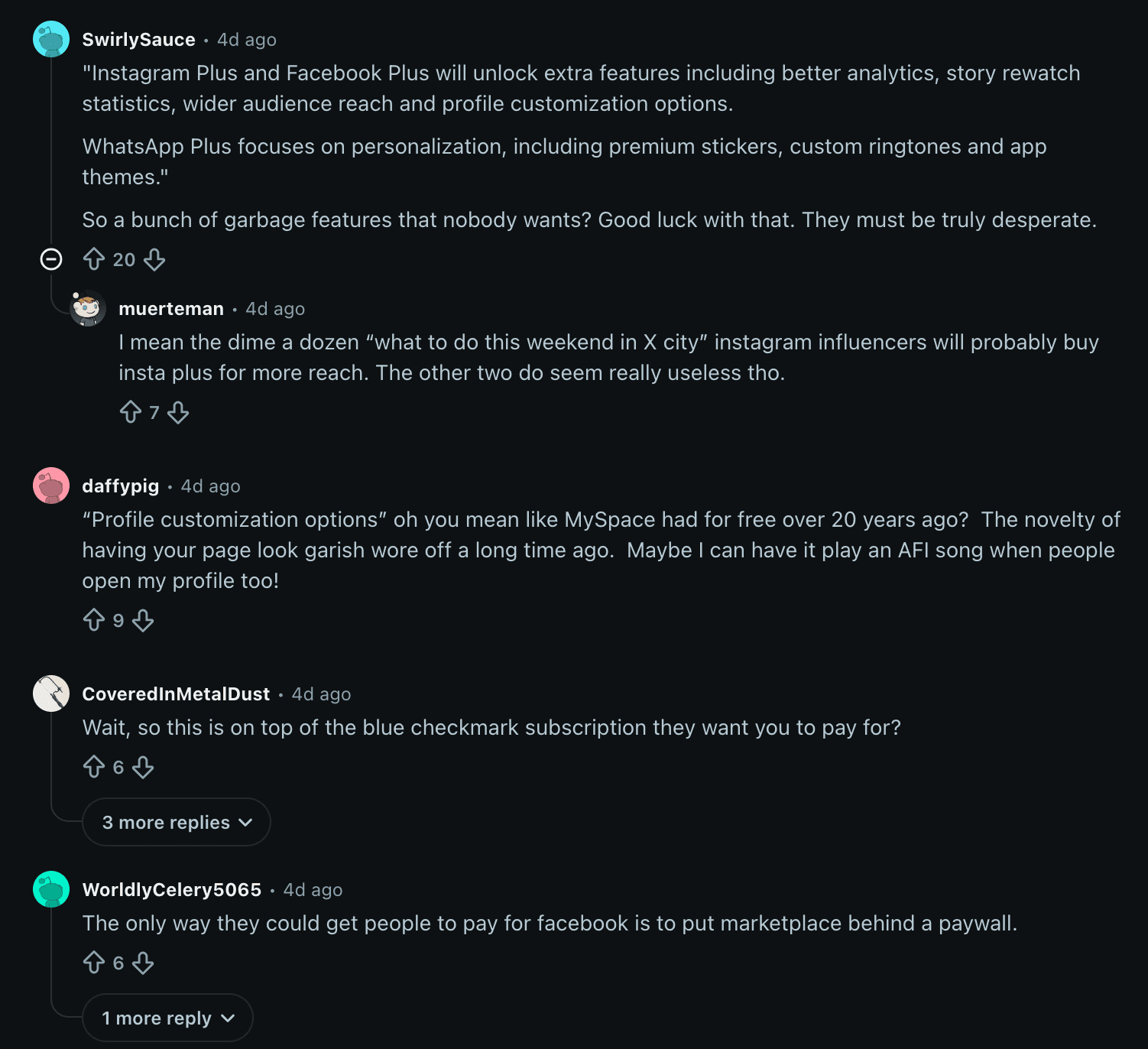
When a platform removes a privacy feature and then introduces paid tiers in quick succession, users are understandably watching the next moves closely.
Not everyone is reading this announcement the same way, and both sides have a reasonable case. Here is where the thinking splits.
Meta has 3.56 billion daily active users. Converting even a fraction to paying subscribers creates a meaningful new revenue stream. Meta is following the trend of companies like X and YouTube, recognizing that with massive AI spending underway, additional revenue streams are necessary and that social media is becoming tiered. The free tier stays intact. Nobody is being forced to pay. And for heavy users, creators, and businesses, the features on offer are genuinely useful.
The AI subscription tier is probably the more strategically significant piece. If Meta can build a compelling enough AI product, charging $7.99 or $19.99 per month for heavier usage is a model that has already proven itself at OpenAI and Anthropic. Meta has the user base to make that work at a scale its competitors cannot easily match.
J.P. Morgan downgraded Meta to neutral, cautioning that Meta One is a smart strategy to diversify revenue but should not be expected to fully ease pressure on the balance sheet or investor sentiment anytime soon.
The deeper concern is structural. Ben Barringer, head of technology research at Quilter Cheviot, noted that subscriptions are unlikely to be a major revenue driver at launch and that the more significant signal is Meta using subscriptions to find a path to monetizing its enormous AI capital expenditure. If the AI plans do not deliver features people genuinely want to pay for, the subscription revenue stays modest while the capex bill keeps growing.
There is also the question of what the free tier looks like in three years. Today Meta says nothing is being removed from the free experience. That commitment is easier to make at launch than to keep when quarterly earnings pressure is real and subscription targets need to be hit.
For the people who have built real audiences and livelihoods on Meta's platforms, this shift carries more weight than it does for casual users.
The creator and business plans are still in testing, but the direction is clear. Tools that help creators understand their audiences, grow their reach, and manage their presence professionally are moving toward a paid model. The question that does not yet have a clear answer is how aggressively Meta will gate those tools once the test phase ends.
There is a version of this that works well for creators, clear, fair pricing for genuinely useful professional tools, with the free tier staying fully functional for everyone else. There is another version where the best growth and distribution features end up locked away, and the cost of building on Meta's platforms climbs quietly year over year.
Which version this becomes will depend on decisions Meta has not made yet.
What happened on May 27 was Meta formally acknowledging that advertising alone cannot carry the weight of what it is building. The AI infrastructure spending is real, the costs are escalating fast, and the company needs revenue that scales alongside that investment.
Whether the Plus tiers find real adoption depends on what gets added over the next twelve months. The launch versions are a starting point, not a finished product. The more consequential question is whether the Meta One AI plans can become something people find genuinely worth paying for, because that is where the real revenue opportunity sits, and where the real test of Meta's subscription ambitions will play out.
For now, the apps you have always used for free still work exactly as they did. You just have a new option sitting quietly in the settings menu, and a company watching very carefully to see if you tap it.
No. Meta has stated that the core experience of Instagram, Facebook, and WhatsApp will remain free. Users can continue posting, messaging, browsing, and interacting without a subscription. The new Plus plans are optional upgrades that unlock additional features and customization options.
Meta One is Meta's new subscription umbrella that brings together paid offerings across Instagram, Facebook, WhatsApp, and Meta AI. It includes consumer subscriptions, AI-focused plans, and future creator and business subscriptions designed to provide advanced tools, analytics, visibility features, and premium support.
Meta is investing heavily in AI infrastructure, with projected capital expenditures reaching as much as $145 billion in 2026. Subscriptions provide a recurring revenue stream that is less dependent on advertising and help Meta create a monetization path for advanced AI services and premium platform features.
Meta says no core WhatsApp functionality is moving behind a paywall today. However, some users and analysts are concerned that additional premium features could gradually expand over time. The long-term question is not whether WhatsApp remains free, but how much of the future feature roadmap becomes exclusive to subscribers.
For creators and businesses, the announcement signals a shift toward paid professional tools. Meta is testing plans that include audience insights, enhanced visibility, collaboration features, clickable links in Instagram posts and Reels, and dedicated support. While this could provide valuable growth tools, it may also increase the cost of building and growing an audience on Meta's platforms over time.
...Loading Related Blogs
Trusted by top platforms for our transformative solutions and exceptional results: