 Add as preferred on Google
How AI Is Changing Custom Software Development (and What It Means for Your Next Build)Read More
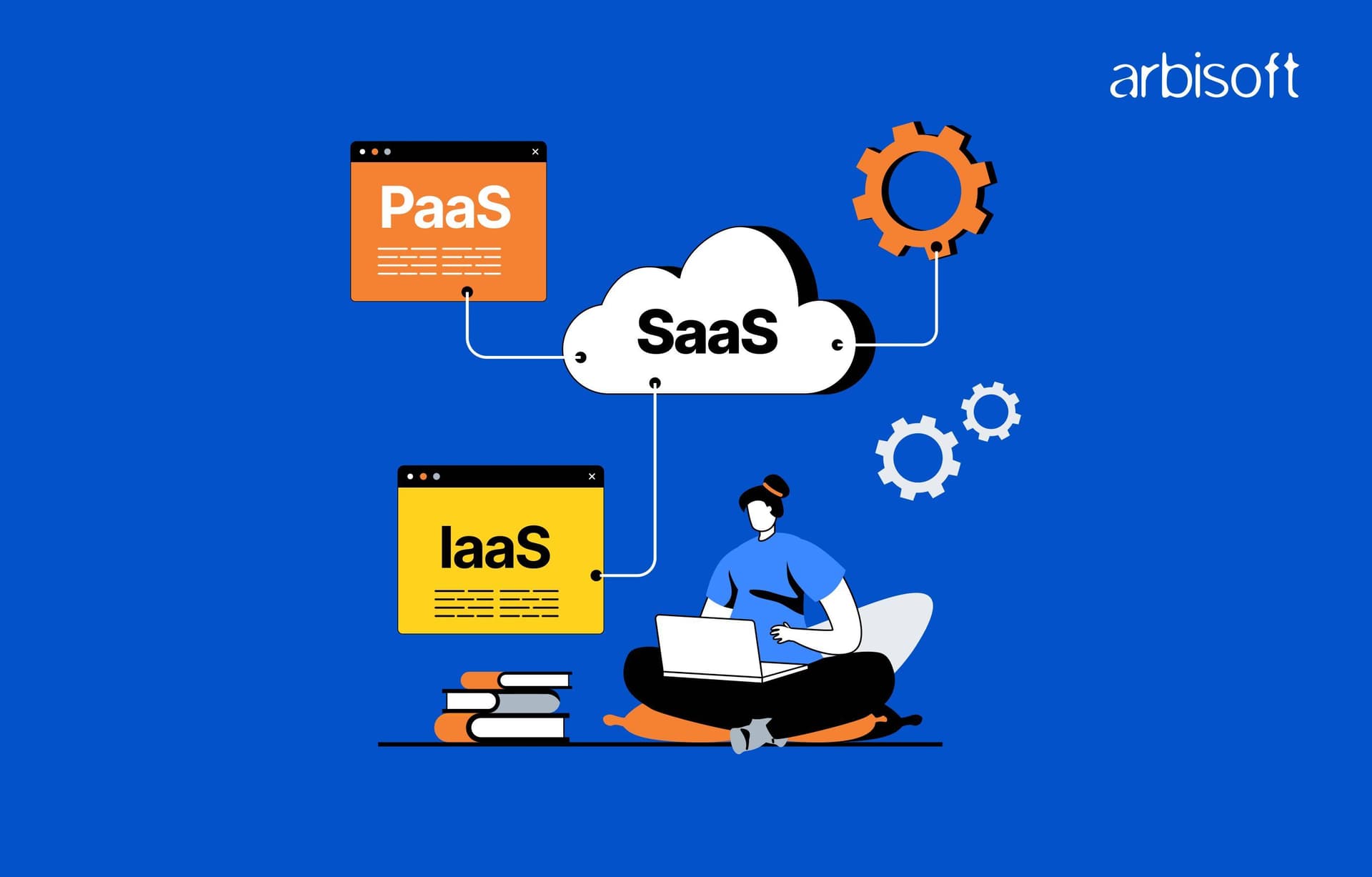
Cloud computing has completely changed how businesses operate. By removing the need for physical hardware, companies can now scale up quickly, innovate faster, and save on operational costs. However, with options like SaaS, PaaS, and IaaS available, choosing the right one can feel confusing. Picking the wrong option might mean spending more than necessary or struggling with tools you don’t need. On the other hand, making the right choice can boost your business’s efficiency and growth.
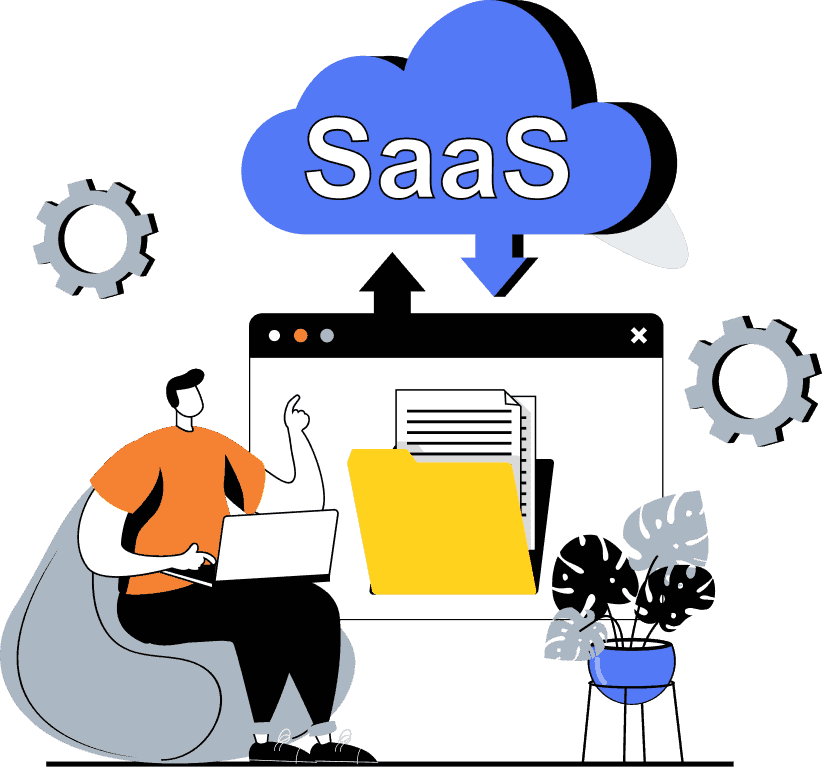
These three terms represent the different levels of cloud computing services, each offering varying degrees of control and convenience.
SaaS is the simplest option. It provides ready-made software you can use immediately over the Internet. You don’t have to worry about installing, updating, or maintaining the software, everything is taken care of for you. Examples of SaaS include Gmail, Dropbox, and Salesforce. For businesses, Software as a service (SaaS) can be a quick and cost-effective solution. For instance, a small marketing firm might use Canva, a SaaS tool, to create stunning designs without hiring a professional designer.
PaaS (Platform as a Service) offers tools and environments for developers to build and launch applications. It sits in the middle, giving developers the freedom to focus on coding without worrying about managing servers or storage. Examples include Google App Engine and AWS Elastic Beanstalk. A startup, for example, could use PaaS to create a custom app faster and more efficiently without handling the underlying technical setup.
IaaS (Infrastructure as a Service) provides the foundational computing resources, like servers, storage, and networking, that businesses need to build and manage their IT infrastructure. This model gives companies full control, which is ideal for large businesses or those with complex needs. Netflix, for instance, uses Amazon EC2 (an IaaS platform) to manage the huge amounts of data required to stream content to millions of users daily.
Every business has unique requirements, and choosing the wrong cloud model can cause unnecessary problems. Imagine a small company selecting IaaS when all they need is a simple SaaS tool. They would not only spend more money but also deal with technical challenges they don’t have the expertise to manage.
Similarly, a team of developers using SaaS might find themselves limited, as SaaS doesn’t provide the flexibility to customize or build software from scratch. Picking the right model ensures that your business gets exactly what it needs, nothing more, nothing less.
SaaS is perfect for businesses looking for ease of use and quick setup. With SaaS, the provider handles everything, from updates to technical maintenance, so you can focus on your core work. Tools like Zoom, Trello, and Slack are great examples of SaaS platforms that save time and simplify everyday tasks.
One major advantage of SaaS is its cost. Since most SaaS tools work on a subscription basis, you only pay a fixed monthly or annual fee. This makes costs easier to predict and budget for. Small and medium-sized businesses especially benefit from SaaS because it gives them access to powerful tools without needing a big IT team.
Furthermore, collaborating with specialized saas software development services can help tailor these platforms to your unique workflows and scaling needs.
If your business involves building applications, PaaS is a smart choice. It gives developers a ready-to-use platform to code, test, and launch applications without managing the infrastructure.
For example, a company creating a unique shopping app could use Google App Engine. Developers can focus on designing the app’s features, while the platform takes care of hosting and scaling the app as it grows. PaaS helps businesses bring their ideas to life faster and with fewer technical hurdles.
Another key benefit of PaaS is its scalability. As your needs grow, most PaaS platforms can scale the app for you, often automatically, so you can expand without reconfiguring everything.
IaaS is best for businesses that need total control over their IT systems. Unlike SaaS and PaaS, which offer pre-configured solutions, IaaS allows you to set up your infrastructure exactly as you want. This level of flexibility is ideal for enterprises or businesses with complex technical requirements.
Take Netflix as an example. To handle millions of users streaming content at the same time, Netflix uses Amazon EC2, an IaaS platform, to manage its data and traffic efficiently. IaaS lets Netflix scale up or down as needed while maintaining complete control over its setup.
For smaller businesses, IaaS can be helpful during cloud migration. Companies moving from physical servers to the cloud can use IaaS platforms like Google Cloud or Microsoft Azure to replicate their existing systems without investing in hardware.
To make it easier, think of these cloud models like hosting a pizza night:
1. SaaS is like ordering a pizza: Everything is ready, and you just enjoy it.
2. PaaS is like buying a pizza base and toppings: You customize it but don’t handle the hard parts, like making the dough.
3. IaaS is like making a pizza from scratch: You handle every step, from preparing the dough to baking, but you have full control over the result.
This analogy shows how each model offers a different level of convenience and control, depending on what you need.
Feature | SaaS | PaaS | IaaS |
| Ease of Use | Very easy | Developer-friendly | Complex |
| Control | Limited | Medium | Full |
| Setup Time | Instant | Moderate | Lengthy |
| Who Uses It | End-users | Developers | IT Teams |
A hybrid cloud combines private, on-premises data centers with public cloud services, and workloads move between the two as demand changes. It answers a different question from the service models above. SaaS, PaaS and IaaS decide who manages what; hybrid cloud decides where a workload runs. NIST's definition of cloud computing (SP 800-145, 2011) treats these as separate dimensions, with three service models and four deployment models.
Hybrid cloud earns its place in three situations:
The trade-off is more work for the engineering team. Connecting on-premises systems to public cloud services takes integration effort, often with virtualization, containers and software-defined networking. Legacy systems don't always work with containers or serverless environments, and data governance gets harder when each environment and country has its own rules.
Applications split across environments also depend on stable network connections, and heavy reliance on one provider's proprietary services makes a later switch costly. Much of this falls to whoever owns DevOps and cloud management, so plan for that skill before choosing hybrid. For a startup with no servers of its own, hybrid cloud adds this overhead without the compliance or existing-hardware reason that usually justifies it.
Cloud computing is rapidly evolving. Many businesses now combine SaaS tools for everyday work with applications built on PaaS or IaaS. Additionally, advancements in artificial intelligence and automation are enhancing cloud platforms, making them smarter and more efficient.
Deciding between SaaS, PaaS, and IaaS comes down to understanding your business needs. If you need something simple and ready to use, go for SaaS. If you’re building custom applications, PaaS is a great choice. And if you want full control over your IT systems, IaaS is the way to go.
The right cloud model isn’t just about technology, it’s about finding a solution that helps your business grow, save costs, and stay efficient. Take the time to assess your needs, and you’ll be well on your way to making the best decision for your business.
...Loading Related Blogs
Trusted by top platforms for our transformative solutions and exceptional results: