

 Add as preferred on Google
Odoo Modules Explained: Which Odoo Apps Your Business Actually NeedsRead More
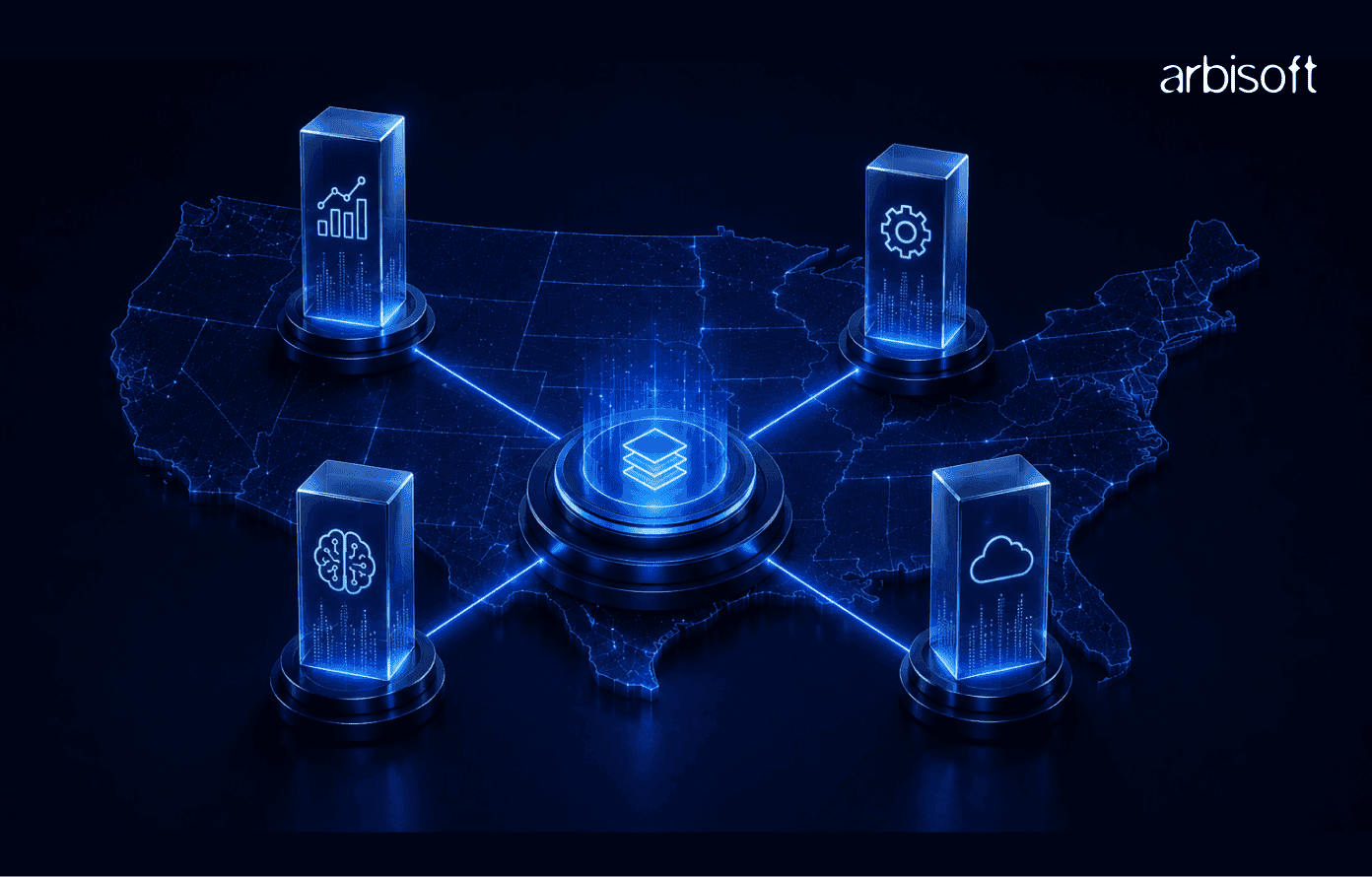
A national “top partner” label can hide the factors that decide whether a Databricks engagement succeeds. The stronger shortlist matches a firm to the workload, industry, delivery geography, and proposed team.
That is the purpose of this regional guide. It helps the US buyers identify firms worth evaluating for a specific need, not declare one universal winner.
Organizations typically hire a Databricks consulting partner when they need to accelerate a migration, design a Lakehouse architecture, modernize data engineering, operationalize artificial intelligence (AI) and machine learning (ML), or establish governance and support processes.
Regional fit can matter, but only when it changes execution. A nearby office does not prove that the active delivery team is local. Buyers should distinguish physical office presence, the legal contracting entity, time-zone overlap, travel availability, and the actual location of assigned engineers.
This guide groups verified US-active firms by region and business need.
A Databricks partner is a company enrolled in an official Databricks partner program. The ecosystem includes consulting and systems integration firms, technology partners, data partners, Built-On partners, cloud providers, and managed service providers.
For professional-services buyers, the most relevant category is usually a Databricks consulting partner that can advise, build, migrate, optimize, or operate the platform. Current partner status is useful evidence of an active relationship, but it does not prove that a firm is right for a particular workload or region.
A consulting partner may configure workspaces and Unity Catalog, design Lakehouse architecture, build Delta Lake pipelines, migrate Hadoop or warehouse workloads, implement ML operations, optimize Apache Spark performance, or provide managed Databricks services.
The delivery model matters. Advisory work produces assessments and roadmaps. Implementation work requires engineers to configure the platform, write production code, manage cutover risk, and accept clear ownership in the statement of work.
Global systems integrators support large, multi-country transformations. National consultancies often combine broad US coverage with local offices. Boutique specialists may offer deeper Databricks concentration and more direct senior involvement. Technology partners sell integrated products rather than custom implementation services, while managed service providers assume ongoing operational responsibility.
These models should not be compared as though they were interchangeable.
Start with the workstream, not the logo. Migration, greenfield implementation, governance, AI, performance optimization, and managed services require different evidence.
A credible shortlist should combine technical proof, relevant industry outcomes, proposed-team quality, delivery coverage, and commercial fit. Disqualify firms that will not identify the proposed team, explain subcontractor use, or provide Databricks-specific references.
Firm-wide certification totals can indicate training investment and bench depth. They do not show who will staff your project.
Ask for named biographies, current credentials, role allocation, tenure, and prior work on a comparable workload. A smaller team with directly relevant migration experience may be a better fit than a large practice assigning mostly junior resources.
Look for evidence across Apache Spark, Delta Lake, Unity Catalog, production pipelines, cloud migration, ML, generative AI, and business intelligence. Named accelerators and technical reference architectures are stronger signals than a page listing every platform capability.
Ask the partner to walk through one similar architecture, including testing, security, observability, deployment, and cost controls. Verify alignment with Amazon Web Services, Microsoft Azure, or Google Cloud where the surrounding cloud stack matters.
A useful case study names the industry or client, confirms Databricks was part of the solution, describes the workload, and reports a measurable outcome. Generic "data modernization" language is not enough. Use the same bar when judging which Oracle AIDP firm has the most production deployments count only the ones comparable to your workload.
Industry relevance matters most in regulated or specialized environments. Financial services, healthcare, public sector, retail, manufacturing, and energy programs often require domain-specific governance, security, and operating knowledge.
Office presence is not delivery coverage.
Confirm where proposed team members sit, how much working-hour overlap exists, whether onsite travel is included, and which legal entity signs the contract. Nearshore teams can provide stronger US time-zone overlap than fully offshore models, while offshore delivery can offer scale and cost efficiency.
Regional access should be a requirement only when it affects cutovers, workshops, security restrictions, data residency, or stakeholder collaboration.
Migration projects need source-system experience, conversion tooling, reconciliation methods, and cutover planning. Greenfield Lakehouse programs need architecture and governance depth. AI projects need production experience with MLflow, retrieval-augmented generation, agentic systems, and controlled access to enterprise data.
Governance work requires credible Unity Catalog experience. Optimization work needs Spark, Photon, and cluster-tuning expertise. Managed services require a documented operating model, monitoring, escalation, and service-level commitments.
Fixed-price work suits a bounded scope with clear acceptance criteria. Time-and-materials work supports discovery and changing requirements. Staff augmentation gives the buyer more daily control, while managed services transfer more operational responsibility to the partner.
Public pricing is too inconsistent to support a reliable market benchmark. Compare proposals using the same assumptions, staffing mix, travel rules, change-control process, knowledge-transfer obligations, and post-launch support model.
The firms below have documented Databricks relationships and enough public evidence to support a comparable profile. They are grouped by regional presence and best-fit need rather than ranked from first to last.
The evaluation considered:
None of these factors is decisive alone.
Verification used different directories, partner websites, published case studies, and company profiles.
Company | Founded | Headquarters | Best fit by U.S. region | Best fit by business need |
Arbisoft | 2007 | Plano, Texas | Texas and South-Central US; also suitable nationally where distributed delivery is acceptable | Hands-on Lakehouse implementation, legacy migration, governed pipelines and projects requiring both data-platform and application-engineering support |
Slalom | 2001 | Seattle, Washington | Nationwide, particularly where buyers want consultants from a nearby metropolitan office | Complex enterprise modernization, regulated industries, governance, organizational adoption and industry-specific AI accelerators |
phData | 2014 | Minneapolis, Minnesota | Upper Midwest and Central Time, with national nearshore and offshore delivery | Hadoop and legacy-data migration, pipeline engineering, platform administration and long-running managed-services programs |
Hakkoda | 2021 | New York, New York | Northeast and nationwide IBM accounts requiring global procurement and transformation capacity | Broad cloud-data and AI transformation within an IBM Consulting relationship rather than a Databricks-only engagement |
Sigmoid | 2013 | San Francisco, California | West Coast-led, with national delivery, particularly for consumer-oriented enterprises | AI-enabled supply chain, retail and CPG analytics, governed data engineering, commercial intelligence and agentic AI applications |
Bitwise | 1996 | Chicago, Illinois | Midwest and Great Lakes, with national delivery for large migration programs | Automation-led conversion of Informatica, legacy ETL and data-warehouse estates to Databricks |
Adastra | 2000 | Toronto and Prague; U.S. offices in Irvine and Austin | Western U.S. and Texas, with wider North American delivery | Multi-cloud Lakehouse modernization, enterprise governance, data engineering and AI/ML programs requiring North American contracting and global delivery |
Celebal Technologies | 2016 | Jaipur, India; U.S. office in Houston, Texas | Texas, the South and national enterprise programs where offshore delivery scale is desirable | Large migration factories, SAP-centered modernization, energy and utilities platforms, governed AI and agentic solutions |
DataArt | 1997 | New York, New York | Northeast and nationwide, especially for financial-services organizations | Asset management, capital markets, regulated-data foundations, Lakehouse architecture and AI implementation across mixed technology stacks |
Arbisoft is a Databricks Partner headquartered in Plano, Texas, and founded in 2007. It supports US clients through a North Texas office combined with distributed global delivery teams. Its broad software-engineering background, flexible engagement models, and growing Databricks practice make it a credible candidate for mid-market and enterprise data-modernization programs.
Slalom is a Databricks Consulting Partner in the Pacific Northwest and Nationwide founded in 2001. Its decade-long Databricks relationship, national office network, industry specializations, and named accelerators make it a strong candidate for complex enterprise programs.
phData combines a Minneapolis headquarters with delivery centers in Uruguay and India. Its evidence is strongest in migration and managed operations.
Hakkoda is a New York-headquartered data consultancy acquired by IBM in April 2025. It now operates within IBM Consulting.
Sigmoid, founded in 2013, is headquartered in San Francisco with New York operations. Evidence points to supply-chain analytics and agentic AI.
Bitwise is a Chicago-headquartered data and AI modernization firm founded in 1996, with delivery capacity in Pune and an office in London.
Adastra is headquartered in Toronto and has verified US offices in Irvine and Austin. It reached Databricks Gold status in May 2026.
Celebal Technologies has a US base in Houston and a primary delivery hub in Jaipur. It holds Elite status and received the 2026 migration and modernization partner award.
DataArt is a global consultancy with a documented Databricks practice and more than two decades of capital-markets domain experience.
The right shortlist begins with the technical need and the evidence required to prove delivery fit. Regional presence matters only when it changes collaboration, contracting, security, or support.
Use a repeatable process:
The companion databricks partner selection questions can structure discovery and RFP review.
The final decision should rest on the team named in the statement of work, the evidence tied to your workload, and the operating model you can govern after launch.
Trusted by top platforms for our transformative solutions and exceptional results: