 Add as preferred on Google
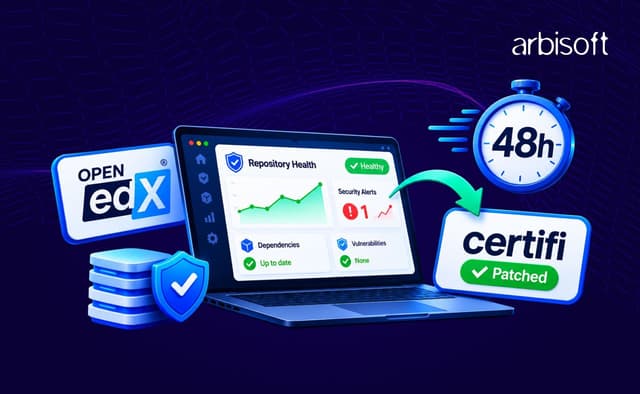
How a Repository Health Dashboard Helped Open edX Patch certifi in 48 HoursRead More

Seed-stage founders should choose an MVP development partner by testing evidence, and a paid discovery sprint shows how the build is likely to go.
Pay one or two finalists for a one to two week discovery sprint before signing the full build.
Most MVP vendors look alike on a sales call. Each shows a portfolio and a rate card, and the differences surface months later as a missed demo date or a quote that doubles once QA and DevOps are added. For a seed-stage founder with one runway, that is an expensive way to learn.
Below is how to choose an MVP development partner for a 2027 build by testing vendors on evidence: who builds, what they cut, how they test and secure code, what the price excludes and who owns the result. The process at the end runs from shortlist to kickoff and turns on a paid discovery sprint.
Seven checks decide whether a partner can ship your first release and hand it over cleanly, and every one of them should be backed by a named person or a document you can read before you sign. Sales-call promises don't count. The scorecard below lists them.
| Check | What a strong partner shows | Evidence to request | Red flag |
|---|---|---|---|
| Delivery team | Named engineers who join calls before signing | Profiles of the proposed team and a session with the tech lead | Senior staff in the pitch, unnamed staff in the contract |
| Recent MVP record | MVPs shipped in the last two years, ideally in your market | Two references you can call and live products | Screenshots only, with every project under NDA |
| Scope judgment | Pushback on features tied to no milestone | A prioritized backlog after discovery | Agrees to the whole wishlist |
| Engineering practice | Code review, CI and tests from sprint one | A walkthrough of a sample repository | "Tests come after launch" |
| Security and compliance | Access control, audit logs and secrets management built in | A written security checklist | "Security is a later-stage concern" |
| Communication | Weekly demos and written burn reports | A sample status report | You chase every update |
| Handover | Documentation and runbooks, with accounts in your name | A sample handover document | Code hosted only in vendor accounts |
Score each finalist from 1 to 5 per row, weighting the rows that match your biggest risk. A FinTech or HealthTech MVP weights security heavily, while a consumer app with no sensitive data weights scope judgment. Totals often land close together. When they do, the rows where finalists differ most should decide, because those rows usually point to the risk most likely to hurt the build in its first three months.
Book a working session with the tech lead who will own your build, because that's where technical expertise either shows up or doesn't. Ask the lead to walk through one MVP their team shipped in the past two years: what was cut from the first release, what broke after launch and how they fixed it. Sales staff can describe a process. Only the people who did the work can explain why a database choice hurt in month four.
Detailed questions are a useful test. If questions about something specific, such as multi-tenant access control for an HR-tech product, keep getting redirected to someone who is not on the call, the expertise sits outside your team. Name the proposed engineers in the statement of work so the team you met is the team you get.
Domain experience matters most in regulated markets. A FinTech MVP may need identity verification (KYC) in its first release, and a HealthTech MVP that stores patient data should have its access controls and audit logging reviewed by a compliance adviser. Ask for a past example of that exact control and confirm it on a reference call by asking what went wrong.
Strong references come from clients who built with the vendor over time. The startup Predict.io hired a team of Arbisoft engineers to build a consumer app that runs machine-learning algorithms on real-time sensor data to predict a driver's parking behaviour, as described in the Predict.io parking prediction case study. Predict.io's CEO said the app generated significant revenue and received industry awards. That's the kind of reference worth requesting from every finalist.
A prototype built in an AI app builder such as Lovable or Replit proves that a user flow works, and that's often enough to get through an investor meeting with something clickable on screen. What it rarely covers is authentication, data modelling, secrets handling, error states or tests. That's why the audit comes first. A good partner keeps what is sound and rebuilds the rest.
The security risk is measurable. Veracode's Spring 2026 GenAI Code Security Update, based on evaluations of more than 150 large language models, found that only 55% of code generation tasks produced secure code and that in 45% of cases the model introduced a known security flaw. Treat a mostly AI-generated prototype as untested code, however polished the interface looks.
Request a written prototype audit and an estimate of how much code will be kept. Arbisoft's service for completing vibe-coded MVPs starts by evaluating what in the prototype is usable and building on top of it. Two answers should worry you. One is a quote to "polish" the prototype from someone who has not read the code, and the other is a full rebuild with no explanation of what failed.
Apply the same scrutiny to the partner's own AI coding tools: which tools engineers use, whether your data can reach them and how AI-written code is reviewed before merge. The US buyer's guide to choosing a custom software development partner covers those questions in detail.
It depends on who your first customers are, because an MVP needs the controls they will ask about. If larger companies are buying first, their procurement teams may send a security questionnaire or ask for a SOC 2 report before a pilot goes live. SOC 2 is an assurance report that a CPA firm issues under the AICPA's System and Organization Controls (SOC) offerings, so your company earns it by working with an auditor, and the partner's job is to build the controls auditors test.
In our view, these controls are cheap to add in sprint one and slow to retrofit:
The AICPA listed an exposure draft titled "Proposed 2027 SOC 2 Trust Services Criteria and Description Criteria" in October 2026. Because those criteria are still a proposal and may change before they take effect, a partner building for 2027 audits should explain how it will map your controls to the final version once the AICPA publishes it. "Security later" should end the call.
MVP quotes differ mostly in what they leave out. Price every finalist against the same scope and ask for a written list of exclusions before comparing totals.
| Pricing model | How billing works | Best for | Hidden-cost risk |
|---|---|---|---|
| Fixed price | One fee for a locked scope | A scope settled by discovery | Expensive change requests; QA or DevOps excluded |
| Time and materials | Hours used, billed monthly | A scope still moving after discovery | Budget drift without weekly burn reports |
| Dedicated team | Monthly fee for a stable team | An MVP followed by a roadmap of later releases | Paying for idle capacity between releases |
| Staff augmentation | Per engineer, per month | Startups with a CTO who runs delivery | The startup carries the delivery risk |
QA, DevOps and cloud setup, product analytics, design, project management, third-party API fees and post-launch support are the line items to look for when one quote comes in far below the others. Change requests are the other leak. Agree in writing how they are estimated and approved, including the hourly rate, before the first sprint starts.
Arbisoft's engagement models follow the usual split, with software outsourcing billed against a defined and locked scope and dedicated teams and staff augmentation priced by team size. Rate haggling saves less than scope discipline. If ten features are in scope and three appear in the pilot plan for an investor demo, the other seven belong in version 2.
Testing starts in sprint one on a well-run MVP, and support continues after launch. Ask for the test strategy in writing. It should name the flows covered by automated tests in continuous integration and say when regression and user acceptance testing happen. Arbisoft's software testing services, for example, pair automation tools such as Selenium and Appium with manual and regression testing, a mix that suits an MVP heading into live demos.
Analytics belongs in the first release. The partner should agree an event plan tied to the activation and retention numbers investors will ask about and wire it into a product analytics tool such as PostHog or Mixpanel. Without that plan, the pilot ends and nobody can say how many users came back.
Our view is that an MVP contract should include at least 30 to 60 days of post-launch coverage, with agreed response times for bugs and load problems. Security patches and dependency upgrades need a named owner after that window too.
A master services agreement (MSA) and a statement of work protect an MVP build when six terms are written down:
The discovery sprint contract needs the same IP clause, which keeps the backlog and architecture you paid for usable with another vendor. Have a startup lawyer review the IP and liability sections. This checklist does not replace legal advice.
Deadline pressure is when a vendor's habits show, and these seven MVP development red flags rarely improve once a contract is signed:
Six steps take a founder from shortlist to signed contract, with a paid discovery sprint as the deciding test.
The discovery sprint tells you the most. A team that cuts scope sensibly and flags risks early during two weeks of paid work will usually behave the same way across a four-month build.
Scope sets the timeline more than the vendor does. We'd treat a first release that needs more than about six months as one carrying version 2 features. A release plan with a demoable build every two weeks is worth asking for, because missed early demos show quickly whether an estimate is realistic.
Usually, yes. One to two weeks of discovery costs less than the build itself and leaves you with a backlog, architecture outline, risk list and estimate that belong to you, whichever vendor you end up choosing.
Your company owns it only if the contract says so. Include an IP assignment clause covering code, designs, documentation and test suites, effective on payment, and keep repositories and cloud accounts in the company's name from day one. Subcontractors working for the vendor should be bound by the same terms, and a startup lawyer should confirm the wording.
Not always, because a part-time technical adviser can review proposals and check the code the partner ships each sprint. Hiring a full-time CTO starts to make sense once the product needs ongoing architecture decisions after launch.
Knowing how to choose an MVP development partner comes down to buying a small piece of real work before committing to the whole build. Run every finalist, Arbisoft included, through the same seven-check scorecard and a paid discovery sprint, then pick the team whose discovery output you would be willing to build on for the next year.
The main cost is time. A two-week sprint pushes kickoff back, and a founder with a fixed demo date should start the shortlist early.
If your next milestone is an investor demo or a pilot in 2027, our MVP development team can start with a discovery call and a proposal you can score against the same checklist.
...Loading Related Blogs
Trusted by top platforms for our transformative solutions and exceptional results: