

Executive Brief
Modernizing Legacy Systems Is Not a Technology Decision: It's a Business One
This brief reframes modernization as a business portfolio decision: where to sequence investment, how to avoid the patterns that stall well-funded programs, and how to measure success in operational and financial outcomes rather than infrastructure milestones.
 Add as preferred on Google
Introduction
Most organizations do not struggle with legacy systems because the technology is old. They struggle because those systems quietly shape how fast the business can move, how much operational risk it absorbs, and how confidently leadership can pursue growth initiatives.
What often begins as a technical constraint eventually becomes a business bottleneck. Product launches slow down because integrations take months instead of weeks. Customer experience suffers because fragmented systems cannot support real-time expectations. Compliance exposure increases because outdated platforms are harder to secure, monitor, and audit (Panorama Consulting Group, 2026).
Yet many modernization discussions still start at the architecture level. Leaders debate cloud adoption, platform replacement, or system migration paths before defining the business problem they are actually trying to solve. That framing collapses the discussion into vendor comparisons and rebuild timelines, and it leaves the underlying question of business exposure largely unexamined.
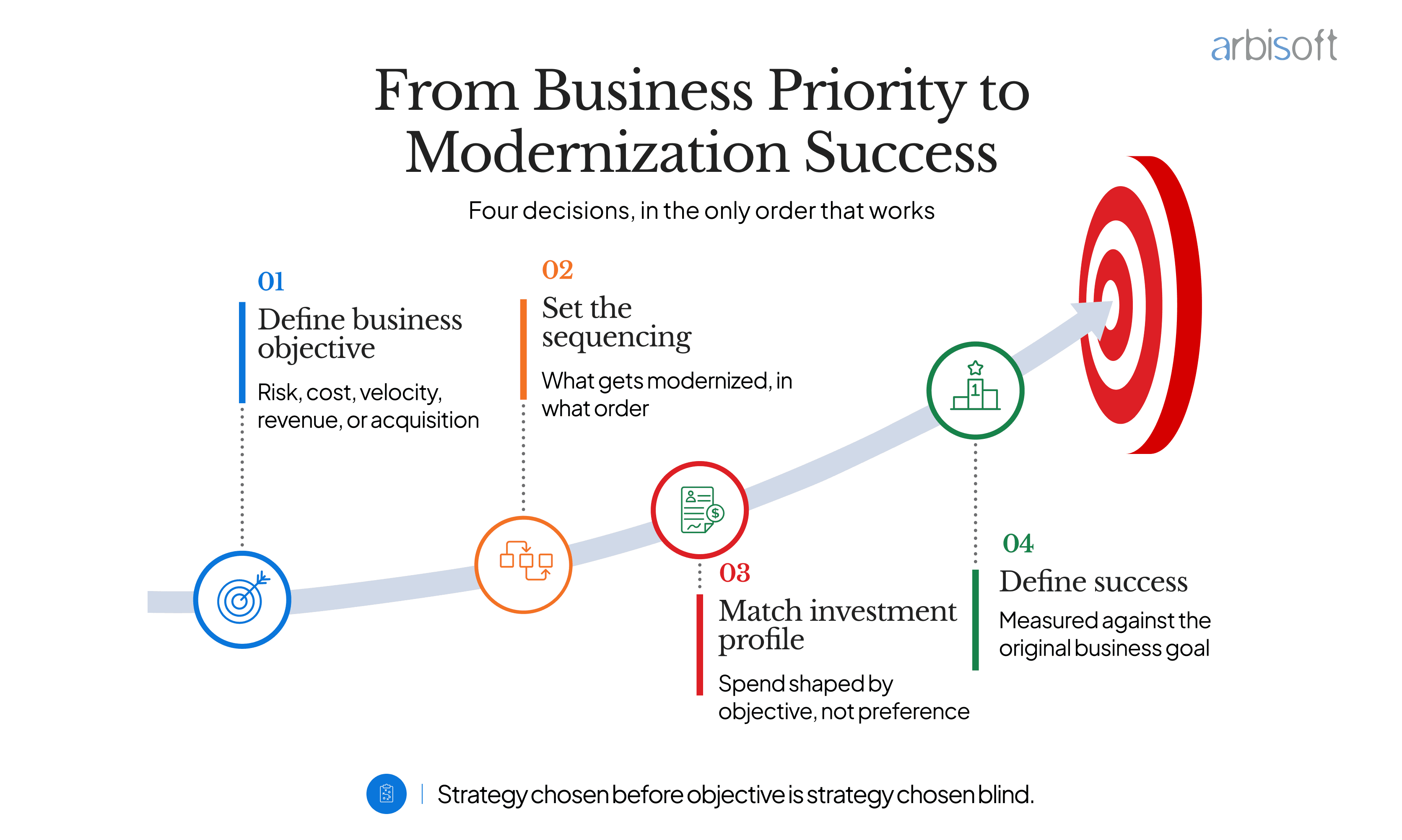
Legacy system modernization should begin with business priorities, not infrastructure preferences. The right modernization strategy depends on whether the organization is trying to reduce operational risk, accelerate digital transformation, improve cost efficiency, increase product velocity, support acquisitions, or unlock new revenue opportunities. Each of those objectives implies a different sequencing, a different investment profile, and a different definition of success.
Leverage two decades of experience
20 years. 550+ partnerships. Trusted to deliver. Let's talk about yours.
Talk to our team