
 Add as preferred on Google
How to Modernize a Legacy Learning Platform Without a Full RewriteRead More
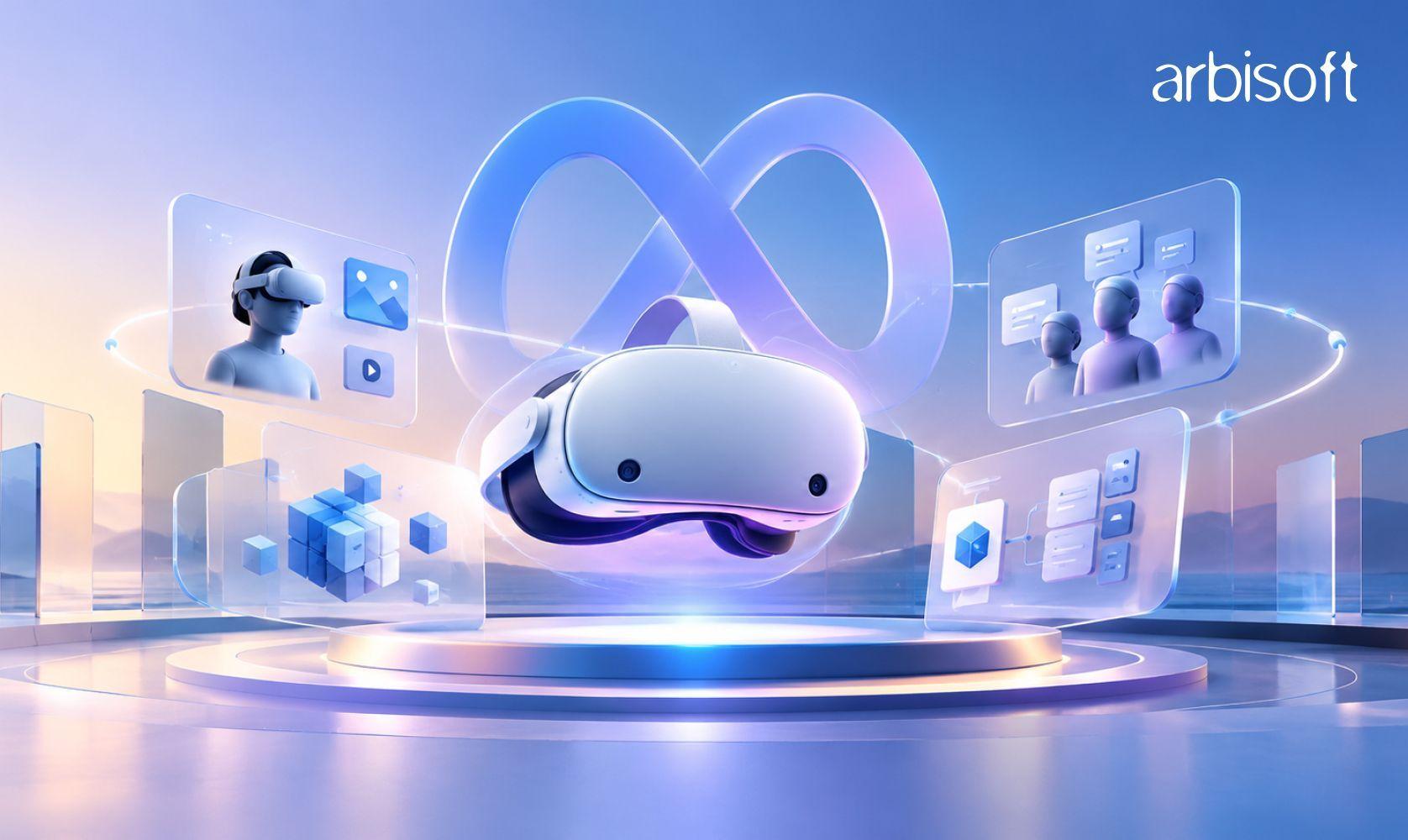
Meta Connect 2026 produced two days of announcements, but the useful dividing line for product teams is availability. Muse Spark is already accessible through the Meta Model API, Horizon Create and Horizon Studio are still behind a waitlist, and Meta VR Glasses are not due until Spring 2027. The nearer-term changes are in software: the Wearables Device Access Toolkit brings camera, voice, and motion into existing mobile apps, Ray-Ban Display can run web apps, and services can connect through APIs or MCP. This practical Meta Connect 2026 analysis sorts the announcements by what teams can test now, what needs more validation, and what belongs on a longer roadmap, including scene-aware constraints such as latency, per-frame inference cost, failed object detection, and camera-frame storage.
| Announcement | Price | When you can use it |
|---|---|---|
| Ray-Ban Meta Gen 3 | $449, Aviator from $579 | On sale since September 23 |
| Ray-Ban Meta Audio | $349 | Ships October 13 |
| Meta Adventurer | $249 | Ships October 23 |
| Meta Ray-Ban Display | $799 US, £749 UK, €899 EU | Ordering now, EU from October 13 |
| Hearing enhancement | $149.99 | Later in 2026, FDA-cleared for adults 18+ |
| Muse Spark through the Meta Model API | Not stated | Available |
| Muse Code | Not stated | Beta since August 5 |
| Horizon Create and Horizon Studio | Not stated | Waitlist, early access rolling out |
| AI Building Blocks for Horizon OS | Not applicable | Documented and available |
| Muse Charm | Not announced | Meta says later this year |
| Meta VR Glasses | $1,299.99 | Spring 2027 |
Three corrections are worth making, because the wrong versions are spreading. The camera-free Ray-Ban Meta Audio is $349, not the bottom of the range; the $249 tier is the Meta Adventurer, a different product. Meta VR Glasses carry a confirmed price and a Spring 2027 date, which puts them roughly 18 months out. Meta has announced no price and no ship date for Muse Charm, saying only that it will share more later this year, and its hardware team said onstage that it has not finished fitting the components into the case. December appears in coverage as reporting, not as a Meta commitment.
Muse Spark is a multimodal reasoning model with tool use, and Meta describes it as treating perception as something to act on rather than something to caption. Developers reach it through the Meta Model API. Muse Code, a terminal coding agent, has been in beta since August 5. Meta also said more than 1,500 developers applied to build Muse connectors within a week of the program opening.
That is the part of the keynote a team can integrate this quarter. The glasses and the keychain will be written about more, and neither changes what anyone can ship before Christmas.
Horizon Create and Horizon Studio generate playable 2D and 3D games from a natural language description. Create is a phone app. Studio runs in a browser and adds visual editing controls for precise adjustments, and projects move between the two. What the tools generate includes environments, characters, progression systems, difficulty balancing, art direction, and multiplayer.
The distribution side matters more than the generation side. Games run natively inside Facebook, Instagram, and Horizon, and players can join a multiplayer session from a social feed without downloading anything. Meta reviews content through built-in safety systems before publication, and creators can earn through in-game monetization and the Meta Horizon Creator Fund. Both tools are in early testing behind a waitlist.
The market read the distribution point the same way. Meta's stock rose on the announcement while Roblox and Unity shares fell.
The more useful glasses announcement for a product team is not another frame. It is that Meta now has several ways to put software on glasses without starting with a glasses-native product.
The Wearables Device Access Toolkit 1.0 lets an existing mobile app keep its logic and backend while the glasses become a hands-free interface. The toolkit adds camera capture, voice input, and motion data, and one integration can work across Meta's display and displayless glasses. For Ray-Ban Display, web apps can run without a native app or a separate SDK. Meta AI connectors take a third route: expose a service through an API or MCP and Meta AI can call it directly for the user. Meta says these updates begin rolling out September 30.
That lowers the cost of finding out whether glasses belong in a product at all. A team can take one workflow that already exists on mobile or web, move the useful part of it into a hands-free interaction, and measure whether that is actually better than reaching for a phone. It does not require committing to a new hardware roadmap first.
Meta is opening distribution at the same time. Select experiences will be discoverable directly on Ray-Ban Display and through a curated section of the Meta AI app, which means the company is building a route from existing software to glasses and a route from glasses users back to that software. Access is still controlled by Meta, but the entry point is much closer to a normal app or API integration than a new device platform.
The harder part starts once the software can use what the wearer sees, says, and does. At that point, the problem stops being how to get an app onto glasses and becomes how reliably it can respond to the world around them.
AI Building Blocks for Horizon OS combine three things Meta already documents: passthrough camera access, object detection, and responsive LLM prompts. Together they let an app react to the room it is in.
The requirements that follow are the part a demo does not show. An app reading camera frames needs a latency budget, because a response that arrives two seconds after someone looks at an object reads as broken. It needs a cost model, since per-frame inference behaves nothing like per-seat pricing. It needs a defined behavior for the case where detection returns nothing or returns the wrong object. It also needs an answer about where camera frames go and how long they persist, which is a question institutional and enterprise buyers ask early.
Ray-Ban Meta Audio has speakers, microphones, and the assistant, with no camera at all, at $349 and 43 grams with up to 12 hours of battery. Reading the product as positioning, it removes the single objection that has followed camera glasses since the first pair shipped, and it does so at a price below the camera models rather than above them. Meta now has a tier to offer anyone who wants the assistant and will not wear a camera on their face.
Most teams reading this will never publish to Horizon, and the announcements still carry a usable pattern.
The pattern is an agent that perceives, plus a generator that produces a rough first version, plus a human who specifies and selects. Meta built a consumer version of it. The same shape applies to internal tooling, to content pipelines, and to any workflow where producing a draft is slower than judging one.
Two decisions follow from that. The first is whether your product has a perception surface at all, meaning a camera, a screen, a document stream, or a log, that an agent could act on rather than summarize. The second is whether your team can evaluate generated output at volume, because that capability decides whether generation saves time or produces more work to review.
Real, and unfinished. Zuckerberg showed a keychain-sized device with a small display, speakers, microphones, and a fingerprint sensor. Meta announced no price and no ship date, saying it will share more later this year, and its hardware team said onstage that component fit inside the case is not settled. December dates in coverage come from reporting rather than from Meta.
Spring 2027, at $1,299.99. Meta describes roughly 100 grams, a 5K display using micro-OLED panels, and a belt-worn processor and battery puck. Anything planned around that device is an 18 month plan.
Meta says the tools generate complete games with progression, difficulty balancing, art direction, and multiplayer, and that creators can publish and monetize them. Both are in early access behind a waitlist, so nobody outside that group can verify output quality yet.
Through the Meta Model API. Muse Code, the terminal coding agent, has been in beta since August 5 and uses the same model.
The Meta Model API works without any Meta device. The rest applies as a pattern rather than a platform, which is agent-driven perception and generated first drafts changing where engineering time goes.
...Loading Related Blogs
Trusted by top platforms for our transformative solutions and exceptional results: