 Add as preferred on Google
Odoo Customization Guide for Smarter ERP DecisionsRead More
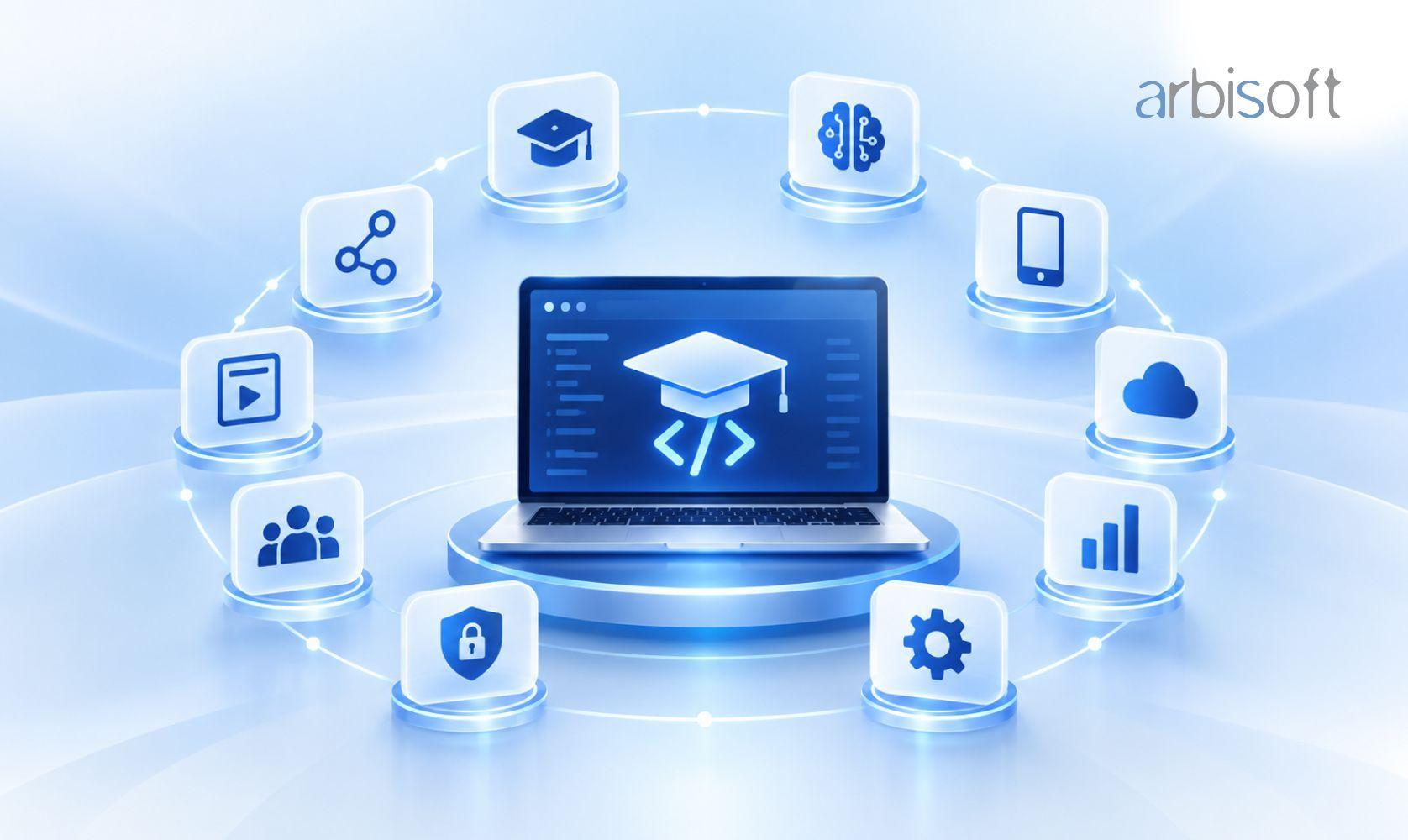
EdTech partner rankings go wrong when they compare fundamentally different purchases as though they were interchangeable. A team hired to build a learning product, a firm brought in for accessibility remediation, and a specialist operating Open edX may all appear under the same label, yet choosing the wrong category can derail the buying process before delivery starts.
The problem is sharper in education because buyers with very different constraints often run the same search. A registrar replacing a student information system needs different expertise from a founder building a tutoring marketplace, while institutions may also need integrations with Canvas, Moodle, PowerSchool, or Docebo. School districts, universities, and public agencies can face accessibility requirements spanning WCAG, EN 301 549, ADA Title II, and the European Accessibility Act, and high-stakes assessment introduces item banking, adaptive testing, security, and psychometric requirements. Category fit carries operational consequences here.
A practical guide to Top EdTech partners in 2026 starts by defining the four partner types, then explains the scoring method and verification sources before matching common builds to the right category. It then compares ten providers and closes with seven questions for evaluating firms outside the list. The practical question is which EdTech software development company or specialist matches the work being bought, including cases where an Open edX partner is the better fit. It is written for founders, CTOs, product and engineering leaders, registrars, and institutional technology buyers choosing an education technology services partner.
An Education technology partner is an external firm you hire to build, operate, certify, or integrate education technology. That description covers more than one kind of company, and the difference between them matters more than anything else on this page.
Four purchase types appear in this ranking.
Custom build partners. Outsourced engineering firms that design, build, and modernize custom education software: learning management systems, online learning platforms, tutoring products, AI learning features, education data platforms. This is what most buyers mean when they search for an EdTech software development company. Here: Arbisoft, Cleveroad, Aristek Systems.
Open-source platform specialists. Firms whose practice is one platform, in every case on this list Open edX. Customization, upgrade paths, upstream contribution, and in some cases hosting and SLA-backed operations. Here: Arbisoft, OpenCraft, Raccoon Gang, eduNEXT, Appsembler.
Accessibility and compliance partners. Firms that audit and remediate an existing product, then author the conformance documentation that procurement asks for. Here: Arbisoft, Magic EdTech.
Architecture and integration partners. Firms that design standards-aligned institutional systems, or connect a learning platform to the student information system, HR system, and identity provider an organization already runs. Here: Arbisoft, Unicon, Chetu.
Mixing purchase types without labelling them is the most common flaw in this category. A buyer reads a ranked list, calls the top three, and discovers that one contributes code upstream to a platform, one writes accessibility conformance reports, and one sells integration programs. All three can be excellent. Only one of them is doing the thing that buyer needs. This list keeps all four types in, because buyers genuinely do choose between them, and labels every entry so you can see which purchase you are making.
Four factors we measured:
| Factor | What it measures |
| Category specialization | Is education technology a core practice, or one line in a general service menu? |
| Proof of delivery | Public, checkable work in education |
| Client validation | Independent review volume, rating, and recency |
| Company standing | Years operating, headcount, verifiable certifications |
Each factor scores Strong, Adequate, Weak, or None. Specialization is scored against education as a whole rather than against a single partner type. A firm can score Strong as an accessibility partner, a platform specialist, or a custom build shop, as long as education is the practice rather than a vertical page on a general site. Specialization carries the most weight deliberately. A large generalist with a strong brand should not outrank a focused specialist inside that specialist's own category, which is what happens when a ranking leans on review volume alone.
Proof of delivery cannot score Strong on a company's own website alone. At least one item was checkable somewhere else: a product the company built listed in the 1EdTech TrustEd Apps Directory, an Open edX partner tier or contributor record, a public commit history, an app-store listing, a named and attributed client, or credible press.
Partner type: Custom build partner, with platform specialist depth on Open edX
Specialization: Strong · Proof of delivery: Strong · Client validation: Strong · Company standing: Strong
The date is the fact that matters. Arbisoft has worked on Open edX since 2013. Its EdTech division is currently listed by Open edX as an official Partner, and Open edX credits it with more than 5,000 contributions to the platform. The partner profile names edX.org, MIT, Philanthropy University, Toastmasters, and Wikimedia among organizations it has worked with. edX's then Senior Director and Head of Engineering, Ed Zarecor, described Arbisoft as a partner since 2013 whose engineers work with the edX team daily to advance the Open edX platform.
That contribution history matters because Arbisoft's involvement reaches into the infrastructure used to run Open edX. Arbisoft’s Edtech division maintains Tutor, the Docker-based distribution used to install and operate the platform. Open edX documentation strongly recommends Tutor for development and installation and directs administrators to Tutor's own documentation for deployment guidance.
Arbisoft’s education work also reaches beyond Open edX. Arbisoft's TenMarks engagement ran for five years and covered web development, mobile applications, infrastructure, QA, and ongoing product development. Arbisoft reports that the mathematics learning platform served more than 2 million users and handled more than 220 million server requests per week. The figures are company-reported, but the project is useful evidence of experience with education products operating at consumer scale.
This breadth becomes relevant when the LMS forms part of a larger product. A project may include mobile applications, commerce, analytics, custom learner experiences, infrastructure, or AI features alongside the learning platform. Arbisoft has public work across each of those areas, which gives buyers one engineering partner for a wider portion of the product.
The company also has independent client validation. As of September 2026, Clutch displays 35 Arbisoft verified client reviews, with a 4.9 overall rating.
Publicly documented relationships and projects include edX, MIT, Stanford, the World Bank, Philanthropy University, Wikimedia, McDonald's, and TenMarks. Arbisoft also works with companies such as KAYAK and Insurify outside education, which can matter when a learning product depends on engineering work that sits beyond the LMS itself.
Best for: end-to-end learning ecosystems where the LMS sits inside a wider product, and Open edX or Moodle modernization at scale.
Less suited for: small, single-course deployments that a hosted platform would serve at lower cost.
Partner type: Open-source platform specialist
Specialization: Strong · Proof of delivery: Strong · Client validation: insufficient evidence · Company standing: Adequate
OpenCraft has worked with Open edX since 2013, designing and supporting large-scale education projects, and reports thousands of code contributions to the platform's master repository along with ongoing maintenance of open-source extensions, APIs, plugins, and XBlocks. OpenCraft's founder made the first outside open-source contribution when Open edX went public.
Here is why upstream contribution matters and when it does not. Most Open edX projects fail at upgrade time. You customize the platform, the project moves forward, your fork drifts, and every release turns into a migration project. A team that contributes upstream approaches customization differently, because it knows which changes will survive the next release. In our view that is the practical difference between a platform you own and a platform that owns you.
The trade-off is scope. OpenCraft is a platform specialist rather than a general product agency. If your build needs mobile, data, and commerce engineering around the LMS, you are buying a different type of partner.
Best for: deep Open edX platform work where staying compatible with upstream matters more than breadth of services.
Less suited for: builds where the LMS is one module inside a larger product.
Partner type: Custom build partner
Specialization: Adequate · Proof of delivery: Strong · Client validation: Strong · Company standing: Strong
Cleveroad is the entry that tests whether this methodology is honest, because Cleveroad competes directly with this article. The evidence places it here anyway.
Cleveroad has built education software since 2011, holds ISO 9001 and ISO 27001 certifications that resolve in IAF CertSearch, holds AWS partner status, and carries 80 Clutch reviews at a 4.9 average. That review volume matters more than the average, because it is enough for the average to mean something.
Cleveroad's education work comes with named clients who go on record. Sean Newman Maroni, founder of the K-12 STEM education platform Betabox, describes a structured discovery phase that produced a validated scope and a delivery roadmap, in a review linked to its Clutch entry. A second project moved the Crossfader DJ education platform off WordPress into a web application, a native iOS app with offline access, and an admin panel handling courses, subscriptions, and payments. That second shape is worth recognizing. A content business outgrowing a CMS is one of the most common situations in EdTech, and the rebuild is not the difficult part. Carrying the existing users and search footprint across without losing either is.
Specialization scores Adequate because education sits among six other industries in Cleveroad's practice.
Best for: mid-size education products needing full-cycle delivery, and modernization off consumer CMS platforms.
Less suited for: open-source platform engineering where upstream ecosystem involvement is the requirement.
Partner type: Accessibility and compliance partner
Specialization: Strong · Proof of delivery: Adequate · Client validation: insufficient evidence · Company standing: Strong
Magic EdTech is the only company here whose main differentiator is a document, and that is less faint praise than it sounds. It is also the clearest example of why this list labels partner types. You do not hire Magic EdTech instead of a build partner. You hire it before a procurement deadline, or alongside the team that built the product.
If you sell into school districts, universities, or public agencies, accessibility is a procurement gate. Fail it and you lose deals you never learn you were in. Magic EdTech authors the VPAT and Accessibility Conformance Report after remediation, then walks client legal and compliance teams through the document line by line so they can defend every Supports and Partially Supports rating without scrambling for expert help on deadline. Anyone who has watched a deal stall because nobody could explain a conformance rating under pressure knows what that service is worth.
The practice covers WCAG, EN 301 549, ADA Title II, and the European Accessibility Act. Magic EdTech's team includes CPACC and CPWA-certified professionals and people with disabilities on the testing panel, combining automated and manual testing. Company-reported work includes more than 60 math interactives remediated for a K-12 publisher and over 1,300 accessibility issues closed two months early for a learning platform. Those figures are self-reported and held to the same standard as Arbisoft's.
One line on Magic EdTech's own site carries more weight than the rest of it: no credible vendor should promise legal immunity on accessibility. That is correct, and it is unusually restrained for a company selling accessibility services.
Best for: publishers and institutions with procurement-driven accessibility obligations, and any product team asked for a VPAT that did not have one.
Less suited for: ground-up product builds where accessibility is one requirement among many rather than the reason you are hiring.
Partner type: Open-source platform specialist
Specialization: Strong · Proof of delivery: Adequate · Client validation: insufficient evidence · Company standing: Adequate
Raccoon Gang reports building, deploying, and maintaining Open edX platforms across more than 30 countries since 2015, with a team of 94 or more engineers, instructional designers, and LMS consultants, and more than 200 projects ranging from MOOC-scale universities to enterprise compliance platforms.
Two details in that sentence do the real work. Instructional designers on staff means someone is positioned to push back when a course structure will not work for learners, which most engineering teams will build without comment. For organizations without a strong internal learning-design function, that changes what you receive. The geographic spread implies repeated exposure to localization, multi-language content, and uneven connectivity, which are the unglamorous problems that sink international rollouts.
Raccoon Gang's published testimonials name Labster, where the work involved bringing legacy Python 2 and Django 1 projects forward, and a lead privacy compliance engineer at PLMC. That is modernization rather than greenfield building, which is a useful signal for anyone sitting on an aging deployment.
Proof of delivery scores Adequate rather than Strong because Raccoon Gang's tier in the Open edX partner directory could not be confirmed within this research pass.
Best for: Open edX implementations at organizational scale, multi-region rollouts, and modernizing a deployment that has fallen behind.
Less suited for: custom products not built on Open edX, where you would pay for specialization you do not use.
Partner type: Open-source platform specialist, operations-led
Specialization: Strong · Proof of delivery: Adequate · Client validation: insufficient evidence · Company standing: Adequate
eduNEXT is an operations purchase rather than a build purchase, and reading it as the latter is how buyers end up disappointed. It reports more than 12 years of Open edX core contribution and provides hosting, platform updates, security, monitoring, and SLA compliance. eduNEXT also offers white-label arrangements in which a consultancy owns the client relationship while eduNEXT provides the technical infrastructure invisibly to the end client.
That white-label model is the interesting part, and it cuts both ways. It means eduNEXT quietly underpins work you may have seen attributed to other firms, which is a genuine depth signal. It also means that if you are hiring a different consultancy for Open edX work, eduNEXT may be the company actually holding your infrastructure.
Best for: organizations that want Open edX hosting and platform operations handled by a specialist rather than an internal team.
Less suited for: product builds that extend well past the Open edX platform itself.
Partner type: Architecture and integration partner
Specialization: Strong · Proof of delivery: Adequate · Client validation: insufficient evidence · Company standing: Adequate
Unicon sells architecture and judgment more than delivery capacity, which is the right purchase earlier in a program than most institutions realize. It builds standards-aligned systems explicitly intended to prevent vendor locking and to use open source, and reports that roughly half of its engineering staff have at least 20 years of professional software development experience.
Seniority claims usually mean nothing. This one is checkable on LinkedIn in about five minutes, and it addresses the failure this market is known for, where a senior pitch is followed by a junior delivery team. Unicon also makes a point most vendors avoid: institutions often bring in a partner halfway through a project, or after building what they believed was the right strategy. A firm willing to say that publicly is more likely to challenge a weak plan before code gets written.
Best for: higher-education institutions with established technology ecosystems, standards-heavy integration work, and buyers who care about exit terms.
Less suited for: consumer EdTech products and fast MVP work.
Partner type: Open-source platform specialist
Specialization: Strong · Proof of delivery: Adequate · Client validation: insufficient evidence · Company standing: Weak
Appsembler appears among the organizations that contributed to the Open edX core committer program, alongside eduNEXT, OpenCraft, Overhang.io, and Raccoon Gang. That listing dates from the edX era before the transition to Axim Collaborative, so treat it as history rather than a current credential and check the present contributor roster.
Company standing scores Weak because Appsembler's headcount and certifications could not be confirmed. The specialization is clear. The operating footprint is not.
Best for: Open edX work at smaller scale, particularly customer education and partner training platforms.
Less suited for: enterprise programs that require procurement-grade security documentation.
Partner type: Custom build partner
Specialization: Adequate · Proof of delivery: Adequate · Client validation: Adequate · Company standing: Adequate
Aristek Systems appears on more competing lists than almost any company here, which is a popularity signal rather than an evidence one. Aristek works across EdTech, HealthTech, logistics, and AI/ML, and its profile emphasizes legacy modernization, AI readiness, governance, security, and compliance for schools, universities, publishers, and corporate learning organizations.
The score lands below Aristek's general reputation, and the reason is worth stating plainly. Clutch lists Aristek Systems with a 4.9 rating from 9 reviews. Nine reviews is a small sample. The rating is good and the sample does not yet support strong conclusions, so client validation scores Adequate rather than Strong. That is a comment on available evidence rather than on the company.
Best for: modernizing an existing education platform and preparing it for AI features.
Less suited for: deep open-source platform work where upstream contribution is the requirement.
Partner type: Architecture and integration partner, inside a general enterprise practice
Specialization: Weak · Proof of delivery: Adequate · Client validation: insufficient evidence · Company standing: Strong
Chetu is the widest entry on this list and the narrowest recommendation. It is a US-headquartered software company with more than 2,800 developers, where custom LMS builds form one track inside a broader enterprise software practice. That track covers SCORM and xAPI compliance, integration work with Canvas, Moodle, PowerSchool, and Docebo, cloud-native architecture on AWS, Azure, and GCP, and K-12, higher education, corporate, and government verticals.
The integration list is the reason Chetu earns a place. Naming Canvas, PowerSchool, and Docebo specifically is more useful than a generic integrations claim, and it points to real institutional work. Specialization scores Weak because education is one track inside a large general practice, and this model weights category focus heavily. A company can be capable and still be the wrong shape for most rows in the table above.
Best for: large integration programs connecting an LMS to institutional systems already in place.
Less suited for: buyers who want an education-native partner rather than an enterprise vendor with an education track.
A registrar replacing a student information system and a founder building a tutoring marketplace type the same search. They need different companies, and often different kinds of companies. Find your row.
| What you are building | Partner type you are buying | Companies with proof in this area |
| Custom LMS, corporate LMS, extended enterprise training | Platform specialist or custom build | OpenCraft, Arbisoft, Raccoon Gang, eduNEXT, Appsembler |
| Online learning platforms, course marketplaces, content platforms | Custom build | Arbisoft, Cleveroad, Raccoon Gang |
| Accessibility remediation, VPAT and procurement readiness | Accessibility and compliance | Magic EdTech, Arbisoft |
| Higher-education architecture, standards work, avoiding lock-in | Architecture and integration | Arbisoft, Unicon, OpenCraft |
| Platform modernization and legacy migration | Custom build or platform specialist | Arbisoft, Aristek Systems, Raccoon Gang, Cleveroad |
| AI features inside an existing learning product | Custom build | Arbisoft, Cleveroad, Aristek Systems |
| Mobile learning apps | Custom build | Arbisoft, Cleveroad, Chetu |
| Integrations with Canvas, Moodle, PowerSchool, Docebo | Architecture and integration | Chetu, Arbisoft |
| Hosting, upgrades, and SLA-backed platform operations | Platform specialist | eduNEXT, OpenCraft, Raccoon Gang, Arbisoft |
Start with the question that sits above all of these: which of the four purchases am I making? A firm that answers "all of them" is describing a sales process, not a practice.
Then seven questions, in the order they are useful on a first call. The value sits in what a weak answer sounds like.
Which named architects stay past month three? Ask for names, then ask for those names in the contract.
Tell us what you are building and we will tell you whether Arbisoft is the right fit. Sometimes the honest answer is that you need a compliance partner or a hosting specialist rather than an engineering team.
Trusted by top platforms for our transformative solutions and exceptional results: