

 Add as preferred on Google
Odoo Customization Guide for Smarter ERP DecisionsRead More
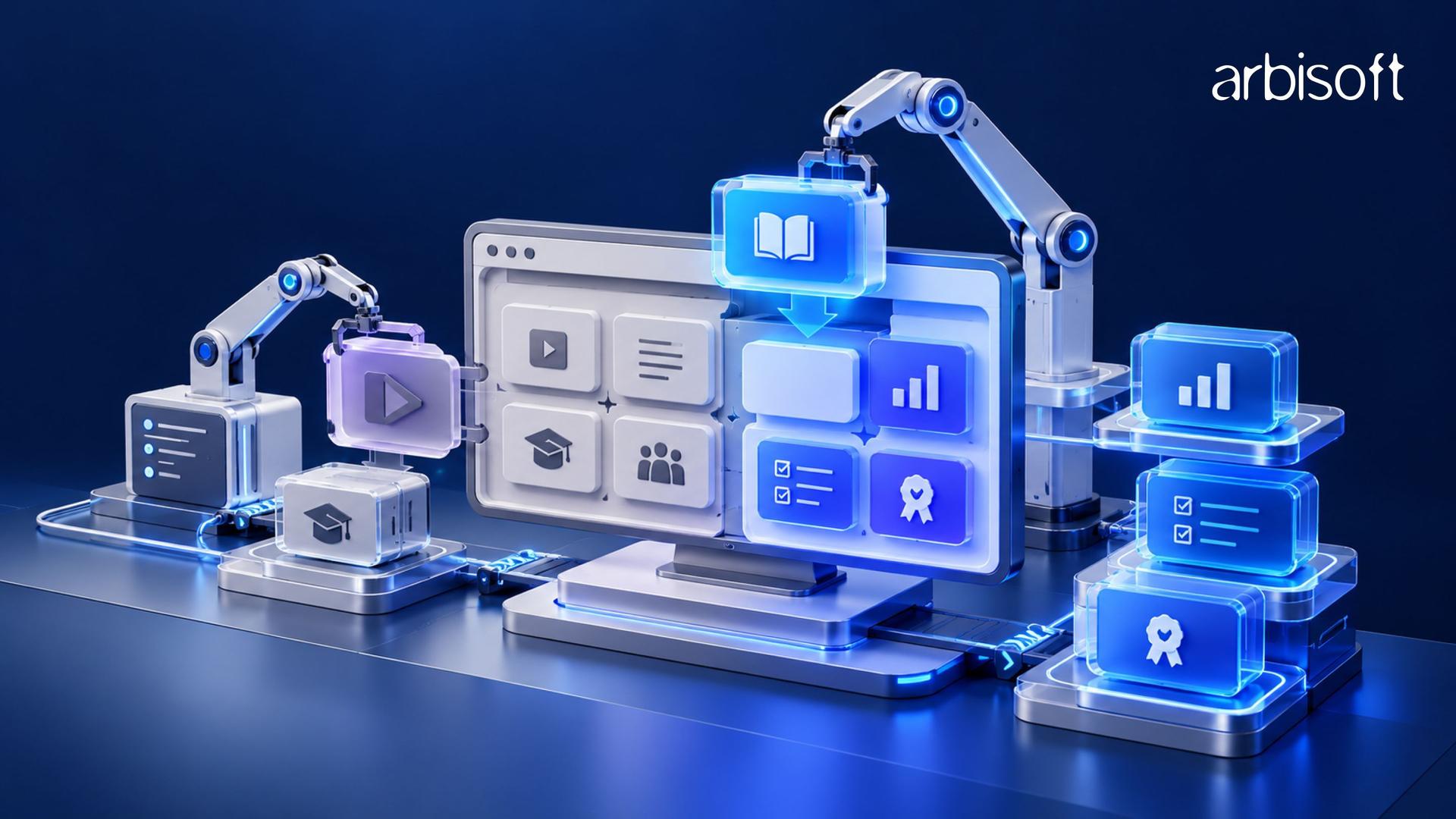
Most established learning platforms do not need to be rebuilt from scratch. Legacy learning platform modernization is often safer and more valuable when it focuses on the parts actually holding the product back, such as the frontend, backend, integrations, data layer, or infrastructure, while preserving the business logic, learner data, content, and workflows that still work.
The safest way to modernize a legacy learning platform without a full rewrite is to modernize it one layer at a time while learners continue using it. Start with a short assessment: trace your three costliest symptoms to the layer behind each one, then rate the affected components by business importance and technical health. Modernize the components that are important and unhealthy first. Before changing their code, protect essential logic such as grading rules, certificate logic, and institution-specific settings with tests. Release changes gradually behind feature flags, validate them with a small group of learners, and schedule cutovers away from term starts and exam periods. For a large, revenue-critical learning platform, avoid a big-bang rewrite that puts customers, data, and revenue at risk at the same time.
Depending on where the constraints sit, modernization may involve a new learner experience, cleaner APIs, framework upgrades, cloud migration, data modernization, architecture decomposition, or replacing only the components that no longer make sense to maintain.
This guide explains how to identify where your learning platform is constrained, decide what to retain, refactor, re-platform, integrate, replace, rebuild, or retire, and sequence those changes with minimal disruption to learners and customers.
Learning platform modernization is the process of upgrading an established education technology product, layer by layer, so it becomes faster to change, easier to integrate, more scalable, and able to support new capabilities, while preserving the parts that still create value.
The "platform" is rarely a single application. A typical EdTech product is an ecosystem: a learner experience on web and mobile, instructor and admin tools, an LMS, LXP, or Open edX or Moodle core, assessment and certification services, content and authoring systems, integrations with SIS, HRIS, CRM, identity providers, video, and payments, and a data layer feeding reports and analytics. Modernization can touch any of these layers, and in most programs it touches only a few.
The guiding principle is to modernize the constraints, not necessarily the entire platform.
Legacy problems usually surface as business symptoms long before anyone labels them technical debt. Each symptom tends to point to a specific layer, which is what makes it useful for planning.
| Symptom | Likely cause | Business consequence |
|---|---|---|
| Releases slow down, and small changes need weeks of regression testing | Tightly coupled code, few automated tests, manual deployment | Roadmap commitments slip, and teams avoid touching risky areas |
| Frameworks, libraries, or language versions are out of support | A stack at or near end of life | Security exposure and harder hiring |
| Cloud or hosting costs grow faster than usage | Oversized servers, no autoscaling, inefficient queries | Margin erosion, especially for SaaS products |
| Institutional security reviews are hard to pass | Outdated dependencies, weak access controls, missing audit trails | Lost or delayed enterprise and university deals |
| The upgrade path for the core platform is blocked | Customizations made directly in core code | Missed fixes and features from the upstream platform |
| Partners and customers struggle to integrate | Weak or undocumented APIs, point-to-point connections | Slow onboarding of institutions and content providers |
| Mobile support is poor or expensive | A server-rendered frontend with no clean API layer | Learners get a weaker experience where they spend the most time |
| Performance drops at term start or during exams | Database bottlenecks, no caching or queues, limited scaling | Failed submissions and support spikes at the worst moments |
| The interface fails accessibility checks | An old frontend without accessible components | Procurement barriers and learners who cannot use the product |
| AI features are hard to add | Learner data and content locked in structures other services cannot reach | AI pilots that never reach production |
Two or three symptoms in one layer usually call for a targeted project. Symptoms spread across most layers call for a broader program, and sometimes a different decision altogether.
"Legacy learning platform" covers very different situations. The starting point depends on which one you are in.
| Situation | Where modernization usually starts |
|---|---|
| The platform works, but every release is slow and risky | Automated tests, CI/CD, and decoupling the most-changed modules |
| The backend is sound, but the learner experience feels dated | A new frontend and design system on top of an API layer |
| Growth in learners, tenants, or regions exposes performance limits | Profiling, caching, queues, database work, and cloud autoscaling |
| The business wants AI features such as tutoring, search, or recommendations | Data access, event capture, and APIs before any model choice |
| Integrations are the bottleneck | An integration layer with standard connectors such as LTI, SSO, and xAPI |
| A monolith needs to become modular or API-first | Clear module boundaries, then extraction of the parts that change most |
| Infrastructure is outdated | Containerization, infrastructure as code, observability, and disaster recovery |
| An acquisition or expansion left several overlapping platforms | Shared identity, shared services, and a common data model |
| The platform encodes years of valuable business logic | Characterization tests and documentation before changing anything |
| Accessibility, security, or privacy requirements are rising | Accessible components, dependency upgrades, and access and audit controls |
| A new business model is coming, such as B2B, multi-tenancy, subscriptions, or credentials | The data model and tenancy layer for the affected domain |
| Parts of the stack are reaching end of life | A staged framework and runtime upgrade plan |
Many organizations recognize three or four of these at once. That is normal, and it is the reason a short assessment should come before any plan.
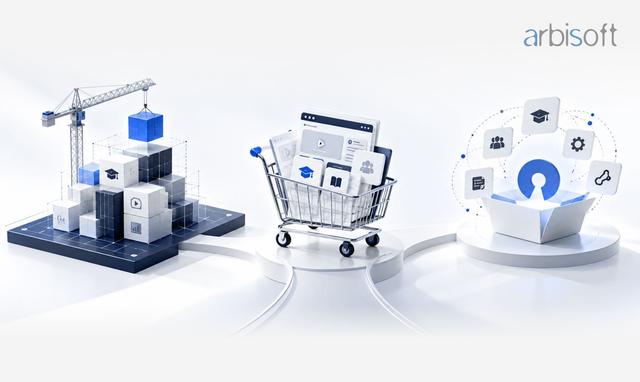
The choice is rarely all-or-nothing. It is best made component by component, and each component can take a different path:
At the level of the whole platform, the following table shows when each broad path usually makes sense.
| Situation | Usual best path | Why |
|---|---|---|
| Core business logic is sound and specific layers hold it back | Modernize incrementally | Keeps proven workflows and data while fixing the constraints |
| The frontend is dated and the backend is stable | Modernize the frontend and add APIs | Visible improvement with limited backend risk |
| The product's value sits in workflows a commercial platform already handles well | Replace with an existing platform | A custom version adds cost without differentiation |
| The data model cannot support the business model the company now needs | Rebuild the affected domain alongside the old system | Incremental fixes cannot repair a model built for a different business |
| The codebase is small, poorly understood, and has few users | A rewrite can be reasonable | Low migration risk and little logic to preserve |
| The platform is large, revenue-critical, and used daily by institutions | Modernize incrementally | A big-bang rewrite puts customers, data, and revenue at risk at the same time |
Full rewrites are almost always underestimated. An established learning platform encodes years of edge cases: institution-specific settings, grading rules, enrollment exceptions, certificate logic, integrations, and reports nobody fully documented. A rewrite has to rediscover all of that while the old system keeps changing, and it delivers nothing to learners until the switch. Incremental modernization avoids that race and starts returning value within months.
A short technical assessment should come before any modernization plan. It answers four questions: which layers cause the symptoms, which components carry the most business value, where technical risk is highest, and what the team needs to keep shipping during the work.
The most useful output is a component map rated on two axes, business importance and technical health:
The assessment should also record the business logic that must survive any change, such as grading and progression rules, certificate and credential logic, institution-specific configuration, and reporting definitions. Writing characterization tests around that logic before touching the code is the cheapest insurance a modernization program can buy.
Most programs combine several of these, applied to different parts of the ecosystem.
Replace the learner, instructor, or admin interface with a modern frontend, usually built on a component library with accessibility built in, while the backend stays in place. This suits platforms with a stable core and a dated experience, and it often brings the most visible improvement for learners. It usually needs an API layer first, so the new interface has clean data to work with. Plan for a period when old and new screens coexist.
Move the application to supported versions of its language, framework, libraries, and database engine. This reduces security exposure and unblocks other work, since modern tools and services assume current versions. Upgrades go in steps, one major version at a time where possible, with automated tests catching regressions. For platforms built on Open edX, Moodle, or similar systems, this is also where customizations get moved out of core code into plugins, so future upgrades stop being blocked.
Introduce documented, versioned APIs in front of the existing system. APIs give mobile apps, new frontends, partners, institutions, and AI services a stable way in, and they hide later changes behind the API from everything that uses it. For education platforms, this layer also carries standards such as LTI for tool launches, SSO through SAML or OpenID Connect, and xAPI or similar formats for learning records.
Move hosting to managed cloud infrastructure with containerization, infrastructure as code, autoscaling, managed databases, and observability. Rehosting as-is reduces hardware and operations work quickly. Deeper re-platforming improves cost control and reliability. Education traffic is unusually peaky, with term starts, enrollment deadlines, and exam windows, so autoscaling and load testing against those peaks often pay for themselves.
Upgrade the database engine, clean up the schema, separate reporting from transactional workloads, and build pipelines into an analytics store. This often delivers the most value for learning analytics, personalization, and AI, since those capabilities depend on learner activity, content, and progress data being accessible and well structured. It is also where consolidation happens after an acquisition, through a shared learner identity and a common data model.
Break a tightly coupled monolith into well-defined modules, and extract into separate services only the parts that need to scale or change independently, such as video processing, assessment delivery, search, notifications, or recommendations. A modular monolith is often the right destination. Full microservices add operational cost that few learning platforms need.
Route traffic through a layer that sends each request either to the old system or to a new component, then move functionality across one slice at a time until the old part can be retired. This is how large platforms are rebuilt without a big-bang cutover. Each slice goes live, is verified against the old behavior, and can be rolled back. Good first slices are high-value, well-bounded areas, such as the learner dashboard, the course catalog, or reporting.
Education platforms carry constraints most software does not. Learners are mid-course, institutions run on academic calendars, and exams cannot fail. These practices protect learners and customers during modernization:
Teams also need to keep shipping product work. Two habits help. Reserve a fixed share of engineering capacity for modernization, and attach modernization work to features the business already wants, so a new feature becomes the first thing built on the new API or frontend. That keeps the program funded and visible, and it avoids a long period where the roadmap stands still.
Learning platform modernization runs as a series of phases rather than one project.
| Phase | Typical duration | Output |
|---|---|---|
| Assessment and roadmap | A few weeks | Component map, priorities, risks, and a sequenced plan |
| Foundations | One to three months, often in parallel with feature work | Automated tests, CI/CD, monitoring, and the first APIs |
| First modernized slice in production | Within a few months of starting | For example, a new learner dashboard or one upgraded service |
| Broader program | A year or more, in regular releases | Several layers modernized and legacy parts retired |
The timeline depends on the size and health of the codebase, existing test coverage, the number of integrations, data migration complexity, and how much product work continues alongside. Programs that invest early in tests and deployment pipelines tend to accelerate later, because every following change becomes cheaper to verify.
Modernizing a live education platform takes different skills from building a new one. A capable partner should be able to:
Legacy learning platforms can be modernized by four kinds of teams: EdTech engineering firms that work across product, architecture, cloud, data, and integrations; platform specialists for systems built on Open edX, Moodle, or similar foundations; general modernization firms with education experience; or an internal team supported by specialist engineers. The right choice depends on whether your platform is custom, built on an open-source foundation, or a mix of both, and on how much of the work your own team will keep.
Arbisoft's own experience centers on evolving live platforms. Its work with edX began in 2013 and grew to a team of more than 150 people working on a platform used by more than 20 million learners, covering Studio course tooling, proctored exams, analytics, enterprise SSO, third-party LMS integrations, and data engineering. For TenMarks, Arbisoft built web, iOS, and Android apps serving more than 2 million users and handling around 220 million server requests a week. Its EdTech division also maintains Tutor, the Docker-based distribution for running Open edX.
Modernize when the platform's business logic, data, and integrations still hold value and the problems sit in specific layers. Consider a rewrite or replacement only when the data model cannot support the business, the codebase is small and poorly understood, or commercial software already covers the product's core workflows.
Yes, and it is one of the most common first steps. Add an API layer in front of the existing backend, then build the new learner or admin interface on that API. Learners see the improvement quickly, while backend modernization continues behind the API at its own pace.
Start with the data. AI features such as tutoring, semantic search, recommendations, and course authoring need structured access to learner activity, content, and progress, plus APIs that let AI services read and act safely. Modernizing the data layer, adding event capture, and exposing APIs usually matter more than the choice of model.
Yes, if the program is planned for it. Reserve a fixed share of engineering capacity for modernization, build new features on modernized components where possible, and use feature flags and staged rollouts so new and old parts ship side by side.
Migrate in stages rather than in one cutover. Copy and transform data into the new structure, run reconciliation checks on counts, progress, grades, and certificates, keep both systems in sync during the transition, and keep a tested rollback path until the new component has run cleanly through at least one busy period.
List the three symptoms that cost your organization the most today, trace each one to the layer that causes it, and rate the affected components by business importance and technical health. That map shows what to modernize first, what to keep, and what to retire, and it turns a general sense that the platform is old into a scoped engineering plan.
Arbisoft works with education and EdTech organizations across that whole ecosystem, from architecture and learner experience to integrations, cloud infrastructure, data, mobile apps, and AI capabilities. If your map points to several layers or many integrations, an architecture assessment with our EdTech team is a practical next step before committing to any rewrite.
Trusted by top platforms for our transformative solutions and exceptional results: