
 Add as preferred on Google
How to Modernize a Legacy Learning Platform Without a Full RewriteRead More
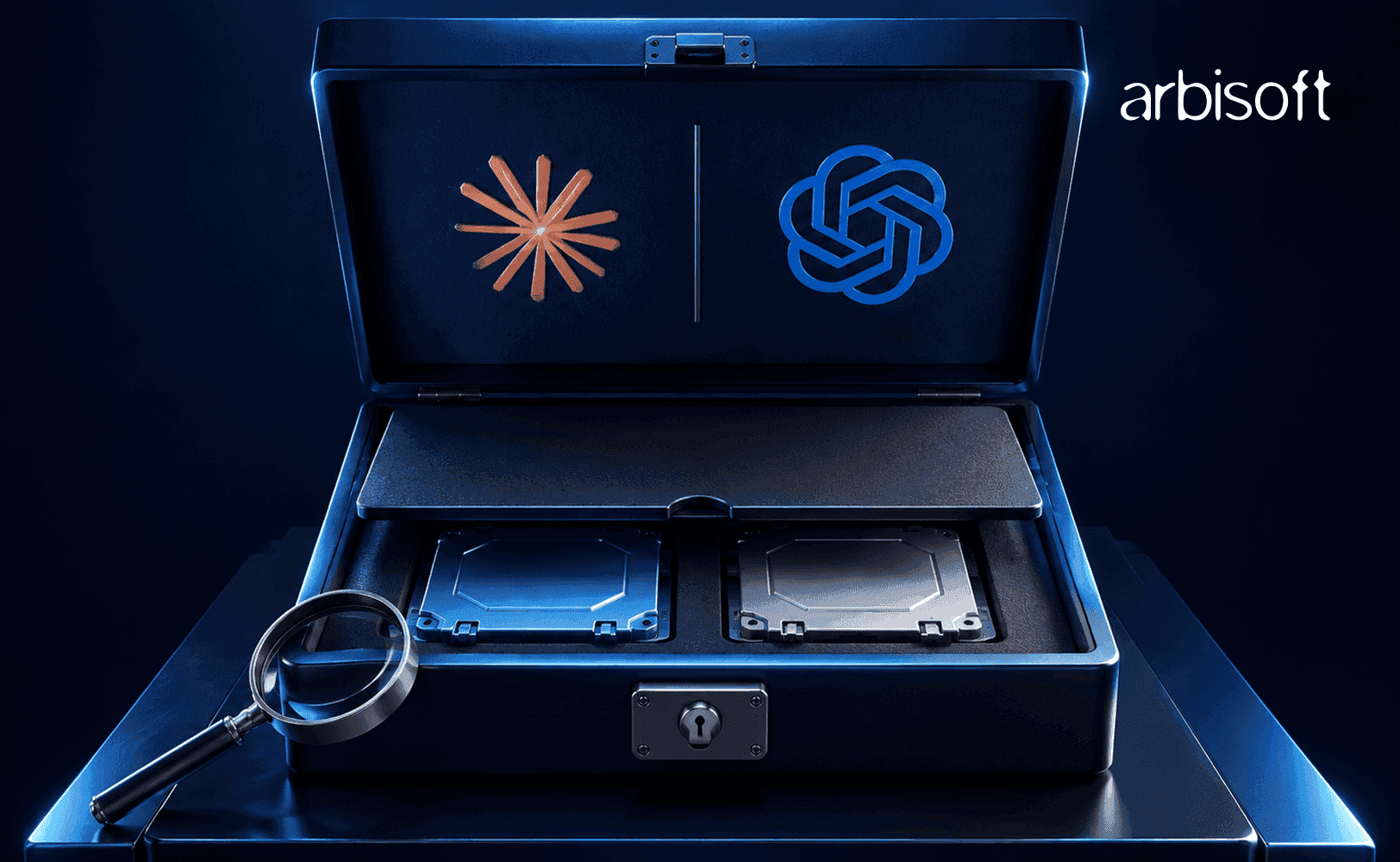
To detect whether a vendor’s “proprietary AI” is actually a GPT, Claude, or other third-party foundation-model wrapper, verify the vendor’s ownership and dependency claims against multiple independent evidence types rather than relying on a single fingerprint. Start with model-provenance documents, architecture and deployment records, contracts, and buyer-controlled runtime evidence. Then corroborate with provider endpoints, request metadata, errors, model identifiers, or supported diagnostics. Treat latency, prose style, refusal wording, and leaked model names as weak signals only. Classify the result by whether the observed architecture matches the vendor’s representation, and record unresolved gaps instead of turning limited visibility into proof of deception.
Using GPT, Claude, or another third-party foundation model is not automatically a problem. A vendor can create substantial proprietary value in retrieval, orchestration, tools, workflow logic, data pipelines, safety controls, fine-tuning, and user experience while relying on an external model.
The diligence question is narrower: does the architecture support the ownership and dependency claims the vendor makes? Wrapper detection works best as an evidence-corroboration exercise, not a hunt for one magical fingerprint.
Before inspecting traffic or probing behavior, force the claim down to the architectural layer. "Proprietary AI" can refer to foundation-model weights, a fine-tuned derivative, retrieval, orchestration, or the surrounding application stack. Those are different claims with different proof requirements.
NIST's terminology helps keep the categories separate: foundation models are distinct from downstream adaptation, and retrieval-augmented generation separates the generator from an external retrieval system.
Turn phrases such as "our model," "custom model," and "private AI" into checkable questions:
Then request an artifact for each answer. Model documentation can support identity. Architecture diagrams can show inference boundaries. Deployment records can support hosting claims. Contracts and dependency schedules can clarify external providers.
For diligence, a wrapper is an application where core generative inference comes from an external foundation model while the vendor builds application layers around it. That definition is architectural, not dismissive.
A proprietary foundation model claim is stronger. The vendor should be able to explain training lineage and its ownership or control of the relevant weights and intellectual property.
Hybrids are common. A product may combine internal and external models, route tasks by use case, or use GPT or Claude only as a fallback. A vendor can also use a third-party foundation model while owning a valuable proprietary application layer.
The strongest audit starts with provenance, then moves toward weaker signals. A useful evidence ladder is:
This ordering matters because outward behavior is easy to reshape. Model provenance is also separate from model quality. A vendor may accurately disclose a third-party model and still make weak performance claims, so verify an AI vendor's accuracy claims in a separate diligence track.
A minimum evidence package should identify the model and the path by which inference happens. Ask for:
No single artifact is automatically decisive. A cloud provider on a subprocessor list may only host infrastructure. An upstream model provider may also be hidden behind a marketplace or intermediary.
When documents disagree, ask for the effective date, architecture version, product edition, region, and current routing or fallback matrix.
A document called a "model card" can still create false assurance.
The original Model Cards proposal focused on trained models, including intended uses, evaluation conditions, performance characteristics, and limitations. For provenance diligence, the buyer needs additional answers: What model is this? Who developed it? What is the adaptation boundary? Where is inference performed? Which parts are vendor-controlled? Does execution depend on another model provider?
A weak document may describe use cases, safety controls, benchmark scores, and customer benefits without identifying the base model or inference provider. A stronger disclosure explicitly separates the external foundation model from proprietary retrieval, routing, domain adaptation, or workflow logic.
Where the buyer controls or jointly manages the environment, runtime evidence can corroborate paperwork. Approved cloud logs, model-invocation records, deployment manifests, API gateway traces, observability data, and legitimate egress telemetry may expose the model identifier, destination service, request ID, account, or route.
Amazon Bedrock shows how strong this can be. Its documented model-invocation logging can record the operation, request ID, AWS identity, and model or inference-profile identifier. Evidence generated inside the buyer's own cloud account is materially stronger than guessing from output style.
Scope still matters. One logged model invocation proves that path for that request, not the whole product.
If the buyer only sees a vendor-controlled proxy, direct attribution may be impossible. In that case, consistent documents and contractual representations may be the strongest available evidence. Record the uncertainty rather than converting a visibility gap into a technical conclusion.
Corroboration matters more than mimicry. Limit checks to documented interfaces, approved prompts, legitimate browser or application telemetry, and infrastructure you are authorized to inspect.
A compact confidence model helps prevent weak signals from dominating the decision:
No single fingerprint should override stronger contradictory provenance evidence without investigation.
Official provider interfaces can leave recognizable traces when the buyer has legitimate access.
OpenAI documents the /v1/responses surface, model identifiers, token usage, and headers including x-request-id, openai-processing-ms, openai-version, and x-ratelimit-*. Anthropic documents /v1/messages, a request ID header, structured errors, token usage, and anthropic-ratelimit-* headers.
Several of these signals together, combined with a provider-controlled destination and matching account evidence, can materially strengthen attribution for the observed request.
But API shape alone is weak. Google documents using Gemini through OpenAI libraries by changing the base URL and API key. AWS Bedrock also supports OpenAI and Anthropic SDK patterns. An OpenAI-looking call can therefore terminate somewhere other than OpenAI.
False negatives matter too. Claude can be deployed through Amazon Bedrock or Google Cloud, where authentication and endpoint structure differ from Anthropic's direct interface. Vendor proxies can strip headers and normalize errors.
Keep prompt-based checks non-intrusive. Do not attempt to bypass controls or extract confidential system instructions.
A buyer can ask benign questions through the ordinary interface or inspect provider and model names that surface naturally in diagnostics, errors, exports, or supported responses. If "Claude," "GPT," or another identifier appears, treat it as a lead.
It does not prove ownership or even current routing. A system instruction can tell a model what identity to claim. A wrapper can inject, suppress, or retain stale provider names. A router can produce different answers across requests.
Absence is equally weak. A well-abstracted application may never expose an upstream model name.
Latency is measurable, but it is a poor identity signature.
Anthropic's own documentation notes that latency depends on model characteristics, prompt complexity, infrastructure, and the point of interaction. Prompt caching can also alter time to first token.
If latency is tested, compare repeated distributions while holding input length, expected output length, streaming mode, tools, region, cache state, and test window as constant as practical. Even then, timing only shows similarity or difference under those conditions.
Routing, load, batching, retries, tool calls, caching, network distance, reasoning settings, and vendor-side processing can all distort the pattern. There is no defensible universal latency threshold that identifies GPT or Claude.
Prose style, markdown habits, refusal wording, verbosity, coding behavior, and capability profiles are easy to observe and weak for attribution.
OpenAI itself warns that prompting behavior can change between model snapshots. System instructions, fine-tuning, retrieval, routing, and post-processing can also reshape visible behavior.
Behavioral resemblance can help decide what to investigate next. It should rarely determine model provenance by itself.
Build a small representation-to-evidence matrix. For each claim, record the base model, ownership or control boundary, inference operator, hosting, fine-tuning, retrieval, routing, fallback behavior, and third-party dependencies. Then compare those statements with approved runtime observations and technical-staff answers.
High confidence comes from independent evidence types agreeing. Low confidence comes from vendor terminology plus a behavioral signature.
A contradiction can have benign causes. Documentation may be outdated. A vendor may have migrated providers. A marketplace may sit between the application and model developer. Different tiers, regions, or fallback paths may use different models.
Even strong provider evidence has scope. One Claude invocation shows Claude was used for that request. An OpenAI entry on a dependency schedule could relate to embeddings, moderation, or another limited function.
Resolve discrepancies by requesting the current architecture version, effective date, feature-level routing, fallback policy, affected regions or editions, and a written explanation. Escalate only when an explicit representation remains inconsistent with stronger corroborated evidence after reasonable clarification.
Benchmarks measure performance under stated conditions. Demos show what an implementation can do. Case studies can support customer outcomes. None necessarily identifies who developed the foundation model or where inference runs.
A system can perform well because a third-party foundation model is paired with strong retrieval, tooling, and workflow engineering. That may be commercially valuable while remaining unrelated to model ownership.
The final classification should answer two questions separately: What architecture does the evidence support? Does that architecture match the vendor's representation?
Do not rank proprietary above third-party by default. A transparently disclosed GPT or Claude dependency can be a clean green result.
Green means the wording is appropriately scoped and the available evidence is consistent.
That can include a vendor that openly uses GPT or Claude while claiming proprietary workflow, retrieval, or orchestration IP. It can also include a vendor claiming its own foundation model and providing coherent provenance, deployment evidence, and technical documentation.
Record the claim, evidence reviewed, product and version scope, date, and any remaining limitations.
Yellow applies when the evidence supports neither a clean match nor a material conflict.
Common examples include undefined "proprietary AI," a product-oriented model card that omits the base model, incomplete architecture diagrams, or runtime signals that cannot be reconciled to a model path.
Ask the vendor to identify the foundation-model developer, inference operator, hosting arrangement, adaptation method, routing, fallbacks, and the exact IP layer described as proprietary. If the distinction matters to the deal, put the clarification into contract language or an architecture schedule.
Red requires more than suspicious latency, style, or a leaked model name. It fits when an explicit claim about model ownership or operation conflicts with materially stronger evidence and remains unresolved.
Strong conflicting evidence can include current architecture documentation naming an external foundation model, buyer-controlled invocation records for the relevant workload, dependency disclosures, or consistent confirmation from technical staff.
State the conflict, not the motive. Procurement can then require corrected representations, updated architecture documentation, contractual clarification, security or architecture review, or legal review where material.
Once a third-party foundation-model dependency is established, portability becomes a different question. Check whether workflows depend heavily on provider-specific tool interfaces, structured-output conventions, caching, prompts, fine-tuning assets, or hosted services.
That dependency is not evidence of improper disclosure.
Model-provenance verification establishes what dependency architecture the evidence supports and whether it matches the vendor's claims. It does not establish security quality, production reliability, benchmark validity, evaluation rigor, customer outcomes, engineering competence, or commercial fit.
The provenance workstream is complete when procurement has either an evidence-supported architecture classification or a clearly recorded unresolved evidence request. Preserve a short representation-to-evidence matrix so the finding can be revisited if the vendor changes models, providers, hosting, or routing.
...Loading Related Blogs
Trusted by top platforms for our transformative solutions and exceptional results: