Building a HIPAA-Conscious Health Research Marketplace for JoinedBio
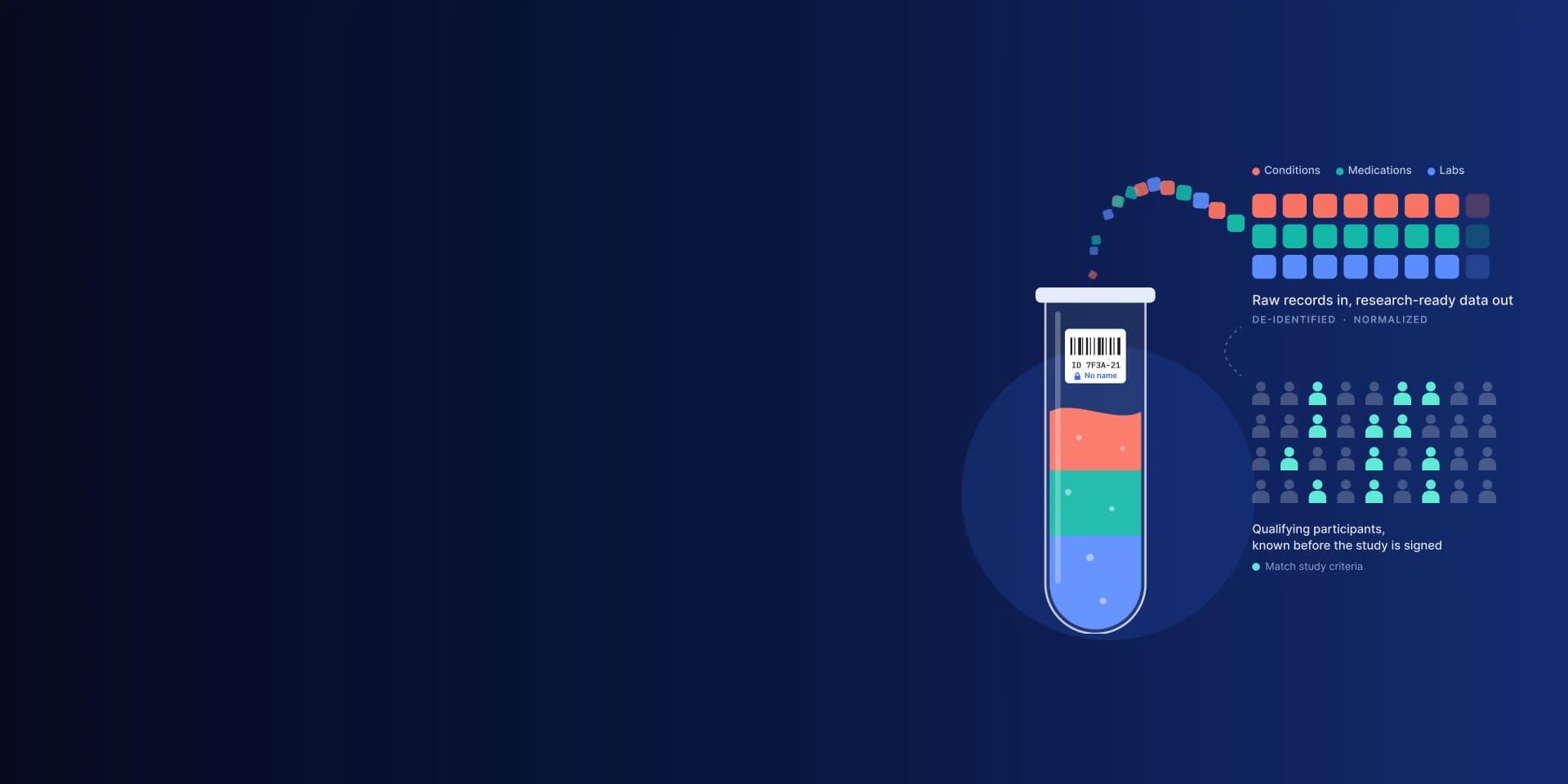
Arbisoft designed, built, and runs JoinedBio, a marketplace that connects people willing to share health data and biospecimens with researchers who need them. What used to be raw medical records from many health systems is now research-ready data, so JoinedBio can show researchers how many participants qualify before a study is signed.
- Participants signed up in the first year
10K
- Studies hosted on the platform
29
- Participants who completed a study
411

Client/Partner
JoinedBio
Industry
Healthcare and Life Sciences
Service Offered
Product Engineering, Cloud Infrastructure, and AI Development
Tech Stack Used
JoinedBio is a direct-to-patient research marketplace based in Lexington, Massachusetts, founded by the team that built iSpecimen. It connects people willing to share health data and biospecimens with researchers who need them, and has since acquired BioSample Connect and DNAsimple.
Since January 2025, a seven-person Arbisoft team has designed, built, and run the full platform: a participant portal, an admin portal, Nova, an AI research assistant, and production-grade cloud infrastructure. AI-powered participant and study matching is now in development.
Live since October 2025, JoinedBio has signed up 10K participants and hosted 29 studies. 11 studies are complete, and 411 participants have successfully finished a study.
Introduction
Researchers struggle to source diverse, well-matched biospecimens and health datasets. At the same time, people who want to contribute to research have no easy, trustworthy way to do it. JoinedBio, a direct-to-patient research marketplace founded by the team that built iSpecimen, set out to connect the two sides.
To do that, JoinedBio needed a platform that could recruit participants at scale and turn their raw medical records into research-ready data, so its team could tell a researcher how many qualifying participants exist before a study is even signed. It needed a team to design, build, and run that platform, and that's where Arbisoft stepped in.
The Challenge
Building a two-sided marketplace on top of sensitive health data meant solving several hard problems at once:
- Raw health data from many systems: Records arrive as raw FHIR from many health systems, each structuring and coding conditions, medications, and labs differently, so the data had to be understood and normalized before anyone could use it.
- Feasibility before a study is signed: Admins needed to run feasibility analyses for new studies across connected records and self-reported data from participants without connected records.
- Sensitive data by default: Every flow handles protected health information, so a HIPAA-conscious approach, consent tracking, and de-identification had to shape every feature.
- A two-sided, multi-system product: Participant and admin portals had to stay in sync with external health record, identity, and verification services.
- An AI assistant that has to be right: Participants needed an AI assistant that answers accurately and safely, including about their own medical data.
The Approach
We designed, built, and run the full JoinedBio platform, and we continue to extend it. The work spans six areas, with privacy shaping each one:
Six Areas, One Research Marketplace
Health Data PipelineRaw FHIR records normalized for study feasibility checks
Nova, a Medical ConciergePersonalized answers grounded in each participant's records
Participant PortalSign-up, consent, health records, and studies in one place
Admin PortalStudies, participants, consent, and role-based access
Privacy-First ArchitectureIdentity and research data kept in separate backends
Production-Grade InfrastructureDev, staging, and production on Google Kubernetes Engine
What We Built
- A health data pipeline built for feasibility: Participants connect their medical records through Fasten Health. We parse and normalize the raw FHIR data into a de-identified research store, alongside self-reported data from participants without connected records. Admins can then query the participant pool against a new study's criteria and see feasibility before committing.
- Nova, a personal medical concierge: Nova is more than a support bot. Powered by Google Gemini, it answers personalized questions about each participant's own connected medical data, as well as questions about studies and the platform, within safety guardrails.
- A low-friction participant portal: Participants sign up with SSO and a skippable email OTP, then connect their health records or share self-reported data. They manage versioned consent, document uploads, study preferences, and a consolidated profile, and a My Studies area follows each study from enrollment request through post-enrollment outcomes.
- An admin portal for study operations: Admins create and manage studies and work from a participant directory with consent and enrollment status controls. They upload documents, review consent signature history, and handle data-deletion requests, with role-based access for Admins and Super Admins.
- Privacy built into the architecture: Identity data and de-identified research records live in separate backends, so researchers never see who a participant is. A HIPAA-conscious approach, consent tracking, and de-identification shaped every feature.
- Production-grade infrastructure: Dev, staging, and production run on Google Kubernetes Engine, with staging as an exact replica of production and fully automated releases through GitHub Actions. Playwright end-to-end and visual regression tests back the platform.
What's In Progress
AI patient-study matching is the next step change for JoinedBio. Today the operations team prescreens participants against each study's criteria by hand, which does not scale to 10K participants and a growing study pipeline. The matching engine we are building turns a large participant pool into ready-to-enroll cohorts:
- Reading the records: It reads each participant's connected medical records and self-reported data against a study's eligibility criteria.
- Scoring the fit: It scores how well each participant fits and surfaces the best candidates to admins.
- For researchers: Faster recruitment and better-matched cohorts.
- For JoinedBio: Recruitment capacity that grows with the participant base instead of with headcount.
The Outcome
In its first year live, from October 2025 onward, JoinedBio signed up 10K participants and hosted 29 studies.
- A growing participant pool: 10K participants have signed up, 1,103 of them with connected health records and 310 sharing self-reported data.
- Studies that reach completion: 11 of the 29 studies on the platform are complete, and 411 participants have successfully finished a study.
- Feasibility before commitment: Connected records now power study feasibility checks for the admin team.
- A reason to stay engaged: Nova gives participants personalized answers about their own medical data, turning the portal from a sign-up form into a reason to stay engaged.
- Privacy by design: Researchers work with de-identified records and never see who a participant is.
Metric | Result |
| Participants signed up | 10K |
| Participants with connected health records | 1,103 |
| Participants sharing self-reported data | 310 |
| Studies on the platform | 29 |
| Studies completed | 11 |
| Participants who completed a study | 411 |
| Live since | October 2025 |
Value Delivered
The platform gives each side of the marketplace something it didn't have before:
- Researchers can learn how many qualifying participants exist before a study is signed
- Raw FHIR records from many health systems become de-identified, research-ready data
- Participants get personalized answers about their own medical data from Nova
- Admins manage studies, consent, enrollment, and data-deletion requests from one portal
- Separate identity and research backends keep participant identities away from researchers
- Staging mirrors production exactly, and releases are fully automated
With AI patient-study matching on the way, JoinedBio is building recruitment capacity that grows with its participant base instead of its headcount.
Participants signed up in the first year
10K
Studies hosted on the platform
29
Participants who completed a study
411
Technology Used
JoinedBio runs on Django and Next.js on Google Cloud, with health data, identity, and AI services integrated through third-party providers:
- Frontend: Next.js (App Router), TypeScript, Redux Toolkit and RTK Query, Tailwind CSS, Shadcn/UI
- Backend: Django and Django REST Framework, Python, PostgreSQL, Redis, Celery background workers, JWT authentication
- Data: Cloud SQL for PostgreSQL, MongoDB Atlas, Memorystore (Valkey), Cloud Storage including FHIR exports, and a FHIR parsing and normalization pipeline
- Infrastructure: Google Kubernetes Engine (Autopilot), Helm, ingress-nginx, Secret Manager with External Secrets Operator, Artifact Registry
- CI/CD: GitHub Actions automated release pipeline
- Observability: Google Cloud Logging and Monitoring, Sentry
- Integrations: Fasten Health (health records, FHIR R4), WorkOS (authentication and SSO), Twilio Verify (OTP)
- AI: Google Gemini powering Nova, grounded in each participant's connected records; an AI patient-study matching engine in development
- Testing: Playwright end-to-end and visual regression tests